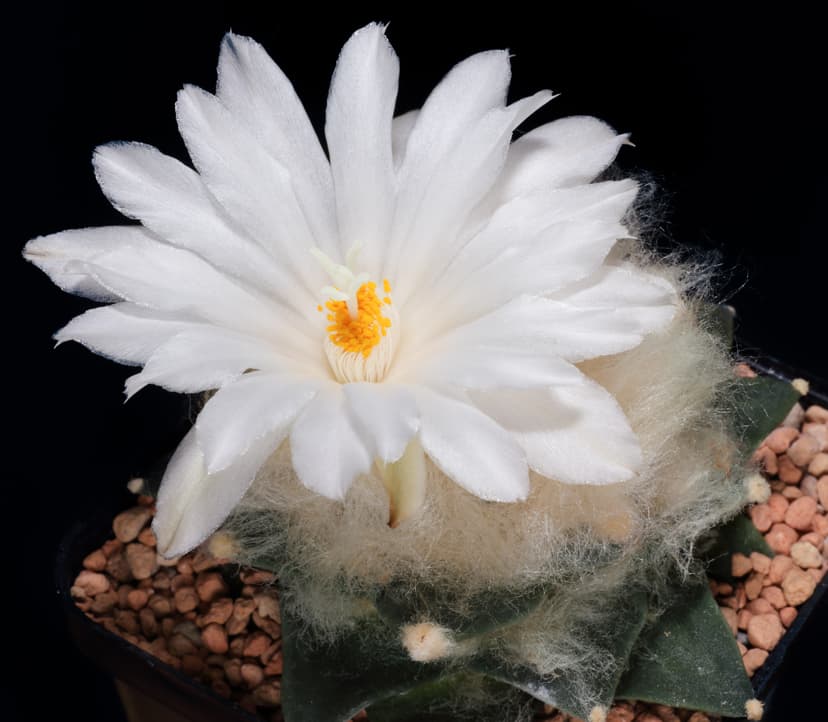
Ariocarpus fissuratus
Ariocarpus·Flattened to spherical bodies
Ariocarpus fissuratus, commonly known as living rock cactus or false peyote, is a slow-growing cactus native to northern Mexico and Texas. Its distinctive feature is its flattened, triangular tubercles that are deeply furrowed, providing excellent camouflage in its arid habitat. While not containing mescaline like peyote, it has been used by some Native American tribes as a substitute.
Key Facts
- ›Known for its exceptional camouflage, making it difficult to spot in its natural environment.
- ›Possesses a large succulent taproot and tubercles with prominent furrows and wool.
- ›Flowers are pinkish, blooming in October and early November.
- ›Found in small numbers across northern Mexico and Texas.
- ›Growth rate is extremely slow, often requiring grafting for faster cultivation.
- ›Protected under CITES due to extensive illegal poaching for collectors.
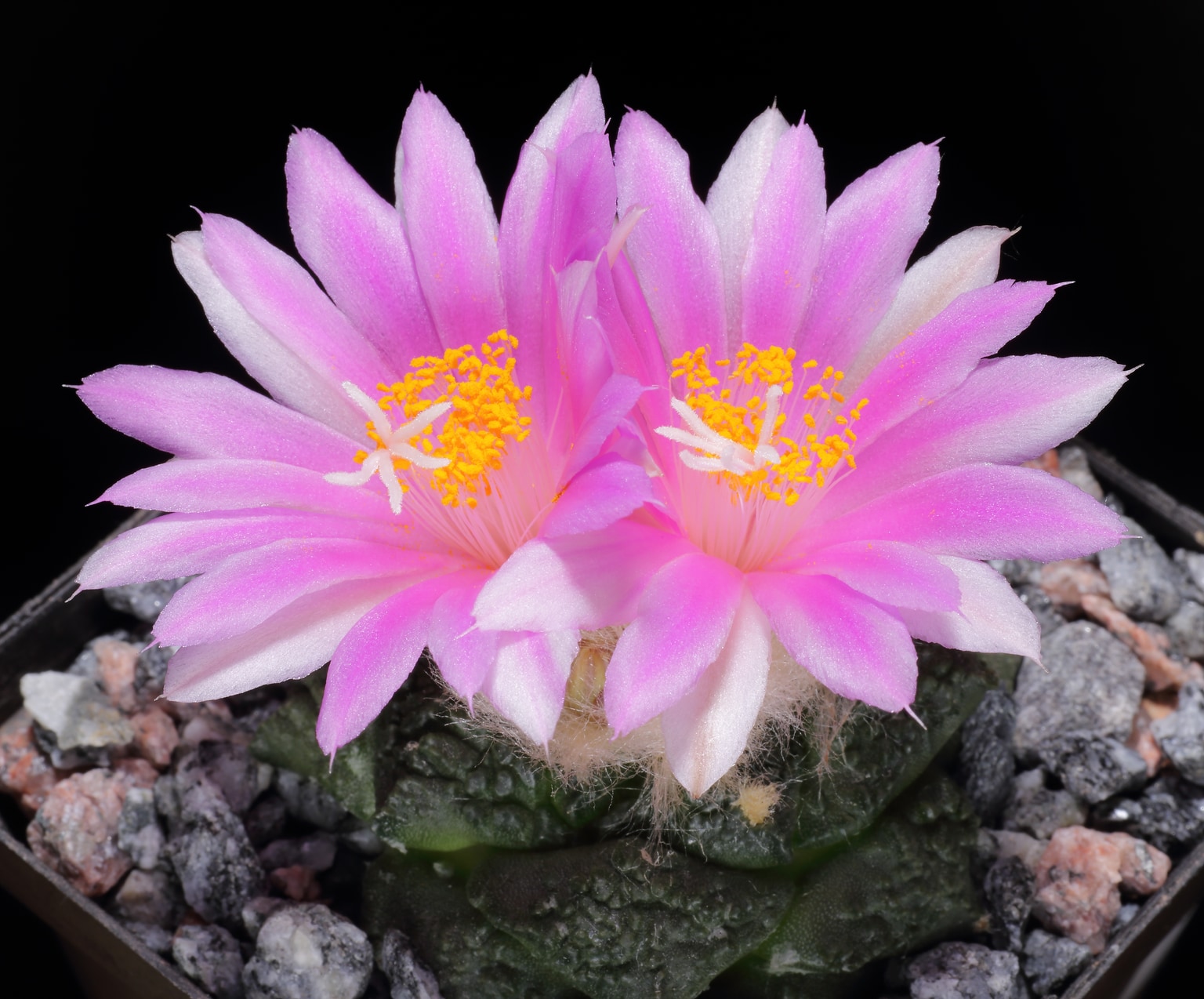
Living Rock Cactus, False Peyote, Chautle, Dry Whiskey, Star Cactus
- Bodies 1.5 To 10 Cm High and Up To 10 Cm In Diameter.
- Consists of Many Small, Spirally Distributed Tubercles.
- Tubercles Are Flattened, Triangular To Rhombic, and Often Overlap.
- Upper Surface of Tubercles Is Hard, Split, and Furrowed Transversely.
- Wool Emerges From Furrows, Initially Straw-Blond, Darkening and Graying With Age.
- Greyish-Green Color, Sometimes Acquiring A Yellowish To Brownish Tint.
- Extremely Slow Growth Rate.
- Thorns Are Not Formed.
- Naturally Camouflaged, Making It Difficult To Spot.
Light Purple, Pinkish Red
About Ariocarpus fissuratus
Ariocarpus fissuratus, also known by common names such as living rock cactus, false peyote, chautle, dry whiskey, and star cactus, is a fascinating species of cactus native to arid regions of northern Mexico and Texas.
Description and Habitat
This cactus is characterized by its flattened to spherical bodies, typically ranging from 1.5 to 10 cm in height and up to 10 cm in diameter, though some can reach 15 cm. It grows from a substantial succulent taproot and usually remains unbranched, with small tubercles emerging from a central point. The plant's coloration is generally greyish-green, often developing a yellowish or brownish hue with age, especially in flattened forms. Its growth rate is exceptionally slow. The tubercles are triangular to rhombic and feature a pronounced, deep furrow on their upper surface, which is covered by wool. This wool, initially straw-blond and later darkening and graying, provides protection to the plant's apex. A key characteristic is the absence of true thorns. The plant's morphology is highly adapted for camouflage, making it blend seamlessly with its rocky surroundings on dry limestone plains, ridges, and low hills.
Flowers and Fruit
Ariocarpus fissuratus is most often discovered due to its flowers, which bloom in October and early November. These flowers emerge from the furrows near the plant's center, displaying colors from light purple to pinkish red with a darker throat, and measure about 2.5 to 4.5 cm in diameter. Following fertilization, the cactus produces spindle- to club-shaped fruits, 5 to 15 mm long, which are greenish to white. These fruits dry out when ripe, releasing dull black seeds that are retained within the crown wool for a considerable time before being dispersed.
Taxonomy and Cultivation
The species was first described by George Engelmann in 1856 as Mammillaria fissurata before being placed in the genus Ariocarpus by Karl Moritz Schumann in 1894. Other historical taxonomic names include Anhalonium fissuratum and Roseocactus fissuratus. In cultivation, Ariocarpus fissuratus is often grafted onto faster-growing columnar cacti to accelerate its development, as it can take at least a decade to mature naturally. Cultivated plants require minimal water and fertilizer, ample light, and a loose, well-draining sandy soil.
Conservation and Use
Due to its rarity and desirability among collectors, Ariocarpus fissuratus is a target of significant illegal poaching, with tens of thousands of wild specimens removed annually. This activity, which has even extended to protected areas like Big Bend National Park, threatens the species' survival and genetic diversity. It is protected under the Convention on International Trade in Endangered Species of Wild Fauna and Flora (CITES). Historically, some Native American tribes have used Ariocarpus fissuratus as a substitute for peyote. Although it does not contain mescaline, it has been found to contain other centrally active substances in very small, generally inactive doses.
Source: Wikipedia ↗
Frequently Asked Questions
What are the common names for Ariocarpus fissuratus?
Ariocarpus fissuratus is known by several common names, including living rock cactus, false peyote, chautle, dry whiskey, and star cactus. These names often reflect its appearance or historical uses.
Where does Ariocarpus fissuratus grow naturally?
This cactus species is found in limited numbers in southwest Texas, from southeastern Hudspeth County to the Pecos River, and in several Mexican states including Coahuila, Chihuahua, Durango, Nuevo León, Tamaulipas, and Zacatecas.
What makes Ariocarpus fissuratus difficult to find?
Ariocarpus fissuratus is naturally camouflaged in its habitat due to its flattened, greyish-green to yellowish-brown bodies and jagged, furrowed warts that resemble rocks. Its slow growth and semi-subterranean habit further contribute to its inconspicuous nature.
When do Ariocarpus fissuratus cacti flower?
The pinkish flowers of Ariocarpus fissuratus typically bloom in October and early November. They emerge individually from the furrows of the youngest areoles, appearing almost centrally located on the plant.
Is Ariocarpus fissuratus psychoactive or used like peyote?
While Ariocarpus fissuratus has been used by some Native American tribes as a substitute for peyote, it does not contain mescaline. It does contain other centrally active substances, but in doses too small to be significantly psychoactive.
Why is Ariocarpus fissuratus protected?
Ariocarpus fissuratus is protected because it is subject to extensive illegal poaching. Tens of thousands of wild specimens are removed annually for collectors, significantly impacting wild populations and genetic diversity.
What are the cultivation needs for Ariocarpus fissuratus?
In cultivation, Ariocarpus fissuratus requires very little water and fertilizer. It thrives with a good amount of light and a loose, sandy soil that offers good drainage. Grafting onto faster-growing cacti is often done to accelerate its growth.