
Encephalartos pterogonus
Mountainous regions.·Arborescent·Not Specified
Encephalartos pterogonus is a species of cycad native to the Manica province of Mozambique, specifically Mount Mruwere and surrounding mountains. It is characterized by its upright stem, pinnate leaves with dark green lanceolate leaflets, and prominent reproductive cones. This dioecious species produces distinct male and female cones, with seeds covered in an orange-red sarcotesta when mature.
Key Facts
- ›Native to Mount Mruwere and adjacent mountains in Mozambique.
- ›Can grow up to 1.5 meters tall with a stem diameter of 40 cm.
- ›Leaves are pinnate, reaching 1.2-1.5 meters in length.
- ›Dioecious, meaning it has separate male and female plants.
- ›Male cones are spindle-shaped, while female cones are roughly cylindrical.
- ›Seeds are ovoid with an orange-red sarcotesta when ripe.

Mozambique
- Upright stem
- Reaches up to 1.5 m in height
- Approximate stem diameter of 40 cm
- Sometimes produces additional stems from suckers at the base
- Pinnate leaves
- 1.2-1.5 m long
- Form a crown at the top of the stem
- Supported by 4-8 cm long petioles
- Composed of several pairs of dark green lanceolate leaflets
- Leaflets typically 15-18 cm long
- Male specimens: 1-3 spindle-shaped cones, 30–38 cm long and 10–11 cm wide, on stalks.
- Female specimens: 2-3 roughly cylindrical cones, 35–40 cm long and 16–18 cm wide, in bright green color.
- Roughly Ovoid
- 28–35 mm Long
- Have An Orange-Red Sarcotesta Covering When Ripe
About Encephalartos pterogonus
Encephalartos pterogonus is a distinctive species of cycad native to the mountainous regions of Mozambique. Its natural habitat is primarily Mount Mruwere (Monte Urueri) and the surrounding mountain areas within the Manica province. This species is recognized for its robust growth form and striking reproductive structures.
Description and Characteristics
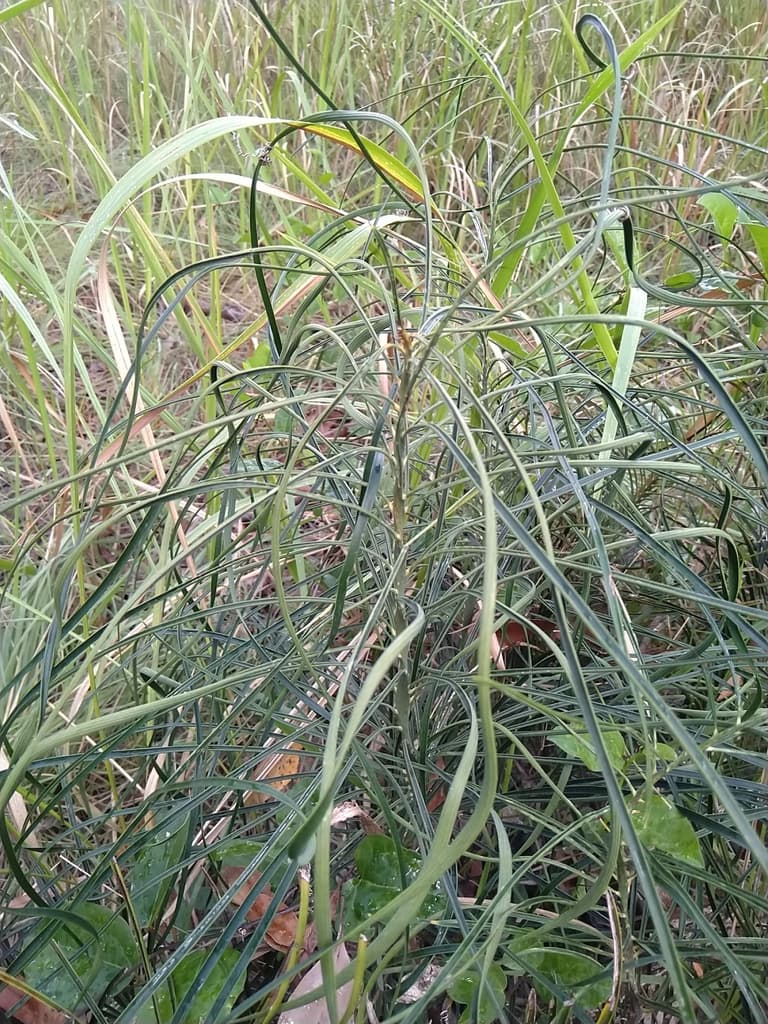
The plant typically features an upright stem that can attain a height of up to 1.5 meters and a diameter of around 40 cm. It is not uncommon for this stem to produce additional growth from suckers at its base, contributing to a multi-stemmed appearance in mature specimens. The leaves of Encephalartos pterogonus are pinnate, measuring an impressive 1.2 to 1.5 meters in length, and they form a dense crown atop the stem. These leaves are supported by petioles that are 4 to 8 cm long. Each leaf is comprised of numerous pairs of lanceolate leaflets, which are dark green in color and generally measure between 15 and 18 cm in length.
Reproduction
Encephalartos pterogonus is a dioecious species, meaning that individual plants are either male or female. The male plants bear one to three spindle-shaped cones that are typically 30–38 cm long and 10–11 cm wide, emerging on stalks. Female plants, in contrast, produce two to three cones that are roughly cylindrical, measuring 35–40 cm in length and 16–18 cm in width, and are noted for their bright green coloration. The seeds produced by this cycad are roughly ovoid, measuring 28–35 mm long, and are characteristically enveloped in an orange-red sarcotesta when they reach maturity.
Source: Wikipedia ↗
Frequently Asked Questions
Where is Encephalartos pterogonus found naturally?
Encephalartos pterogonus is indigenous to Mount Mruwere (Monte Urueri) and the adjacent mountains located in the Manica province of Mozambique.
What are the typical dimensions of an Encephalartos pterogonus plant?
This cycad species typically features an upright stem that can reach up to 1.5 meters in height and approximately 40 cm in diameter. It may also produce additional stems from suckers at its base.
Describe the leaves of Encephalartos pterogonus.
The leaves of Encephalartos pterogonus are pinnate and can grow to be 1.2 to 1.5 meters long. They form a crown at the top of the stem and are composed of dark green, lanceolate leaflets typically measuring 15 to 18 cm in length.
What are the reproductive cones of this cycad like?
Encephalartos pterogonus is dioecious. Male plants produce 1 to 3 spindle-shaped cones measuring 30–38 cm long and 10–11 cm wide. Female plants bear 2 to 3 roughly cylindrical cones that are 35–40 cm long and 16–18 cm wide, exhibiting a bright green color.
What do the seeds of Encephalartos pterogonus look like?
The seeds of Encephalartos pterogonus are generally ovoid in shape, measuring 28 to 35 mm in length. When ripe, they are covered by an orange-red sarcotesta.
Related Cycad species

Cycas chevalieri
Cycas chevalieri is a species of cycad belonging to the Cycadaceae family. This plant is primarily found in central Vietnam, with its known distribution including Nghe An Province. It is also believed to potentially occur in neighboring Laos.
Macrozamia parcifolia
Macrozamia parcifolia is a species of cycad native to Australia, belonging to the Zamiaceae family. Its botanical characteristics are primarily defined by its classification within this family, though specific details regarding its morphology, habitat, and distribution are limited in available records.

Cycas edentata
Cycas edentata is a species of cycad found widely across Southeast Asia. Its original classification was based on a specific population from Calusa Island in the Philippines, highlighting its initial identification within a defined geographical context.