
Aletopelta
Herbivore·Late Cretaceous·Southern California, USA·Quadrupedal
Aletopelta is a genus of basal ankylosaurid dinosaur discovered in Southern California. It lived during the Late Cretaceous period and is known from a partial skeleton that includes osteoderms. The name Aletopelta means "wanderer shield," reflecting its armor and the geological history of the region where its fossils were found.
Key Facts
- ›Aletopelta lived during the Late Cretaceous period, specifically the upper Campanian stage, approximately 75.5 million years ago.
- ›Fossils were discovered in the Point Loma Formation of Southern California.
- ›The genus is monospecific, with the only known species being Aletopelta coombsi.
- ›It is estimated to have been around 5 meters (16 feet) long and weighed approximately 2 tonnes (4,409 lbs).
- ›The partial skeleton preserves osteoderms, indicating it was an armored dinosaur.
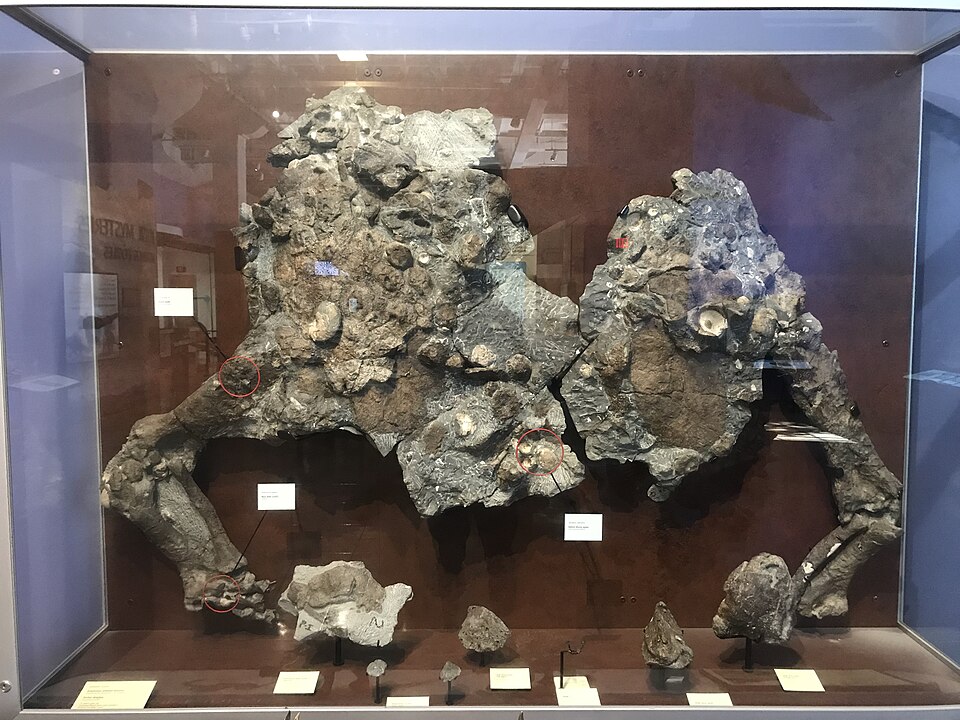
- ›The holotype specimen became a miniature reef after death, attracting invertebrates and being scavenged by sharks.
- Estimated length of 5 meters
- Estimated weight of 2 tonnes
- Possessed osteoderms for armor, including a pelvic shield and cervical half ring
- Teeth were wider than tall
- Femur was longer than the tibia and fibula
- Cervical half ring composed of fused osteoderms
Stegopelta, Glyptodontopelta, Edmontonia, Panoplosaurus, Liaoningosaurus, Cedarpelta, Chuanqilong
North America
About Aletopelta
Aletopelta is a genus of dinosaur that roamed Southern California during the Late Cretaceous period. Its name, meaning "wanderer shield," reflects both its protective armor and the geological journey of the landmass it inhabited. This basal ankylosaurid is known from a partial skeleton, including distinctive osteoderms.
Discovery and Naming
The remains of Aletopelta were discovered in 1987 during construction work near Carlsbad, California. The specimen was recovered from the marine Point Loma Formation, dating to the upper Campanian stage, approximately 75.5 million years ago. Initially dubbed the "Carlsbad Ankylosaur," the skeleton was described in 1996 by Thomas Deméré and Walter Coombs before being formally named Aletopelta coombsi in 2001 by Tracy Ford and James Kirkland. The specific name honors Walter Preston Coombs, Jr. for his contributions to vertebrate paleontology.
Life and Environment
Fossils indicate that Aletopelta was an armored herbivore, estimated to be around 5 meters (16 feet) in length and weighing about 2 tonnes (4,409 lbs). Its osteoderms, which provided defense, included a pelvic shield and a cervical half ring. Uniquely, the holotype specimen was found in a marine context, suggesting that its carcass was washed out to sea, sank, and became a substrate for marine life, attracting invertebrates and even being scavenged by sharks. This preservation offers a glimpse into the post-mortem processes and the marine ecosystem of the time.
Classification
Classified as a basal ankylosaurid, Aletopelta has been placed in various phylogenetic positions within the armored dinosaurs. While some studies have considered it a valid genus with specific diagnostic characteristics, others have debated its precise taxonomic status. Its placement within ankylosaurid evolution continues to be a subject of research, with some analyses suggesting it may be a basal nodosaurid.
Source: Wikipedia ↗
Frequently Asked Questions
What does the name Aletopelta mean?
The name Aletopelta is derived from Greek words meaning "wanderer" and "small shield." This name refers to the dinosaur's armor and the tectonic movement that carried its fossil-bearing sediments.
When and where did Aletopelta live?
Aletopelta lived during the Late Cretaceous period, specifically the upper Campanian stage, about 75.5 million years ago. Its fossils were found in what is now Southern California, within the Point Loma Formation.
What kind of dinosaur was Aletopelta?
Aletopelta was a basal ankylosaurid dinosaur. Ankylosaurids are known for their bony armor and, in many cases, their tail clubs.
What is known about the physical characteristics of Aletopelta?
Aletopelta is estimated to have been about 5 meters (16 feet) long and weighed around 2 tonnes (4,409 lbs). It was characterized by its osteoderms, which formed its protective armor, including a pelvic shield and a cervical half ring.
What is the significance of the Aletopelta fossil discovery?
The discovery of Aletopelta provided insights into the diversity of ankylosaurids in North America during the Late Cretaceous. The fossil's unique preservation as a "miniature reef" also offers clues about the marine environment and scavenging processes of the time.
Related Dinosaur species

Abditosaurus
Abditosaurus is an extinct genus of titanosaurian sauropod dinosaur that lived during the Late Cretaceous period in what is now Catalonia, Spain. It is known from the most complete titanosaur skeleton ever discovered in Europe, representing a large species that inhabited the Ibero-Armorican Island. Phylogenetic analyses suggest it was related to South American and African saltasaurines, distinguishing it from other European dwarf sauropods.

Acantholipan
Acantholipan is a genus of herbivorous nodosaurid dinosaur discovered in Mexico. It lived during the early Santonian age of the Late Cretaceous period and is known from fragmentary fossils, including a partial skeleton with osteoderms. Acantholipan gonzalezi is the type species, named in honor of paleontologist Arturo Homero González-González.

Acanthopholis
Acanthopholis is a genus of herbivorous ankylosaurian dinosaur belonging to the family Nodosauridae. It lived during the Late Cretaceous Period in England and is characterized by its distinctive armor, including keeled plates and prominent spikes along its neck and shoulders. The genus name translates to "spiny scales."