
Bonitasaura
Herbivore·Late Cretaceous·Río Negro Province, Patagonia, Argentina·Quadrupedal
Bonitasaura is a genus of titanosaurian dinosaur that lived during the Late Cretaceous period in what is now Patagonia, Argentina. Its name honors the "La Bonita" fossil quarry and paleontologist Leonardo Salgado. This herbivorous dinosaur possessed a unique skull and jaw structure adapted for cropping vegetation.
Key Facts
- ›Lived during the Late Cretaceous period (Santonian stage).
- ›Discovered in Río Negro Province, Patagonia, Argentina.
- ›Measured approximately 10 meters (33 feet) in length.
- ›Had a skull and jaw structure resembling diplodocids for cropping vegetation.
- ›Was a titanosaurian sauropod, belonging to the larger group of dinosaurs.
- ›Fossils show evidence of several palaeopathologies, including bone tumors and infections.
- About 10 meters in length.
- Skull similar to diplodocids.
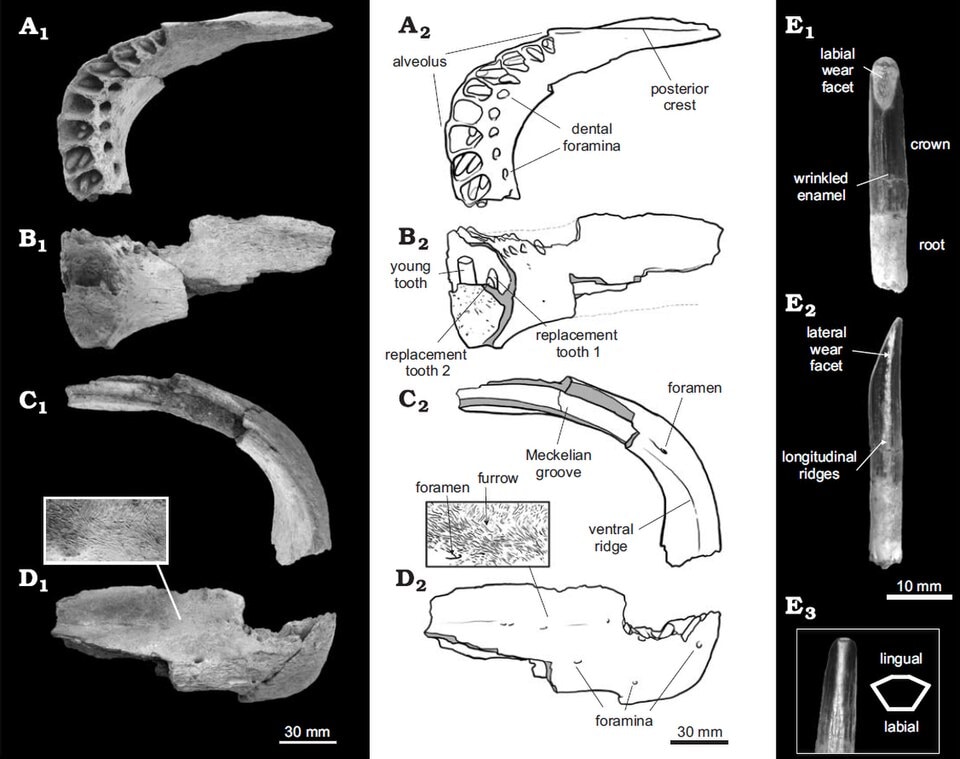
- Lower jaw with a sharp ridge behind reduced teeth, supporting a keratin sheath.
- Short neck.
- Robust projections on back vertebrae for muscle attachment.
- Reversed limb proportions.
- Rudimentary whiplash tails.
Antarctosaurus, Chucarosaurus, Notocolossus
Argentina
About Bonitasaura
Bonitasaura is a genus of titanosaurian dinosaur that roamed the Earth during the Late Cretaceous period, specifically the Santonian stage. Its fossils were unearthed in the Neuquén Basin of Patagonia, Argentina, within the uppermost layers of the Bajo de la Carpa Formation. The genus was formally described by Sebastian Apesteguía in 2004, who named the type species, B. salgadoi, in recognition of the renowned Argentine paleontologist Leonardo Salgado. The genus name itself, Bonitasaura, derives from the name of the fossil quarry where its remains were found, "La Bonita."
Description and Paleobiology
This herbivorous dinosaur is estimated to have reached a length of approximately 10 meters (33 feet). Bonitasaura possessed a skull that bore similarities to those of diplodocids, a group of long-necked sauropods. A distinctive feature was its lower jaw, which had a sharp ridge located behind a reduced set of teeth. This ridge likely supported a keratinous beak-like sheath in life, which, when paired with a similar structure in the upper jaw, would have functioned like a guillotine to crop vegetation. The dinosaur also had a relatively short neck and robust projections on its posterior vertebrae, suggesting that its neck was employed in vigorous movements, probably related to feeding. Bonitasaura's anatomy also indicated convergent evolution with diplodocids in several aspects, including low, long skulls lacking nasal arches typical of other macronarians, squared-off lower jaws with comb-like teeth, and reversed limb proportions where the forelimbs were shorter than the hindlimbs.
Palaeopathology
The holotype specimen of Bonitasaura salgadoi has revealed several pathological conditions. These include a femoral osteoblastic tumor, an enthesophyte on metatarsal III, and abnormal tissue found in a caudal prezygapophysis, which is believed to have been caused by an infection. These findings provide insights into the health and potential injuries experienced by this individual dinosaur.
Classification
Initially classified as a member of Nemegtosauridae, subsequent cladistic analyses have placed Bonitasaura within the titanosaur clade. More recent studies have recovered it as a colossosaurian member of the Titanosauria, acting as the sister taxon to a clade comprising Chucarosaurus, Notocolossus, and the Lognkosauria.
Source: Wikipedia ↗
Frequently Asked Questions
When did Bonitasaura live?
Bonitasaura lived during the Santonian stage of the Late Cretaceous period. This places its existence roughly between 86 and 83 million years ago.
Where was Bonitasaura discovered?
The fossils of Bonitasaura were discovered in the eastern Neuquén Basin, specifically in Río Negro Province, Northwestern Patagonia, Argentina.
What did Bonitasaura eat?
Bonitasaura was a herbivore. Its distinctive jaw structure, featuring a sharp ridge and a keratin sheath, was adapted for cropping vegetation.
How large was Bonitasaura?
Bonitasaura is estimated to have measured about 10 meters (33 feet) in length. Its build was robust, characteristic of titanosaurian sauropods.
What makes Bonitasaura unique?
Bonitasaura is notable for its skull and jaw morphology, which showed convergent evolution with diplodocids. It possessed a sharp, beak-like keratin sheath on its lower jaw for efficiently cropping plants.
What is known about Bonitasaura's health?
The holotype fossil of Bonitasaura exhibits multiple palaeopathologies. These include a femoral osteoblastic tumor, an enthesophyte on metatarsal III, and abnormal tissue in a caudal prezygapophysis indicative of infection.
Related Dinosaur species

Abditosaurus
Abditosaurus is an extinct genus of titanosaurian sauropod dinosaur that lived during the Late Cretaceous period in what is now Catalonia, Spain. It is known from the most complete titanosaur skeleton ever discovered in Europe, representing a large species that inhabited the Ibero-Armorican Island. Phylogenetic analyses suggest it was related to South American and African saltasaurines, distinguishing it from other European dwarf sauropods.

Acantholipan
Acantholipan is a genus of herbivorous nodosaurid dinosaur discovered in Mexico. It lived during the early Santonian age of the Late Cretaceous period and is known from fragmentary fossils, including a partial skeleton with osteoderms. Acantholipan gonzalezi is the type species, named in honor of paleontologist Arturo Homero González-González.

Acanthopholis
Acanthopholis is a genus of herbivorous ankylosaurian dinosaur belonging to the family Nodosauridae. It lived during the Late Cretaceous Period in England and is characterized by its distinctive armor, including keeled plates and prominent spikes along its neck and shoulders. The genus name translates to "spiny scales."