
Cerasinops
Herbivore·Late Cretaceous·Two Medicine Formation, Montana, USA·Quadrupedal
Cerasinops was a small ceratopsian dinosaur that lived during the Campanian stage of the Late Cretaceous Period. Its fossils were discovered in the Two Medicine Formation of Montana. The genus name 'Cerasinops' means 'cherry face,' referring to the color of the rock formations where its fossils were found.
Key Facts
- ›Lived during the Campanian of the Late Cretaceous Period.
- ›Fossils found in the two Medicine Formation, Montana.
- ›Named Cerasinops hodgskissi in 2007 by Brenda Chinnery and Jack Horner.
- ›Estimated to be 2.5 meters (8.2 ft) long and weigh 175 kg (386 lb).
- ›Belonged to the Ceratopsia group, known for parrot-like beaks.
- ›Considered a basal member of Neoceratopia.
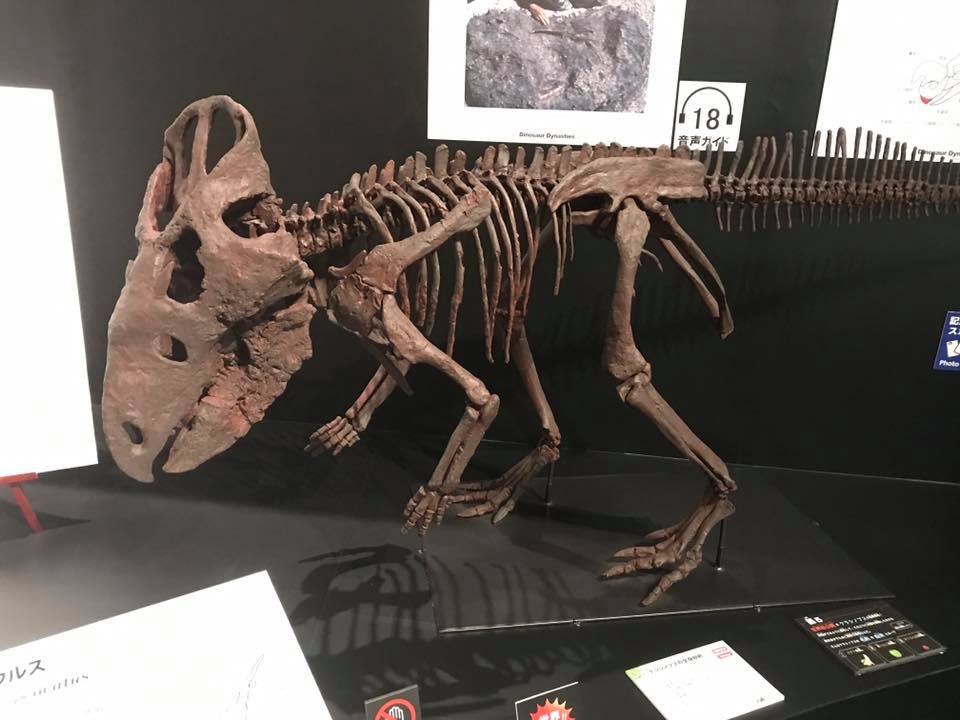
- Small ceratopsian dinosaur with a parrot-like beak.
- Estimated total body length of 2.5 m.
- Estimated body mass of 175 kg.
Leptoceratops
North America
About Cerasinops
Cerasinops was a small ceratopsian dinosaur that roamed North America during the Campanian stage of the Late Cretaceous Period. Its fossils have been unearthed in the Two Medicine Formation of Montana, a region rich in dinosaur discoveries.
Physical Characteristics and Classification
Cerasinops is estimated to have reached a length of approximately 2.5 meters (8.2 feet) and weighed around 175 kilograms (386 pounds). As a member of the Ceratopsia, it possessed a characteristic parrot-like beak, indicative of its herbivorous diet. While placed within the broader group of Neoceratopia, its precise phylogenetic placement has seen some variation in scientific literature, with some studies assigning it to Leptoceratopsidae and others considering it a sister taxon or a general neoceratopsian.
Discovery and Naming
The genus Cerasinops was formally described in 2007 by paleontologists Brenda Chinnery and John R. Horner. The type species, Cerasinops hodgskissi, is named in honor of the Hodgskiss family, on whose land the principal specimen was discovered. The genus name, derived from Latin and Greek, translates to "cherry face," a nod to the distinctive coloration of the sedimentary rocks in the discovery area. The most significant specimen, MOR 300, represents nearly 80% of the skeleton, providing valuable insights into the anatomy of this dinosaur.
Temporal and Geographic Context
Fossils of Cerasinops have been recovered from the lower Two Medicine Formation, specifically between ash beds dated to between 77 and 80.2 million years ago. This places the dinosaur firmly within the Campanian epoch of the Late Cretaceous. The Two Medicine Formation in Montana has yielded numerous significant dinosaur fossils, making it a crucial site for understanding Late Cretaceous ecosystems in North America.
Source: Wikipedia ↗
Frequently Asked Questions
What does Cerasinops mean?
The name Cerasinops means 'cherry face.' This name refers to the color of the rock formations in the Two Medicine Formation where its fossils were discovered.
When did Cerasinops live?
Cerasinops lived during the Campanian stage of the Late Cretaceous Period. This period is further specified by ash beds dated between 77 and 80.2 million years ago.
Where were Cerasinops fossils found?
Fossils of Cerasinops have been discovered in the Two Medicine Formation in Montana, USA. Specifically, specimens were found in Teton County, on land belonging to the Wilson Hodgskiss family.
How large was Cerasinops?
Based on a nearly 80% complete specimen, Cerasinops is estimated to have had a total body length of 2.5 meters (8.2 feet) and a body mass of 175 kilograms (386 pounds).
What group of dinosaurs did Cerasinops belong to?
Cerasinops belonged to the Ceratopsia, a group of herbivorous dinosaurs characterized by their parrot-like beaks. It is considered a basal member of Neoceratopia.
Related Dinosaur species

Abditosaurus
Abditosaurus is an extinct genus of titanosaurian sauropod dinosaur that lived during the Late Cretaceous period in what is now Catalonia, Spain. It is known from the most complete titanosaur skeleton ever discovered in Europe, representing a large species that inhabited the Ibero-Armorican Island. Phylogenetic analyses suggest it was related to South American and African saltasaurines, distinguishing it from other European dwarf sauropods.

Acantholipan
Acantholipan is a genus of herbivorous nodosaurid dinosaur discovered in Mexico. It lived during the early Santonian age of the Late Cretaceous period and is known from fragmentary fossils, including a partial skeleton with osteoderms. Acantholipan gonzalezi is the type species, named in honor of paleontologist Arturo Homero González-González.

Acanthopholis
Acanthopholis is a genus of herbivorous ankylosaurian dinosaur belonging to the family Nodosauridae. It lived during the Late Cretaceous Period in England and is characterized by its distinctive armor, including keeled plates and prominent spikes along its neck and shoulders. The genus name translates to "spiny scales."