
Elephantulus
Macroscelidea·Africa·Not Applicable·Sengi
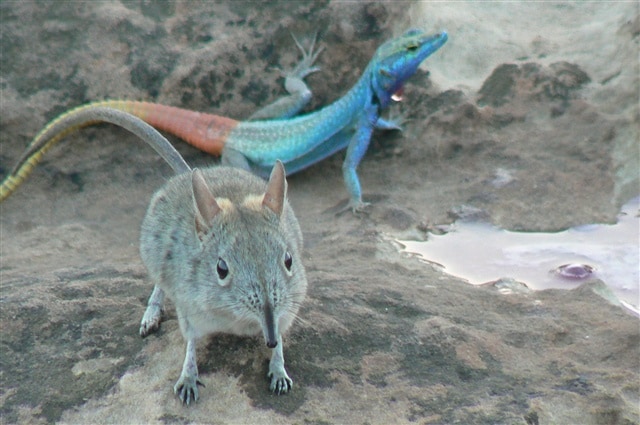
Elephantulus is a genus of sengi, commonly known as elephant shrews, native to Africa. These small, ground-dwelling mammals are characterized by their long, flexible snouts and are primarily insectivorous.
Key Facts
- ›Elephantulus is a genus within the sengi family, Macroscelididae.
- ›All species within the Elephantulus genus are native to the African continent.
- ›These animals are commonly referred to as elephant shrews due to their distinctive long, trunk-like snouts.
- ›Their diet primarily consists of insects.
- ›There are eight recognized species within the Elephantulus genus.
Terrestrial
Long, Flexible Snout
Insectivore
About Elephantulus
Elephantulus: The Elephant Shrews
The genus Elephantulus encompasses a group of small mammals commonly known as sengis or elephant shrews. These fascinating creatures belong to the family Macroscelididae and are exclusively found on the African continent. Their most striking characteristic is their elongated, flexible snout, which gives them their common name and is crucial for their foraging activities.
Species Diversity
The Elephantulus genus is comprised of eight distinct species, each adapted to various terrestrial environments across Africa. These include well-known species such as the Short-snouted sengi (E. brachyrhynchus), the Cape sengi (E. edwardii), and several rock sengi species like the Eastern rock sengi (E. myurus) and the Western rock sengi (E. rupestris). The Dusky-footed sengi (E. fuscipes), Dusky sengi (E. fuscus), and Bushveld sengi (E. intufi) also form part of this genus.
Diet and Behavior
Elephant shrews are primarily insectivorous, relying on their keen sense of smell and acute hearing to locate insects, spiders, and other small invertebrates hidden in leaf litter and soil. While specific social behaviors can vary between species, many sengis are known to be solitary or live in monogamous pairs, maintaining well-defined territories. Their activity patterns are often diurnal or crepuscular, meaning they are most active during the day or at dawn and dusk.
Source: Wikipedia ↗
Frequently Asked Questions
What are elephant shrews?
Elephant shrews, belonging to the genus Elephantulus, are small mammals in the family Macroscelididae. They are known for their elongated snouts, which they use to forage for food.
Where do elephant shrews live?
All species within the Elephantulus genus are found on the African continent. Their specific habitats vary by species but generally include terrestrial environments.
What do elephant shrews eat?
Elephant shrews, including those in the Elephantulus genus, are primarily insectivores. They use their sensitive snouts to locate and consume insects and other small invertebrates.
How many species of Elephantulus are there?
The genus Elephantulus contains eight recognized species. These include the short-snouted sengi, the Cape sengi, and various rock sengis, among others.