
African forest elephant
Africa·Critically Endangered
African forest elephants are the smallest of the three living elephant species, characterized by their straight, down-pointing tusks and oval-shaped ears. Native to the humid tropical forests of West Africa and the Congo Basin, they live in complex, sociable family groups and play a crucial role in maintaining forest biodiversity through seed dispersal. Despite their ecological importance, they face severe threats from habitat loss and poaching.
Key Facts
- ›The smallest of the three living elephant species, with an average shoulder height of 2.16 m.
- ›Both males and females possess straight, down-pointing tusks.
- ›They live in highly sociable family groups of up to 20 individuals.
- ›Their diet consists of leaves, seeds, fruit, and tree bark, contributing to forest biodiversity through seed dispersal.
- ›Listed as Critically Endangered on the IUCN Red List since 2021.
- ›Threatened by habitat loss, fragmentation, and poaching for their hard ivory.
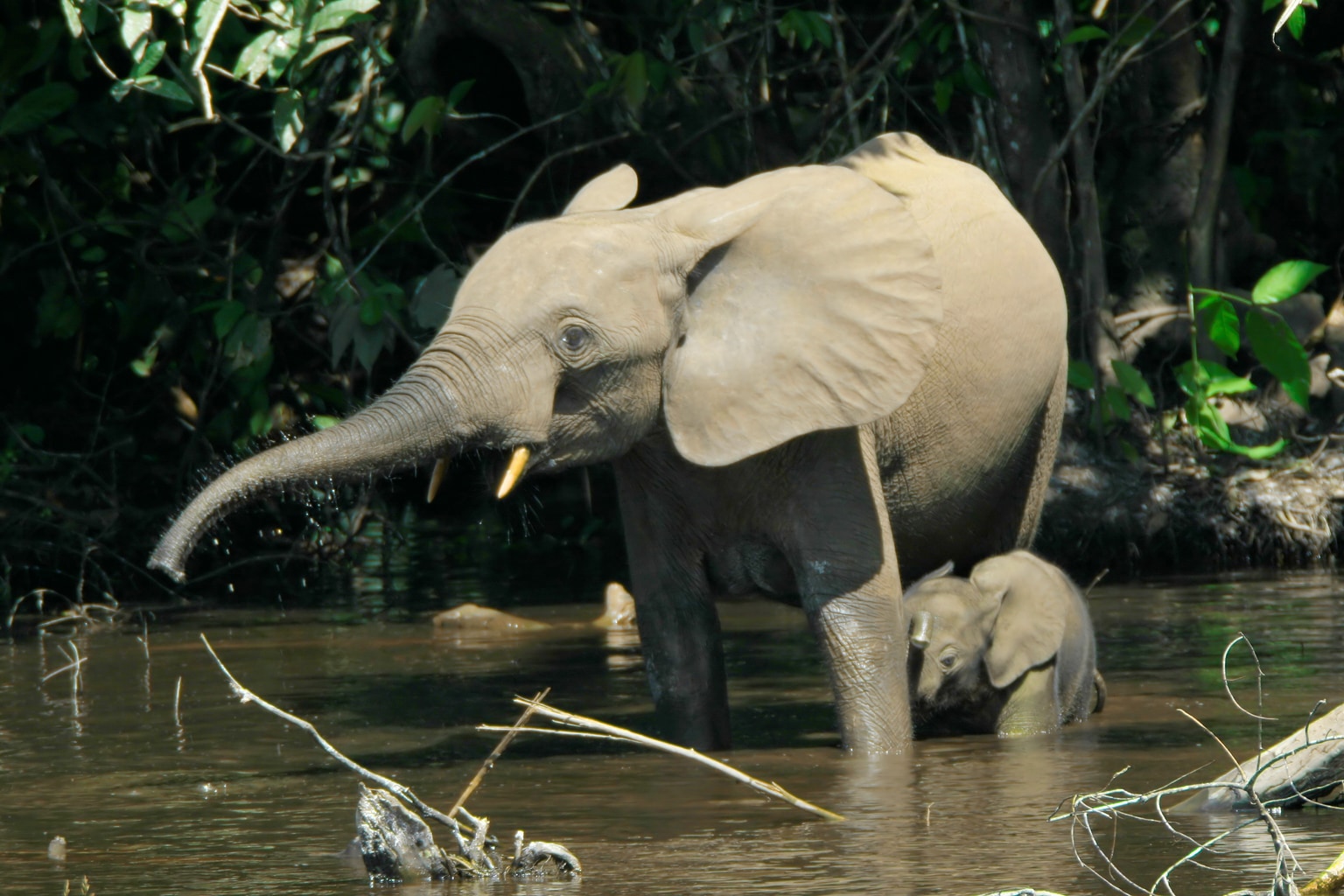
African Forest Elephant
Genus: Loxodonta, Family: Elephantidae, Order: Proboscidea, Class: Mammalia, Phylum: Chordata, Kingdom: Animalia
Humid Tropical Forests, Rainforests, Evergreen Moist Deciduous Forests
- Smallest of the Three Living Elephant Species
- Average Shoulder Height of 2.16 m
- Grey Skin, Appearing Yellow To Reddish After Wallowing
- Sparsely Covered With Black Coarse Hair
- Oval-Shaped Ears With Small Elliptical-Shaped Tips
- Tip of the Trunk Has Two Finger-Like Processes
- Straight, Down-Pointing Tusks Present In Both Sexes
- Pink Tusks, Thinner and Harder Than Those of the African Bush Elephant
- Five Toenails On the Forefoot and Four On the Hind Foot
- Back Is Nearly Straight
Cameroon, Democratic Republic of the Congo, Gabon, Republic of the Congo, Central African Republic, Ivory Coast, Ghana, Angola
Habitat Loss, Habitat Fragmentation, Poaching For Ivory, Poaching For Bushmeat, Human-Elephant Conflict, Civil Unrest, Human Encroachment
- Disseminate Partly Digested Seeds Over Long Distances, Aiding Forest Diversity and Structure.
- Use A Complex Network of Permanent Trails Connecting Fruit Trees and Forest Clearings.
- Exhibit Fission-Fusion Social Dynamics, Meeting At Forest Clearings.
- Communicate Through Vocalizations Including Rumbles, Broadband Calls, and Combinatorial Calls.
- Possess Keen Hearing and Smell, With Adaptable Eyesight For Dim Light.
- Males Experience 'Musth,' A Hormonal State of Increased Aggression and Scent Marking.
- Allomothering Is Practiced.
- Seasonal Movement Is Related To the Availability of Ripe Fruits.
- Dna Identification System Established To Trace the Origin of Poached Ivory.
- Relocation Projects Undertaken To Move Elephants To Safer Areas.
About African forest elephant
The African forest elephant (Loxodonta cyclotis) is the smallest of the three recognized living elephant species. This species is native to the humid tropical forests found in West Africa and the Congo Basin. Distinct from the African bush elephant, the African forest elephant was scientifically described in 1900 and was long considered its subspecies until genetic and morphological analyses confirmed them as separate species. They diverged genetically at least 1.9 million years ago.
Physical Characteristics
African forest elephants are characterized by their relatively smaller size compared to bush elephants, with an average shoulder height of approximately 2.16 meters. Both males and females possess straight, downward-pointing tusks, which are generally thinner and harder than those of the bush elephant, making them desirable for carving. Their skin is grey and can appear yellowish or reddish after wallowing. They have oval-shaped ears with small, elliptical tips, and the tip of their trunk features two finger-like projections. Their back is nearly straight.
Habitat and Distribution
These elephants inhabit large, contiguous rainforest tracts in Central Africa, stretching from Cameroon to the Democratic Republic of the Congo, with Gabon holding the largest stable population. They are also found in the Upper Guinean forests of Ivory Coast and Ghana in West Africa. Their habitat is dense tropical forest, where they utilize a complex network of trails.
Social Structure and Behavior
African forest elephants live in highly sociable family groups, typically consisting of adult females and their offspring, sometimes numbering up to 20 individuals. These groups exhibit cooperative care for calves, known as allomothering. Young bulls leave these matriarchal herds as they mature, forming temporary bachelor groups or living solitarily, only rejoining family units for mating. Adult bulls experience a hormonal state called 'musth,' characterized by increased aggression and scent marking.
Diet and Ecological Role
As herbivores, their diet comprises leaves, seeds, fruits, and tree bark from a wide variety of plant species. They play a critical ecological role as one of the most effective seed dispersers in the tropics, often referred to as the "megagardener of the forest." By disseminating seeds through their droppings, they significantly contribute to maintaining the diversity and structure of rainforests. Several tree species are dependent on them for seed dispersal and survival.
Reproduction and Lifespan
Females reach sexual maturity between 8 and 12 years old and typically begin breeding around age 23, giving birth every 5–6 years. The gestation period lasts for 22 months. African forest elephants have a lifespan of about 60 to 70 years. Calves weigh around 105 kg at birth and are weaned around 4 to 5 years old.
Threats and Conservation
The African forest elephant is listed as Critically Endangered on the IUCN Red List since 2021, a status driven by a severe population decline. Major threats include habitat loss and fragmentation due to human activities such as agriculture and development, and rampant poaching for their valuable ivory, which fetches a high price due to its hardness. Conservation efforts include establishing DNA identification systems to track ivory origins and, in some cases, relocating elephants to safer areas. The species' hard ivory is particularly prized in markets like Japan for crafting musical instrument components.
Source: Wikipedia ↗
Frequently Asked Questions
What is the scientific name of the African forest elephant?
The scientific name for the African forest elephant is Loxodonta cyclotis. This name was first proposed in 1900.
How large are African forest elephants?
African forest elephants are considerably smaller than their bush elephant counterparts. While estimates vary, a 2003 study found no elephants taller than 2.16 m (7.1 ft) at the shoulder, and a 2015 study suggested males average 2.2 m (7.2 ft) tall and weigh 2 tonnes.
What do African forest elephants eat?
They are herbivores, foraging on leaves, seeds, fruit, and tree bark from at least 96 plant species. They also congregate at mineral-rich waterholes and mineral licks to supplement their diet.
What is the social structure of African forest elephants?
African forest elephants live in highly sociable family groups, typically comprising adult females and their daughters and sons, numbering up to 20 individuals. Young bulls leave these groups to form temporary bachelor groups or live alone, only associating with family groups during the mating season.
What are the main threats to African forest elephants?
The primary threats are habitat loss and fragmentation due to human activities like plantations and urban development, leading to increased human-elephant conflict. Poaching for ivory and bushmeat is also a significant threat, particularly in Central Africa.
What is the conservation status of the African forest elephant?
As of 2021, the African forest elephant is listed as Critically Endangered on the IUCN Red List. This designation follows a significant population decline.