
Angiopteris evecta
Terrestrial, self-supporting perennial fern with a massive, trunk-like rhizome that can lie on the ground or rise vertically.
Angiopteris evecta, also known as the king fern or giant fern, is a very large rainforest fern native to Southeast Asia and Oceania. It is distinguished by its exceptionally long, bipinnate fronds, which are supported entirely by hydraulic pressure rather than woody tissues, and its massive, trunk-like rhizome. This ancient fern family has a history dating back approximately 300 million years.
Key Facts
- ›Possesses the longest fronds of any known fern species, potentially reaching up to 9 meters in length.
- ›Features a massive, trunk-like rhizome that can grow up to 1 meter in diameter and rise vertically.
- ›Fronds are bipinnate and are supported by hydraulic pressure, not woody structures.
- ›Native to Southeast Asia and Oceania, with introductions and naturalization in other tropical regions.
- ›Rhizomes are starchy and can be processed for consumption, used for perfuming oils, flavoring rice, or producing intoxicating drinks.
- ›Conservation status varies by region, with listings from vulnerable to endangered in parts of Australia, though not globally assessed by the IUCN.
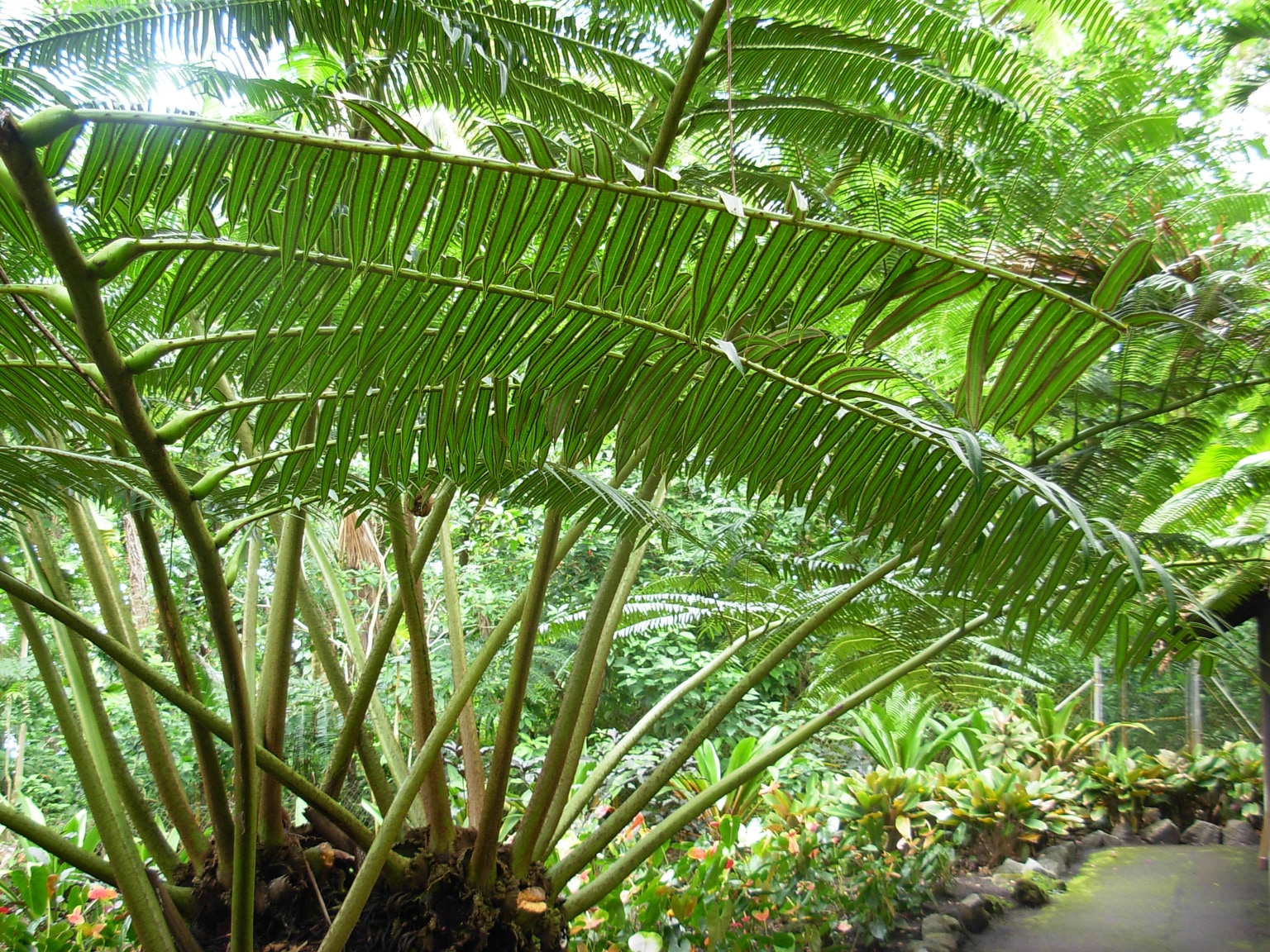
King Fern, Giant Fern, Elephant Fern, Oriental Vessel Fern, Madagascar Tree Fern, Mule's Foot Fern
Rainforest, Understory, Creek Banks, Sheltered Gullies
Southeast Asia, Oceania, Sri Lanka, Bangladesh, Melanesia, Micronesia, Polynesia, Japan, Australia, Madagascar, Tropical Americas
- Requires a very warm, wet climate.
- Prefers rich soils, often of volcanic origin.
- Grows best in rainforest conditions, particularly along creek banks in sheltered gullies.
- Avoid exposed situations for optimal growth.
Food, Perfume, Flavoring, Intoxicating Drink
About Angiopteris evecta
Angiopteris evecta: The Giant King Fern
Angiopteris evecta, widely known by common names such as the king fern, giant fern, or elephant fern, is a remarkably large and ancient species of rainforest fern belonging to the family Marattiaceae. Its natural range spans across much of Southeast Asia and Oceania, with a history stretching back approximately 300 million years, placing it among some of the earliest fern lineages.
Description and Characteristics
This evergreen perennial fern is distinguished by its immense size and unique frond structure. Angiopteris evecta possesses a massive, trunk-like rhizome that can reach up to 1 meter in diameter and may grow vertically as high as 1.2 meters. The most striking feature is its fronds, which are bipinnate and can extend up to an astonishing 9 meters in length and 2.5 meters in width. Unlike many other large ferns, these enormous fronds lack woody strengthening tissues and are held erect solely by the hydraulic pressure of their sap. The fronds emerge from the tip of the rhizome, with a substantial portion being the fleshy petiole. At the base of the petiole, where it joins the rhizome, are distinctive flat, rounded, ear-shaped structures known as "auricles."
Distribution and Habitat
The natural distribution of Angiopteris evecta covers a broad area from Sri Lanka and Bangladesh westward, through Southeast Asia, and eastward across Oceania to Japan in the north and northern/eastern Australia in the south. It has also been introduced and become naturalized in various other tropical regions, including Madagascar and parts of the Americas. This fern thrives in warm, wet rainforest environments, typically found in the understory, particularly along creek banks in deep, sheltered gullies. It prefers very rich soils, often of volcanic origin, and requires good drainage alongside a plentiful supply of fresh water, growing from sea level up to elevations of 1,500 meters.
Source: Wikipedia ↗
Frequently Asked Questions
What makes Angiopteris evecta's fronds so distinctive?
Angiopteris evecta is renowned for having the longest fronds of any fern species, capable of reaching up to 9 meters in length. These enormous fronds are bipinnate and uniquely rely on the hydraulic pressure of their sap for support, rather than any woody strengthening tissues.
Where is Angiopteris evecta found naturally?
This large fern is native to most parts of Southeast Asia and Oceania, extending from Sri Lanka and Bangladesh in the west to Melanesia, Micronesia, and Polynesia in the east, and from Japan in the north to northern and eastern Australia in the south. It has also been introduced and become naturalized in other tropical regions.
What kind of habitat does Angiopteris evecta prefer?
Angiopteris evecta thrives in rainforest environments with very rich soils, often of volcanic origin, and requires a warm, wet climate. It is typically found as an understory plant along creek banks in deep, sheltered gullies with good drainage and a consistent supply of fresh water.
Are the rhizomes of Angiopteris evecta edible or useful?
Yes, the starchy rhizomes of Angiopteris evecta are utilized in various ways. After extensive processing to remove toxins, they can be eaten, used to perfume coconut oil, flavor rice, or even be made into an intoxicating drink. Indigenous Australians have also historically consumed the pith.
What is the conservation status of Angiopteris evecta?
The conservation status of Angiopteris evecta varies significantly by location. For instance, it is listed as endangered in New South Wales, Australia, and vulnerable in the Northern Territory, while being considered of least concern in Queensland due to abundant suitable habitat. The species has not yet been assessed by the IUCN.
Can Angiopteris evecta be invasive?
Yes, Angiopteris evecta has the potential to be invasive. When introduced to areas with suitable climates, it can form dense stands that outcompete native species. It has been documented as invasive in places like Costa Rica, Cuba, Jamaica, and Hawaii, often after escaping from botanic garden plantings.