
Amietophrynus togoensis
Sclerophrys togoensis, commonly known as the Tingi Hills toad or Togo toad, is a species of toad found in West Africa from Sierra Leone to Togo. This moderate-sized toad is distinguished by its clay-colored back, darker sides with light transverse areas, and specific markings on its face and limbs. It inhabits subtropical or tropical moist lowland forests and high forests at moderate elevations and is currently threatened by habitat loss.
Key Facts
- ›Found in West Africa, ranging from Sierra Leone to Togo.
- ›Adult males measure approximately 60 MM (2.4 in) from snout to vent.
- ›Characterized by a distinct tympanum, tarsal ridge, and low, rounded warts.
- ›Coloration includes a clay-colored back, darker sides, and specific dark bars on the face and limbs.
- ›Inhabits subtropical or tropical moist lowland forests and high forests.
- ›Threatened by habitat loss.

Tingi Hills Toad, Togo Toad
Subtropical Or Tropical Moist Lowland Forests, High Forest
- Distinct Tympanum
- Tarsal Ridge
- Low, Rounded Warts On Back and Sides
- Elongate Parotoids Reaching the Eye With A Distinct Dorsolateral Edge
- First Finger Longer Than the Second
- Clay-Colored Back With Darker Sides and Specific Transverse Light Areas
- Distinctive Dark Barring On Face and Limbs
- Yellow To Crimson Ventral Coloration
About Amietophrynus togoensis
What is Sclerophrys togoensis?
Sclerophrys togoensis, commonly known as the Tingi Hills toad or Togo toad, is a species of toad belonging to the Bufonidae family. This amphibian is found in West Africa, with its range extending from Sierra Leone eastward to Togo. The species is characterized by its moderate size, with adult males typically measuring around 60 mm from snout to vent.
Description and Characteristics
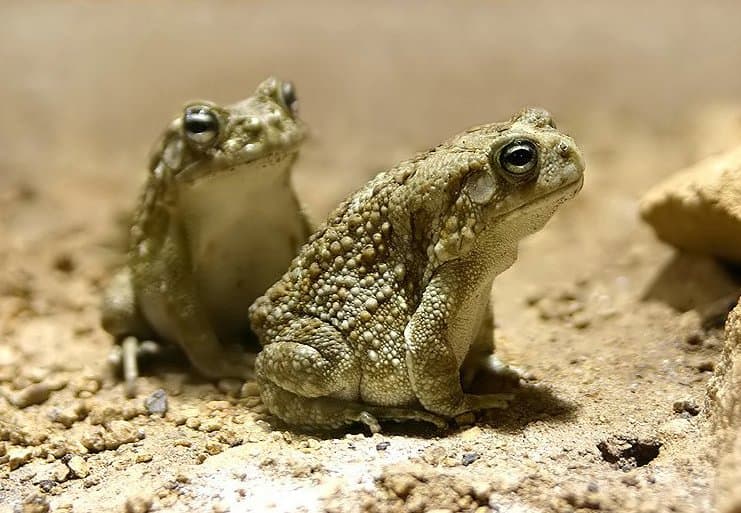
The Togo toad possesses several distinct physical features. These include a clear tympanum, a tarsal ridge, and low, rounded warts scattered across its back and sides. Its parotoid glands are notably elongate, reaching the eye and featuring a discernible dorsolateral edge. A unique characteristic is that the first finger is longer than the second. In life, the toad displays a clay-colored back that darkens on the sides, often accented by two indefinite transverse light areas—one between the eyes and another at the sacral region. Dark markings are present on the face, including a bar below the eye and another covering the tympanum, as well as an interrupted bar between the eyes and obscure markings on the back. The limbs are adorned with dark cross-bars dorsally, and the rear of the thigh bears five to seven narrow vertical dark bars. The throat shows a light dusting of melanophores, and the vocal sac is black and visible through the gular skin. The ventral surface is typically yellow, deepening to orange laterally and to crimson on the thighs. When preserved, these ventral surfaces turn cream-colored and lose their markings.
Habitat and Distribution
Sclerophrys togoensis inhabits subtropical or tropical moist lowland forests and high forests found at moderate elevations. Its natural range is confined to West Africa, specifically from Sierra Leone to Togo.
Conservation Status
The Tingi Hills toad is currently classified as threatened. The primary factor contributing to its vulnerability is habitat loss, which poses a significant risk to its continued survival in its natural environments.
Source: Wikipedia ↗
Frequently Asked Questions
What is the scientific name for the Tingi Hills toad?
The scientific name for the Tingi Hills toad is Sclerophrys togoensis. It is also sometimes referred to by its older scientific name, Amietophrynus togoensis, reflecting its taxonomic classification.
Where is the Togo toad found?
The Togo toad is found in West Africa, with its distribution extending from Sierra Leone eastward to Togo. It primarily inhabits specific types of forest environments within this region.
What are the distinctive physical features of Sclerophrys togoensis?
Sclerophrys togoensis has a distinct tympanum, a tarsal ridge, and low, rounded warts on its back and sides. Its parotoids are elongate and reach the eye, with a clear dorsolateral edge. The first finger is also notably longer than the second.
What colors are characteristic of the Togo toad?
In life, the Togo toad is clay-colored dorsally, becoming darker on the sides with indefinite transverse light areas. It features dark bars on its cheeks and below the eye, as well as interrupted dark markings on its back and limbs. The ventral surface is yellow, deepening to orange laterally and crimson on the thighs.
What kind of habitat does the Tingi Hills toad prefer?
The Tingi Hills toad prefers subtropical or tropical moist lowland forests. It can also be found in high forest environments at moderate elevations within its West African range.
What is the conservation status of Sclerophrys togoensis?
The species Sclerophrys togoensis is classified as threatened. The primary threat to its survival is habitat loss, which impacts its natural forest environments.
Related Frogs

Afrixalus fulvovittatus
The Banded Banana Frog (Afrixalus fulvovittatus) is a species of frog native to West Africa, specifically found in Ivory Coast, Ghana, Guinea, Liberia, and Sierra Leone. Its natural habitats include moist savannas and various wetland environments, often in areas that have been degraded from their original forest state. This species is currently threatened by habitat loss.

Aglyptodactylus laticeps
Aglyptodactylus laticeps is a frog species belonging to the Mantellidae family, native to Madagascar. Its natural environment consists of dry forests and temporary freshwater marshes. The primary threat to this species is habitat loss.
Amietophrynus
Sclerophrys is a genus of "true toads" found in Africa and the southern Arabian Peninsula. These toads were originally classified under the genus Bufo, but were later separated into Amietophrynus due to significant taxonomic differences. The genus name Amietophrynus is now considered a junior synonym of Sclerophrys.