
Anilany helenae
Anilany
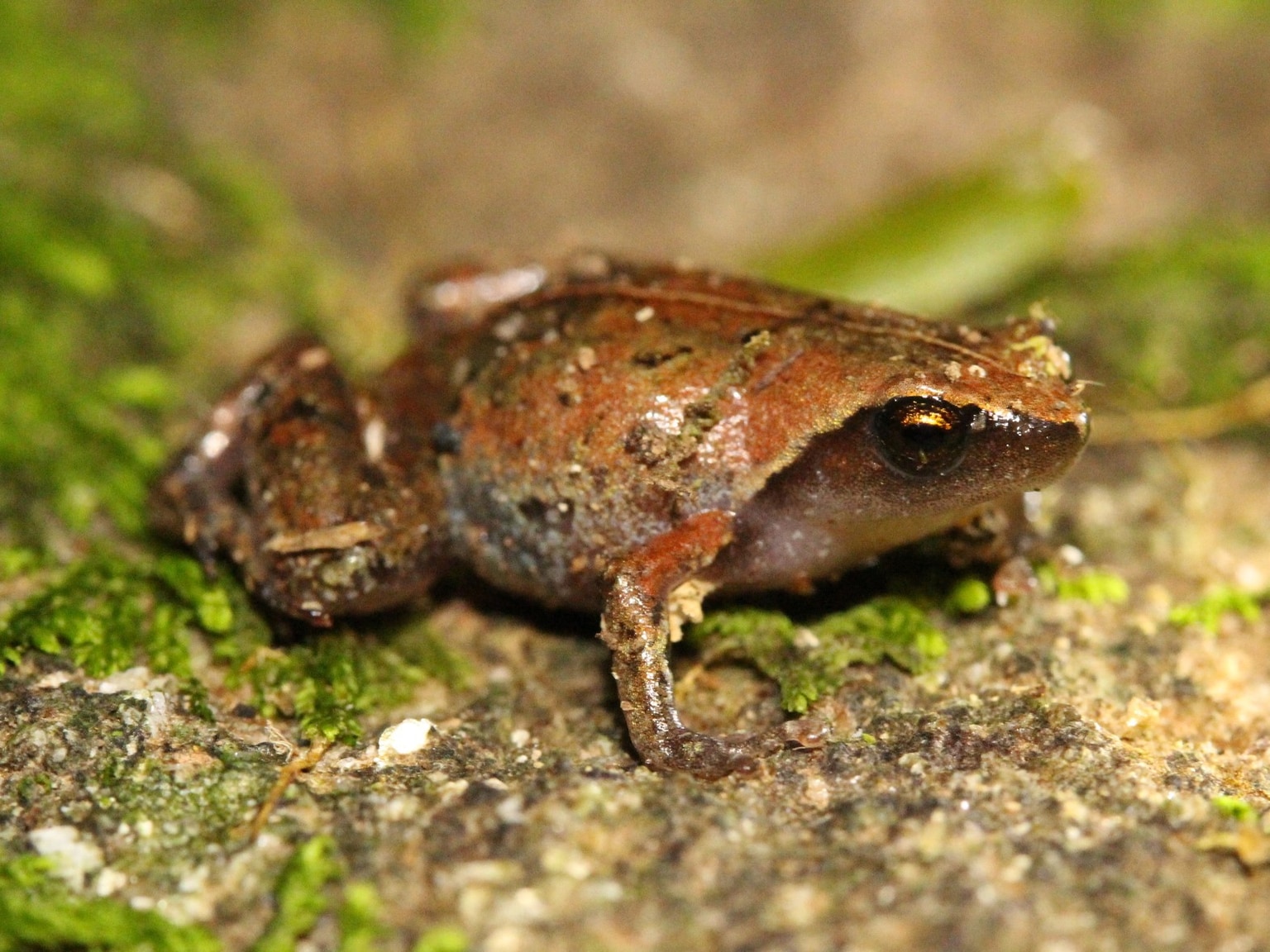
Anilany helenae is a microhylid frog species recognized as the sole member of the genus Anilany. It is exclusively found in the montane forests of central Madagascar, where it faces threats from habitat loss. This species is distinguished by unique morphological features, particularly in the shape of its vomer, clavicles, and terminal phalanges.
Key Facts
- ›Endemic to central Madagascar.
- ›Found in subtropical or tropical moist montane forests.
- ›Threatened by habitat loss.
- ›It is the only species in the monotypic genus Anilany.
- ›Differs morphologically from related genera in bone structure.
Montane Forests, Tropical Moist Forests, Subtropical Forests
Madagascar
- Unique Morphology of the Vomer
- Distinct Shape of Clavicles
- Specific Structure of Terminal Phalanges of Fingers and Toes
About Anilany helenae
Anilany helenae is a species of frog belonging to the microhylid subfamily Cophylinae. It holds the distinction of being the only species within its monotypic genus, Anilany, and is found exclusively in central Madagascar. This unique taxonomic position underscores its specific evolutionary path.
Habitat and Ecology
The natural environment for Anilany helenae consists of subtropical or tropical moist montane forests. These habitats are crucial for its survival, providing the necessary conditions for its life cycle. Unfortunately, the species is currently facing significant threats, primarily due to habitat loss. As a result, Anilany helenae is now primarily found in a few scattered and fragmented areas of its former habitat, notably near Ambohitantely in Madagascar.
Taxonomy and Morphology
Originally described in 2000 as a member of the genus Stumpffia, Anilany helenae has undergone taxonomic revisions. It was later transferred to the genus Rhombophryne before being moved to its current genus, Anilany, by Scherz and colleagues. This reclassification was based on its genetic relationships and significant morphological differences. These distinctive features include the shape of the vomer, clavicles, and the terminal phalanges of its fingers and toes, which set it apart from other related frogs.
Source: Wikipedia ↗
Frequently Asked Questions
What is Anilany helenae?
Anilany helenae is a species of frog belonging to the microhylid subfamily Cophylinae. It is the only species within its genus, Anilany, and is native to central Madagascar.
Where does Anilany helenae live?
This frog species is endemic to central Madagascar. Its natural habitat consists of subtropical or tropical moist montane forests.
What are the threats to Anilany helenae?
The primary threat to Anilany helenae is habitat loss. It is now found in fragmented areas of its former habitat near Ambohitantely, Madagascar.
What makes Anilany helenae morphologically distinct?
Anilany helenae differs significantly in its morphology from related genera, particularly in the shape of the vomer, clavicles, and the terminal phalanges of its fingers and toes.