
Annandale's bush frog
Raorchestes·Least Concern
Annandale's bush frog, also known as the coppersmith frog, is a species found in the eastern Himalayas of India, Nepal, and Bhutan. It inhabits moist montane forests and high-altitude shrublands, often near human settlements. This frog is distinctive for its direct development, bypassing a free-swimming tadpole stage.
Key Facts
- ›Found in the eastern Himalayas, including India, Nepal, and Bhutan.
- ›Inhabits subtropical/tropical moist montane forests and high-altitude shrublands.
- ›Breeds through direct development, without a free-swimming tadpole stage.
- ›Classified as 'Least Concern' by the IUCN due to its large range and presumed population.
- ›Can be found in grasses near human habitation.
- ›Relies on saltation (hopping) for locomotion.
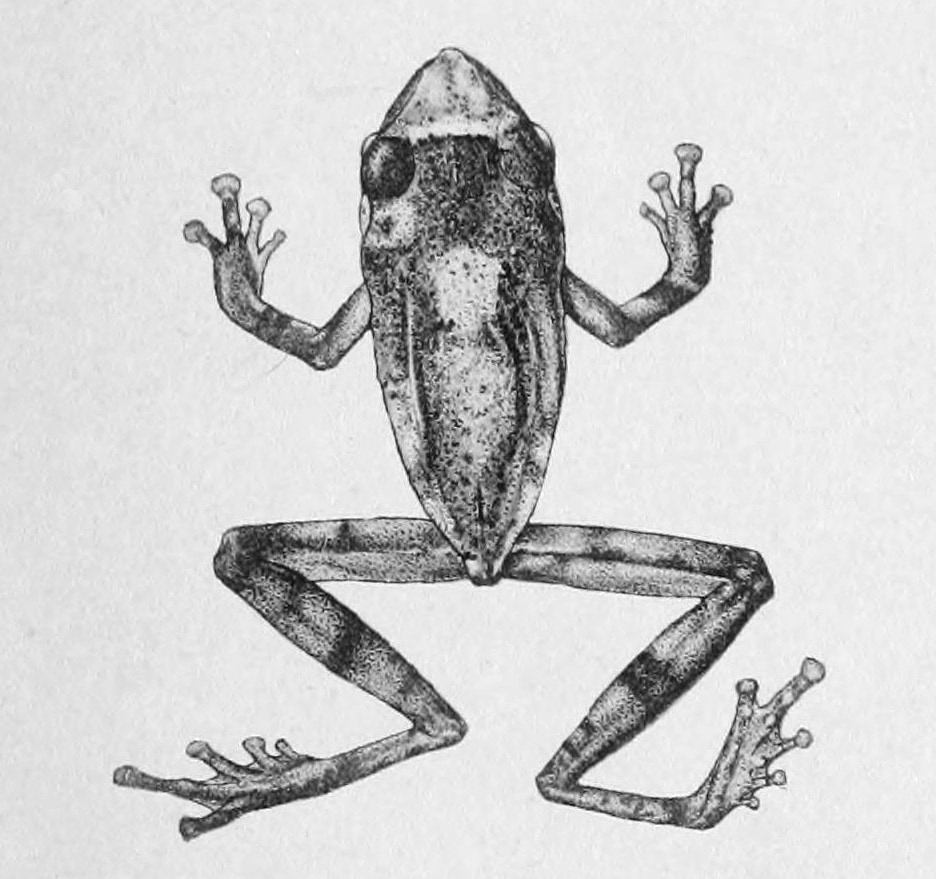
Annandale's Bush Frog, Coppersmith Frog, Himalaya Bubble-Nest Frog, Himalaya Foam Nest Frog
Montane Forests, Shrubland
India, Nepal, Bhutan
Direct Development, Uses Saltation For Movement
About Annandale's bush frog
Annandale's bush frog, scientifically known as Raorchestes annandalii, is a species of frog native to the eastern Himalayas. It is also recognized by common names such as the coppersmith frog, Himalaya bubble-nest frog, and Himalaya foam nest frog. This amphibian is found across India, Nepal, and Bhutan, inhabiting environments characterized by moist montane forests and high-altitude shrublands.
Habitat and Distribution
The preferred habitat for Annandale's bush frog includes subtropical and tropical moist montane forests, as well as high-altitude shrublands. These frogs have been recorded at elevations up to 2,700 meters above sea level. Interestingly, they have also been observed in grasses in close proximity to human settlements, suggesting a degree of adaptability to human-influenced landscapes.
Biology and Reproduction
A distinctive biological trait of Annandale's bush frog is its reproductive strategy, which involves direct development. This means that the species bypasses the free-swimming tadpole stage, with young frogs developing directly from eggs into froglets. For locomotion, the frog relies on saltation, a method of movement involving hopping.
Conservation Status
Annandale's bush frog is currently classified as 'Least Concern' by the International Union for Conservation of Nature (IUCN). This assessment is based on its extensive geographical range and a presumed large population size. Despite this overall status, there are reports of localized population declines. Potential threats to the species include pollution, particularly from tea plantations, which may negatively affect local populations. The frog's range does encompass protected areas, such as Namdapha Wildlife Sanctuary and Dibang Wildlife Reserve, offering some level of habitat security.
Source: Wikipedia ↗
Frequently Asked Questions
What are the common names for Raorchestes annandalii?
Raorchestes annandalii is commonly known as Annandale's bush frog. Other names include the coppersmith frog, Himalaya bubble-nest frog, and Himalaya foam nest frog.
Where is Annandale's bush frog found?
This species is native to the eastern Himalayas, with confirmed sightings in India, Nepal, and Bhutan. Its range extends to areas as high as 2700 meters above sea level.
What type of habitat does Annandale's bush frog prefer?
Annandale's bush frog thrives in subtropical or tropical moist montane forests and subtropical or tropical high-altitude shrubland. It has also been observed in grasses close to human settlements.
How does Annandale's bush frog reproduce?
The breeding behavior of this frog involves direct development. This means there is no free-swimming tadpole stage; the young frogs develop directly from eggs.
What is the conservation status of Annandale's bush frog?
Annandale's bush frog is classified as 'Least Concern' by the IUCN. This status is attributed to its extensive geographical range and presumed large population, though some localized declines have been noted.
Are there any threats to Annandale's bush frog populations?
While considered Least Concern, pollution from tea plantations is a potential threat that may negatively impact local populations. The frog's range does include protected areas like Namdapha Wildlife Sanctuary and Dibang Wildlife Reserve.
Related Frogs

Adelphobates castaneoticus
The Brazil-nut poison frog (Adelphobates castaneoticus) is a small, vibrantly colored frog endemic to the state of Pará in Brazil. It is distinguished by its unique breeding behavior, where males transport tadpoles to water-filled Brazil nut husks, creating a complex micro-ecosystem for development. This species is diurnal and inhabits the rainforest floor.

Adelphobates galactonotus
Adelphobates galactonotus, also known as the splash-backed poison frog, is a species of poison dart frog native to the rainforests of the southern Amazon Basin in Brazil. It is distinguished by its highly variable coloration, ranging from black and yellow to red and blue, and its unique behavior of carrying tadpoles to water sources after hatching.

Adelphobates quinquevittatus
Adelphobates quinquevittatus, also known as the Rio Madeira poison frog, is a species found in the southern Amazon Basin of Brazil and Bolivia. It inhabits the leaf litter of tropical rainforests and is known for its unique reproductive behavior of carrying tadpoles to water.