
Ansonia
Ansonia is a city located in the Naugatuck Valley Planning Region of Connecticut, United States. It is situated on the Naugatuck River, north of Derby and northwest of New Haven. The city's ZIP code is 06401 and it is a stop on the Metro-North Railroad's Waterbury Branch and is served by Connecticut Transit buses. Connecticut Route 8 also provides major road access.·Ansonia is situated in a river valley, bisected by the Naugatuck River. The land spreads from the riverbanks up the hills, with some areas quite steep. The land along the river is largely occupied by industrial sites, both active and defunct. Residential housing, primarily one- or two-family homes, covers most of the remaining land, with larger homes in the Hilltop neighborhood. The Ansonia Nature Center preserves open fields and woodlands.
Ansonia is a city in Connecticut's Naugatuck Valley Planning Region, situated on the Naugatuck River. Founded in 1844 by Anson Green Phelps, it became known as "The Copper City" for its extensive history of heavy manufacturing, including copper, brass, and iron production. The city is notable as the birthplace of Revolutionary War figure David Humphreys and the site where the first pedaled bicycle patent was filed.
Key Facts
- ›Founded in 1844 by Anson Green Phelps.
- ›Known as "the Copper City" due to its manufacturing history.
- ›Historical center for copper, brass, rubber, plastics, and iron production.
- ›Site where the patent for the first pedaled bicycle was filed in 1866.
- ›Suffered significant damage from the 1955 Naugatuck River flood.
- ›Served by Metro-North Railroad and Connecticut Route 8.
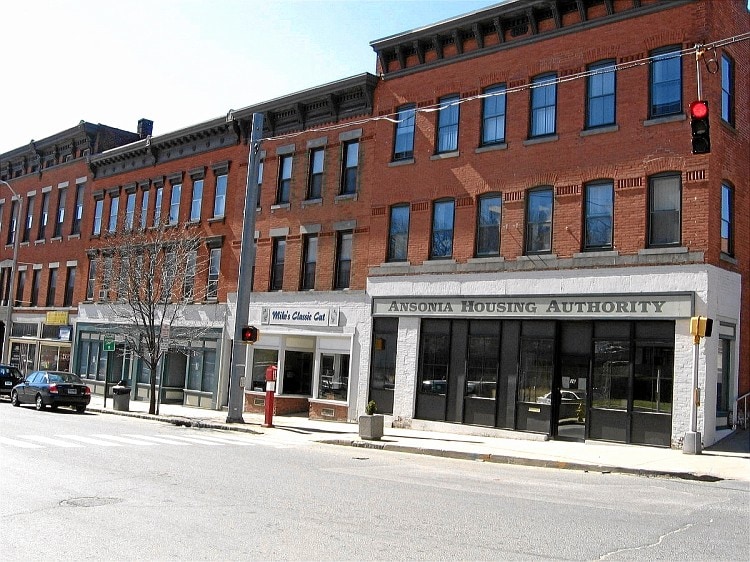
the Copper City
River Valley, Industrial Areas, Residential Areas, Woodlands
Connecticut
Located On the Naugatuck River, Historical Manufacturing Hub, Site of Early Industrial Development
About Ansonia
Ansonia: The Copper City
Ansonia is a city located in the Naugatuck Valley Planning Region of Connecticut, United States. Situated on the Naugatuck River, it lies immediately north of Derby and approximately 12 miles northwest of New Haven. The city's identity is deeply intertwined with its industrial past, earning it the nickname "The Copper City" due to its significant history in heavy manufacturing.
History and Industrial Heritage
The area that is now Ansonia was first settled by English colonists in 1652 as part of the township of Derby. In 1844, merchant and philanthropist Anson Green Phelps founded the industrial village, naming it Ansonia after his first name. Phelps envisioned a hub for industrial development, and a canal was dug to harness river power for factories. Ansonia's manufacturing prowess grew rapidly, encompassing the production of copper, brass, rubber, plastics, iron castings, sheet metal, electric supplies, and textiles. The renowned Ansonia Clock Company was established here in 1851.
Ansonia was chartered as a borough of Derby in 1864 and officially separated to become a town in 1889, later incorporating as a city in 1893. By the end of the 19th century, it was a key part of one of Connecticut's most important industrial communities.
Notable Inventions and Events
Ansonia holds a unique place in technological history as the location where inventor Pierre Lallement filed the patent for the first pedaled bicycle in 1866. The city also experienced significant hardship during the Flood of 1955, when the Naugatuck River overflowed due to Hurricane Diane, causing extensive damage.
Geography and Modern Development
The city spans 6.2 square miles, with much of the land along the Naugatuck River historically dedicated to factory sites. Residential housing now occupies most of the land, with distinct neighborhoods like Downtown, Library District, North End, and Hilltop. While much of the heavy industry has relocated since the late 20th century, Ansonia has seen revitalization in its downtown area with new retail businesses, and its housing market improved in the early 2000s.
Transportation and Landmarks
Ansonia is a transportation hub, served by the Metro-North Railroad's Waterbury Branch, connecting residents to Grand Central Terminal in New York City, and by Connecticut Transit buses. Key landmarks include the Ansonia Library, the Anna Sewell Memorial Fountain, the Ansonia Opera House (built in 1870), and numerous historic churches. The city is also the birthplace of David Humphreys, a diplomat and colonel in the American Revolutionary War.
Source: Wikipedia ↗
Frequently Asked Questions
When was Ansonia founded and by whom?
Ansonia was founded in 1844 by merchant and philanthropist Anson Green Phelps. Phelps acquired land along the east side of the Naugatuck River to enable industrial development and named the new village "Ansonia" after himself.
What industries were historically important in Ansonia?
Ansonia was historically recognized for its heavy machine manufacturing industry. Key productions included copper, brass, rubber, plastics processing, iron castings, sheet metal, electric supplies, textiles, and foundry products. The Ansonia Clock Company was also founded there.
What was the impact of the 1955 flood on Ansonia?
The Naugatuck River flooded significantly on August 19, 1955, due to heavy rain from Hurricane Diane. This flood destroyed many houses and businesses, swept away a bridge, and necessitated the construction of a flood wall along the river's east bank.
What is Ansonia's connection to the invention of the bicycle?
In 1866, inventor Pierre Lallement, while living in Ansonia, submitted a patent application for the first pedaled bicycle. This marked a significant development in personal transportation.
What is Ansonia's current economic situation?
Since the late 20th century, much of Ansonia's heavy industry has moved overseas. However, economic growth in southwestern Connecticut and corporate relocations have led to improvements in its housing market in the early 2000s.