
Condylura
Condylura is a genus of moles containing the single living species, the star-nosed mole, which is native to North America. While currently found only in the New World, fossil evidence indicates this genus was once more widely distributed across Europe and Asia. Condylura is typically classified within the subfamily Scalopinae, although some research suggests a more ancient lineage within the mole family, Talpidae.
Key Facts
- ›The genus Condylura contains only one extant species: the star-nosed mole (Condylura cristata).
- ›The star-nosed mole is endemic to the northern parts of North America.
- ›Fossil evidence indicates the genus Condylura was once much more widespread, with species found in Pliocene Europe and MID-Miocene Asia.
- ›Condylura is the sole living member of the tribe Condylurini.
- ›Most authorities classify Condylura with other New World moles in the subfamily Scalopinae.
- ›More recent studies suggest Condylura holds a more basal position within the mole family (Talpidae).
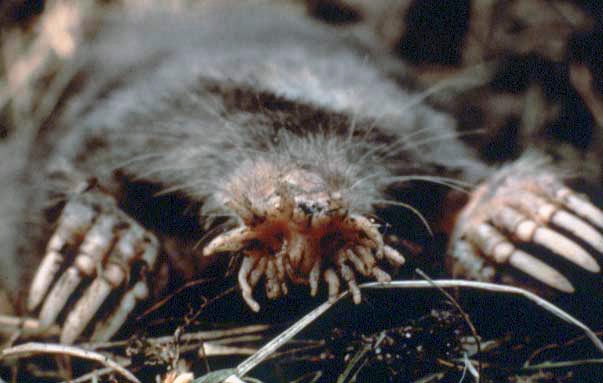
Star-Nosed Mole
North America
Possesses A Distinctive Star-Shaped Nose .
- the Genus Contains the Star-Nosed Mole, Which Is Known For Its Distinctive Sensory Organ On Its Nose.
About Condylura
The genus Condylura represents a unique lineage within the mole family, notable for containing a single extant species, the star-nosed mole (Condylura cristata). This species is endemic to the northern regions of North America and is the sole living member of the tribe Condylurini. While its current distribution is confined to the New World, fossil discoveries reveal a much broader historical presence for the genus.
Fossil Distribution
Fossil evidence has unearthed species of Condylura from the Pliocene epoch in Poland (as C. kowalskii and C. izabellae) and an unnamed species from the Mid-Miocene of Kazakhstan. These findings indicate that Condylura was once a much more widespread genus, with its ancient range extending across parts of Europe and Asia.
Taxonomic Placement
Most scientific authorities classify Condylura alongside other New World moles within the subfamily Scalopinae. However, more recent phylogenetic studies suggest that Condylura occupies a more basal position within the larger family Talpidae. These studies propose it as sister to a clade that includes the fossil genus Geotrypus, all living members of the subfamily Talpinae, and all members of the tribe Scalopini. The extinct genus Eotalpa has also been considered a potential sister genus to Condylura.
Source: Wikipedia ↗
Frequently Asked Questions
Where is the star-nosed mole found today?
The star-nosed mole (Condylura cristata), the only living species in the genus Condylura, is currently endemic to the northern parts of North America.
Was the genus Condylura always restricted to North America?
No, fossil evidence indicates that the genus Condylura was once much more widespread. Species have been identified from the Pliocene of Poland and the Mid-Miocene of Kazakhstan, suggesting a broader ancient distribution.
What is the taxonomic classification of Condylura?
Most authorities classify Condylura with other New World moles in the subfamily Scalopinae. However, some more recent studies propose that it occupies a more basal position within the family Talpidae.
Is the star-nosed mole the only species in its tribe?
Yes, the star-nosed mole (Condylura cristata) is the only living member of the tribe Condylurini. This highlights its unique evolutionary placement within the mole family.
