
Aeluroscalabotes felinus
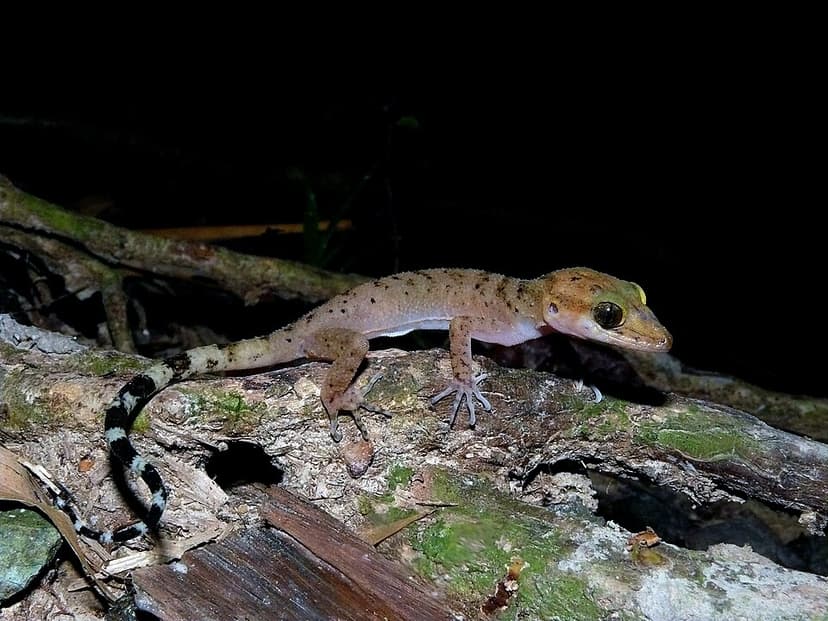
The cat gecko (Aeluroscalabotes felinus) is a species of gecko native to Southeast Asia, known for its habit of curling its tail around itself when sleeping, resembling a cat. It is a lightly built, nocturnal, and insectivorous lizard found in cool, humid montane rainforests. This species is considered relatively primitive in its physical structure.
Key Facts
- ›Native to Indonesia, Malaysia, Singapore, Cambodia, and Thailand.
- ›Known for curling its tail around its body when sleeping, hence the name 'cat gecko'.
- ›Primarily nocturnal and insectivorous, feeding on small insects and arthropods.
- ›Prefers cool, humid, montane rainforest habitats.
- ›Can grow up to approximately 18 cm in length, with females being larger than males.
- ›Considered one of the more primitive gecko species.

Cat Gecko
Indonesia, Malaysia, Singapore, Cambodia, Thailand
Montane Rainforest, Cool, Humid
- Lightly Built Gecko
- Typically Red-Brown In Color
- White Spots On Body
- Solid White Under Chin, Sometimes To Belly
- Some Specimens Have Brown Blotching Along the Back
- Physically Similar To Early Gecko Fossils
- Average Adult Size Up To 18 cm
- Males Are Smaller Than Females
Small Insects, Other Arthropods
Semi-Arboreal, Primarily Nocturnal, Curling Tail Around Body When Sleeping
About Aeluroscalabotes felinus
The Cat Gecko (Aeluroscalabotes felinus)
The cat gecko, scientifically known as Aeluroscalabotes felinus, is a distinctive species of gecko found across several Southeast Asian countries, including Indonesia, Malaysia, Singapore, Cambodia, and Thailand. This lizard earns its common name from a unique behavioral trait: when it sleeps, it curls its tail neatly around its body, much like a domestic cat. This behavior, combined with its physical appearance, makes it easily recognizable.
Description and Habitat
Physically, the cat gecko is a lightly built reptile, typically displaying a red-brown coloration adorned with white spots across its body. The underside of its chin is usually a solid white, a pattern that can sometimes extend to its belly. Some individuals may also exhibit brown blotches along their backs. Considered one of the more primitive geckos, its body structure bears a notable resemblance to discovered fossils of early gecko species. They generally grow to about 18 centimeters (7 inches) in length, with females typically being larger than males.
The cat gecko prefers cool, humid environments, specifically inhabiting montane rainforests. It is semi-arboreal, meaning it spends time both in trees and on the ground within its preferred habitat.
Behavior and Diet
As a primarily nocturnal species, the cat gecko is most active during the night. Its diet consists mainly of small insects and other arthropods, making it an insectivore. It actively hunts these small invertebrates within its rainforest home.
Taxonomy and Subspecies
While the species has undergone various taxonomic descriptions leading to some initial classification confusion, its distinct morphological characteristics have solidified its standing. There are two recognized subspecies: Aeluroscalabotes felinus felinus and Aeluroscalabotes felinus multituberculatus.
In Captivity and Conservation
The cat gecko is occasionally kept as a pet, though it is not commonly available. Captive breeding is known to be difficult, and wild-caught specimens often carry heavy parasite loads and are susceptible to stress, making their care challenging. Exact population counts are not known, and it is not considered common throughout its range. While it doesn't hold a specific conservation status globally, its collection and export are prohibited in Thailand, highlighting regional conservation efforts.
Source: Wikipedia ↗
Frequently Asked Questions
What is the cat gecko?
The cat gecko, scientifically known as Aeluroscalabotes felinus, is a species of gecko found in parts of Southeast Asia. It is recognized for its unique sleeping posture, where it curls its tail around itself, similar to a cat.
Where can the cat gecko be found?
This species is naturally found in Indonesia, Malaysia, Singapore, Cambodia, and Thailand. It typically inhabits cool, humid, montane rainforest environments.
What does the cat gecko eat?
The cat gecko is primarily insectivorous, meaning its diet consists of insects and other small arthropods. It is an active hunter of these small invertebrates.
What are the physical characteristics of a cat gecko?
Cat geckos are lightly built lizards, usually red-brown with white spots on their body and a solid white underside of the chin, sometimes extending to the belly. They can reach lengths of about 18 cm, with females generally being larger than males.
Is the cat gecko a common pet?
The cat gecko is occasionally kept as a pet, but they are not widely available. Captive breeding is known to be challenging, and wild-caught specimens can be susceptible to stress and parasites.
What is the conservation status of the cat gecko?
Exact population numbers for the cat gecko are not precisely known, but it is not considered common throughout its range. It does not have an overall conservation status, except in Thailand where its collection and export are restricted.
Related Lizards
Andaman bent-toed gecko
The Andaman bent-toed gecko, also known as the red bow-fingered gecko, is a small to medium-sized gecko found in the Andaman Islands of India and the Coco Islands of Myanmar. It inhabits lowland and deciduous forests, often found near human dwellings, and is known for its reddish-brown to dark grey coloration marked with black bands or blotches, and a black and white banded tail. This species is oviparous, typically laying two eggs, and exhibits both terrestrial and arboreal behaviors.

Andaman giant gecko
The Andaman giant gecko (Gekko verreauxi), also known as the Andamanese giant gecko, is a large gecko species indigenous to the Andaman Islands of India. Reaching over 30 cm in total length, it is one of the world's largest geckos, characterized by its shy nature and excellent camouflage, which aids its survival in its arboreal and semi-arboreal habitats.

Calumma nasutum
The Calumma nasutum, commonly known as the Madagascar pimple-nose chameleon or big-nosed chameleon, is a small arboreal lizard native to Madagascar. It is distinguished by a prominent, paddle-like appendage on its nose, which is thought to aid in mate identification, particularly in males who also possess a more noticeable casque. This species inhabits dense rainforests and is primarily nocturnal, feeding on small invertebrates.