
Aprasia inaurita
Least Concern (IUCN), Endangered (New South Wales)·Oviparous (egg-laying)
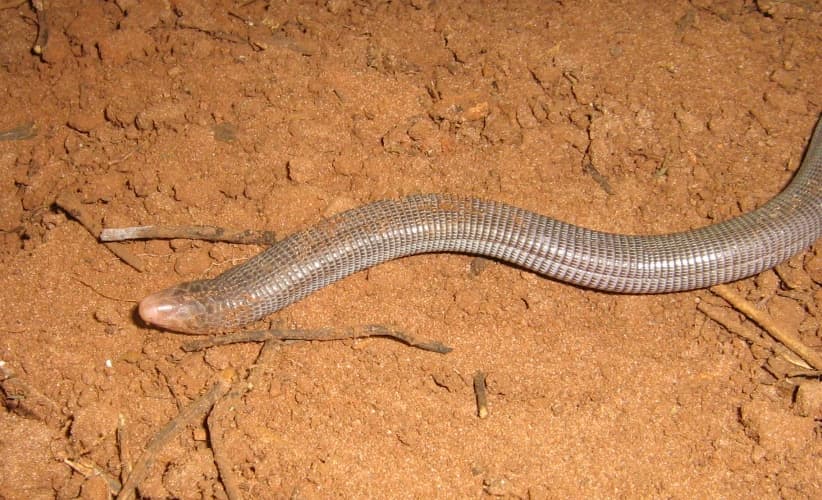
The Mallee worm-lizard (Aprasia inaurita) is a slender, legless lizard endemic to southern mainland Australia. It is characterized by its pale olive-brown or greyish-brown upper body, whitish underside, and a distinctively bright reddish-orange tail. This species inhabits semi-arid Mallee woodlands and is fossorial, often found under leaf litter, in sand, or within ant tunnels.
Key Facts
- ›Endemic to southern mainland Australia, with a fragmented distribution.
- ›Possesses a pale olive-brown to greyish-brown upper body and a bright reddish-orange tail.
- ›Lacks external ear openings and has very small black eyes.
- ›Feeds primarily on ant eggs and larvae, acting as an opportunistic 'binge feeder'.
- ›Reproduces by laying eggs (oviparous) with an incubation period of 66-77 days.
- ›Threatened by habitat destruction, land clearing, and introduced pest species.

Mallee Worm-Lizard, Pink-Nosed Worm-Lizard, Red-Tailed Worm-Lizard
Australia
Semi-Arid Woodlands, Mallee Region, Sandy Soils, Fossorial
- Slender, Legless Lizard With A Snake-Like Appearance.
- Pale Olive Brown Or Greyish-Brown Coloration From Above.
- Whitish Underside.
- Reddish-Brown Hue Around the Head and Neck.
- Distinctly Bright Reddish-Orange Tail.
- Lacks External Ear Openings.
- Very Small Black Eyes.
- Small, Scaley Hind-Limb Flaps Located Near the Cloacal Vent.
- Males Possess 'Spurs' On Hindlimb Flaps and Toothed Premaxilla, Absent In Females and Juveniles.
- Snout-Vent Length Averages 135mm, With Females Generally Larger Than Males.
- Average Female Body Size Around 115.6mm, Average Male Body Length Around 101.6mm.
Aphaenogaster Sp. Eggs and Larvae
- Fossorial, Burrowing In Sand, Under Stumps, Or In Leaf Litter.
- Inhabits Ant Tunnels.
- Uses Lateral Undulations For Locomotion.
- Opportunistic 'Binge Feeders', Feeding Infrequently But In Excess When Prey Is Found.
- May Use Its Brightly Colored Tail As A Decoy For Predators, Raising and Waving It When Prodded.
Myrmecophagous, Insectivore
Diurnal Raptors, Elapid Snakes, Goannas, Feral Cats, Foxes
Habitat Destruction, Agriculture and Land Management Practices, Introduced Pest Species, Altered Fire Regimes
About Aprasia inaurita
The Mallee Worm-Lizard (Aprasia inaurita)
The Mallee worm-lizard, scientifically known as Aprasia inaurita and also referred to as the pink-nosed or red-tailed worm-lizard, is a slender, legless lizard species endemic to Australia. Its distinctive appearance includes a pale olive-brown to greyish-brown upper body, a whitish underside, and a striking, bright reddish-orange tail. This species lacks external ear openings and possesses very small black eyes, which helps distinguish it from closely related species.
Habitat and Ecology
This lizard primarily inhabits semi-arid regions characterized by red sandy soils and woodlands, particularly within the Mallee region and its surroundings. It is often found sheltering in sand, beneath mallee stumps, within leaf litter, or as a fossorial species, living within ant tunnels. The Mallee worm-lizard is thought to be dependent on spinifex grass and requires mature habitats with a well-developed surface debris layer. Its diet consists mainly of ant eggs and larvae, and it is known to be an opportunistic feeder, consuming large quantities when prey is encountered.
Reproduction and Lifespan
Aprasia inaurita is oviparous, laying eggs typically in October after mating in the Spring. The incubation period for its eggs ranges from 66 to 77 days, with a usual clutch size of two. Studies have noted sexual dimorphism, with males possessing 'spurs' on their hindlimb flaps and toothed premaxillae, believed to aid in combat or mating. While pyrgopodids have been recorded to live up to seven years in captivity, little is definitively known about the specific lifespan of the Mallee worm-lizard in the wild.
Distribution and Conservation
The Mallee worm-lizard has a fragmented distribution across southern mainland Australia, extending from southeastern Western Australia through southern South Australia, northwestern Victoria, and southwestern New South Wales. While globally listed as Least Concern by the IUCN, it is considered endangered within New South Wales. The primary threats to its survival include extensive habitat destruction due to land clearing for agriculture, the impacts of land management practices that remove crucial ground cover, and the presence of introduced pest species such as foxes, cats, and rabbits. Altered fire regimes also pose a risk by affecting its spinifex habitat.
Source: Wikipedia ↗
Frequently Asked Questions
What is the Mallee worm-lizard?
The Mallee worm-lizard (Aprasia inaurita) is a slender, legless lizard species found in Australia. It is characterized by its snake-like appearance, pale coloration, and a distinctive bright reddish-orange tail.
Where does the Mallee worm-lizard live?
This species is endemic to the southern mainland states of Australia, specifically found in semi-arid areas of red sandy soils and woodlands of the Mallee region. Its distribution is particularly fragmented across parts of Western Australia, South Australia, Victoria, and New South Wales.
What does the Mallee worm-lizard eat?
The Mallee worm-lizard is myrmecophagous, meaning it feeds on ants. Its diet specifically targets the eggs and larvae of ant species, and they are known to be opportunistic 'binge feeders'.
How does the Mallee worm-lizard reproduce?
This species is oviparous, meaning it lays eggs. Mating typically occurs in Spring, with eggs laid in October, and the incubation period ranges from 66 to 77 days. They usually have a clutch size of two eggs.
What are the threats to the Mallee worm-lizard?
Major threats include habitat destruction due to land clearing for agriculture, which removes essential debris and ground cover. Introduced pest species such as rabbits, foxes, and cats also pose a significant risk, as do altered fire regimes that can impact its spinifex habitat.
What is the conservation status of the Mallee worm-lizard?
Globally, it is listed as Least Concern by the IUCN. However, within the Australian state of New South Wales, it is listed as endangered, with concerns that it may become extinct in the wild if current threats persist.
Related Lizards

Hemiergis millewae
The Millewa skink is a small, ground-dwelling lizard endemic to Australia, known for its reliance on spinifex (Triodia scariosa) for sustenance and shelter. Characterized by dark brown scales with a distinctive burnt orange stripe and a pale grey underbelly, this species is found in the semi-arid Mallee woodlands of southern Australia. It faces threats from habitat loss and altered fire regimes, leading to its endangered status in some regions.

Ctenophorus cristatus
Ctenophorus cristatus, also known as the crested dragon, is a species of agamid lizard found in the semi-arid woodlands of southwestern Australia. It is characterized by its distinctive crest, which gives it its common names.
Amphisbaena mertensi
Amphisbaena mertensii, also known as Mertens' worm lizard, is a species of amphisbaenian endemic to South America, found in parts of Argentina, Brazil, and Paraguay. These fossorial reptiles possess a powerful bite and employ writhing defensive tactics, including releasing a foul discharge from their cloacal region, to deter predators.