
Barbour's least gecko
Barbour's least gecko, scientifically known as Sphaerodactylus torrei, is a small lizard species endemic to Cuba. It is characterized by its very small, granule-like dorsal scales and is oviparous, meaning it reproduces by laying eggs. This species inhabits forests and has two recognized subspecies.
Key Facts
- ›Endemic to Cuba.
- ›Possesses very small, granule-like dorsal scales.
- ›Reproduces via eggs (oviparous).
- ›Inhabits forest environments.
- ›Two subspecies are recognized: S. t. spielmani and S. t. torrei.
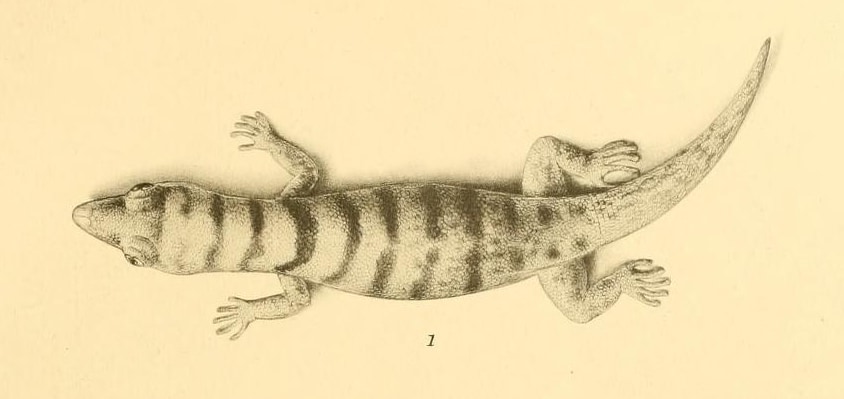
Barbour's Least Gecko, Cuban Broad-Banded Geckolet
Cuba
- Has Very Small Minute Granule-Like Dorsal Scales.
About Barbour's least gecko
Barbour's least gecko, scientifically classified as Sphaerodactylus torrei, is a small lizard species exclusively found in Cuba. It is also known by the common names "Barbour's least gecko" and "Cuban broad-banded geckolet." The species belongs to the Sphaerodactylidae family, a group of geckos known for their characteristic "eyelash" fringe scales.
Habitat and Description
The preferred habitat for S. torrei is forest environments. Physically, this gecko is distinguished by its dorsal scales, which are described as "very small minute granule-like." This feature contributes to its unique appearance within its genus.
Reproduction and Subspecies
Barbour's least gecko is oviparous, meaning it reproduces by laying eggs. The species has two recognized subspecies: Sphaerodactylus torrei spielmani and the nominotypical subspecies, Sphaerodactylus torrei torrei. The specific name "torrei" honors the Cuban naturalist Carlos de la Torre y Huerta.
Source: Wikipedia ↗
Frequently Asked Questions
What is the scientific name for Barbour's least gecko?
The scientific name for Barbour's least gecko is Sphaerodactylus torrei. This binomial nomenclature is used to classify the species within the scientific community.
Where is Barbour's least gecko found?
Barbour's least gecko is endemic to Cuba. This means the species is naturally found only in this specific geographic location.
What are the distinctive physical features of Barbour's least gecko?
A notable physical characteristic of Sphaerodactylus torrei is its dorsal scales, which are described as 'very small minute granule-like.' This gives the gecko a unique texture.
How does Barbour's least gecko reproduce?
Barbour's least gecko is oviparous. This means that individuals reproduce by laying eggs, which then develop and hatch outside the mother's body.
What habitat does Barbour's least gecko prefer?
The preferred habitat for Sphaerodactylus torrei is forest. These environments likely provide the necessary conditions for shelter, foraging, and reproduction.
Are there different types of Barbour's least gecko?
Yes, two subspecies of Sphaerodactylus torrei are recognized as valid. These are Sphaerodactylus torrei spielmani and the nominotypical subspecies, Sphaerodactylus torrei torrei.
Related Lizards

Aaron Bauer's house gecko
Aaron Bauer's house gecko is a species of lizard found in the Western Ghats of Maharashtra, India. It is notable for its relatively large size within its genus, reaching up to 13 cm in snout-to-vent length. This species prefers rocky outcrops within forested areas as its natural habitat.

Adolfus jacksoni
Adolfus jacksoni, also known as Jackson's forest lizard, is a species of lizard belonging to the Lacertidae family, native to East Africa. It prefers forest habitats at significant altitudes and exhibits diurnal and semi-arboreal behaviors. This oviparous species lays clutches of three to five eggs, and communal nesting sites have been observed.

Agama
Agama are a genus of small to moderate-sized, long-tailed lizards native to Africa, particularly sub-Saharan regions. Known for their insectivorous diet and ability to adapt to various habitats, including human settlements, they display striking color changes based on mood and gender. These diurnal reptiles are characterized by powerful hind legs for swift movement and are recognized by their common names, some referencing their head-bobbing displays.