
Budak's snake-eyed skink
Budak's snake-eyed skink is a species of lizard in the family Scincidae, endemic to the Near East. It prefers the leaf litter of shrubby or forested areas for its habitat. The species was elevated to full species status from a subspecies of Ablepharus kitaibelii in 1997 and is named in honor of herpetologist Abidin Budak.
Key Facts
- ›Endemic to the near East, including southern Turkey, western Syria, Cyprus, and Lebanon.
- ›Prefers leaf litter in shrubby or forested environments.
- ›Oviparous, meaning it reproduces by laying eggs.
- ›Named in honor of Turkish herpetologist Abidin Budak.
- ›Considered common with no major threats across most of its range.

Budak's Skink
Southern Turkey, Western Syria, Cyprus, Lebanon
Deforestation
About Budak's snake-eyed skink
Budak's snake-eyed skink, scientifically classified as Ablepharus budaki, is a species of lizard belonging to the family Scincidae. This reptile is endemic to the Near East, with its known range encompassing southern Turkey, western Syria, Cyprus, and Lebanon. The species was elevated from its former status as a subspecies of Ablepharus kitaibelii to its own distinct species in 1997. Its specific name, 'budaki', serves as an honorific, recognizing the contributions of Turkish herpetologist Abidin Budak to the field.
Habitat and Behavior
The preferred habitat for Budak's snake-eyed skink consists of the leaf litter found within shrubby or forested environments. While specific behavioral patterns are not extensively detailed, its habitat preference suggests a life spent close to the ground, likely foraging among fallen leaves. The species is oviparous, meaning it reproduces by laying eggs.
Conservation and Threats
Across the majority of its distribution, Budak's snake-eyed skink is considered common and does not face significant threats. However, in Lebanon, populations may be vulnerable to the impacts of deforestation. Despite this localized concern, the species is generally not listed with a specific conservation status, indicating a stable presence in most of its native range.
Source: Wikipedia ↗
Frequently Asked Questions
What is Budak's snake-eyed skink?
Budak's snake-eyed skink, scientifically known as Ablepharus budaki, is a species of lizard belonging to the family Scincidae. It is a native reptile of the Near East region.
Where is Budak's snake-eyed skink found?
This species is found in southern Turkey, western Syria, Cyprus, and Lebanon. It is endemic to the Near East.
What kind of habitat does Budak's snake-eyed skink prefer?
Budak's snake-eyed skink thrives in the leaf litter of shrubby or forested areas. This environment likely provides shelter and suitable conditions for foraging.
How does Budak's snake-eyed skink reproduce?
Budak's snake-eyed skink is oviparous, which means it reproduces by laying eggs. This is a common reproductive strategy among many reptile species.
What is the conservation status of Budak's snake-eyed skink?
The species is generally considered common and faces no major threats across most of its geographical range. However, deforestation in Lebanon poses a potential threat to some populations.
Why is it called Budak's snake-eyed skink?
The specific name 'budaki' was given in honor of Abidin Budak, a Turkish herpetologist. This naming convention is common in scientific classification to recognize significant contributors to a field.
Related Lizards
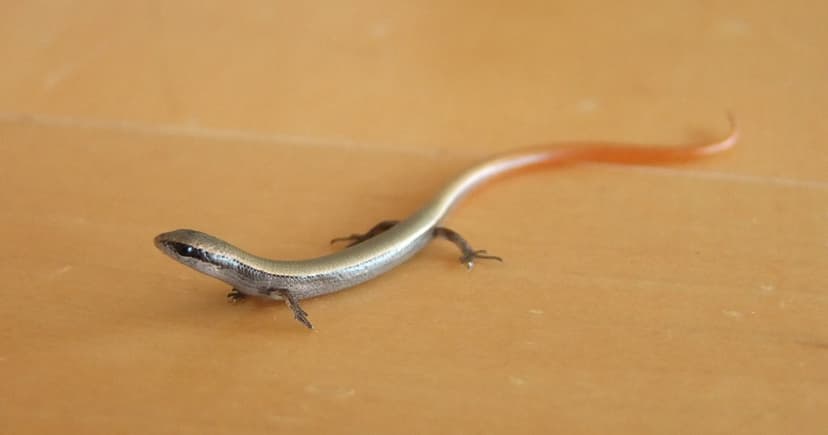
Ablepharus rueppellii
Ablepharus rueppellii, commonly known as Rüppell's snake-eyed skink, is a species of skink native to the Middle East, including Israel, Lebanon, Jordan, and Egypt's Sinai Peninsula. This species is characterized by its preference for leaf litter in forested or shrubby areas, and can also be found in oases and even urban environments in Israel. While generally uncommon, it is protected by legislation in Israel.
Rüppell's snake-eyed skink
Rüppell's snake-eyed skink (Ablepharus rueppellii) is a species of skink native to the Middle East, found in parts of Israel, Lebanon, Jordan, and Egypt. It inhabits the leaf litter of forested or shrubby areas, and is also found near oases in Egypt. This species was formerly considered a subspecies but is now recognized as distinct, though current understanding suggests it may represent two separate species.
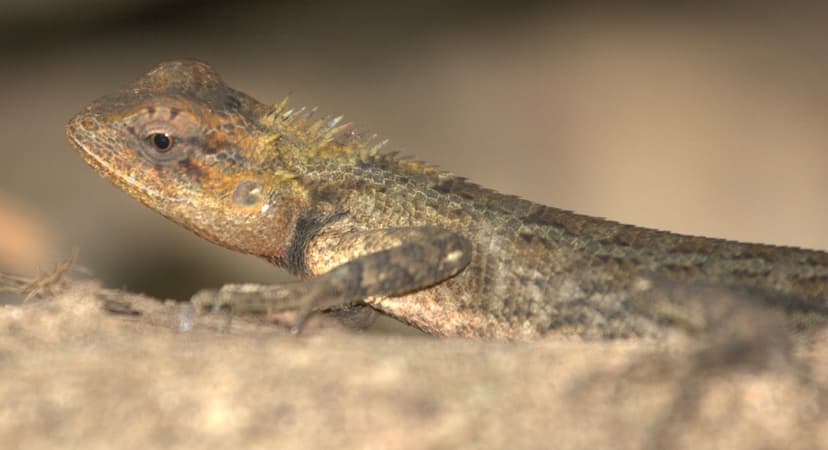
Whistling lizard
The whistling lizard, scientifically known as Calotes liolepis, is a species of agamid lizard endemic to Sri Lanka. It is distinguished by its ability to change color for camouflage, a long tail, and the unique habit of emitting a high-pitched whistle when alarmed. This species inhabits submontane forests and forested areas below 100 meters in elevation.