
Emoia atrocostata
Emoia atrocostata, also known as the littoral whiptail-skink, mangrove skink, or littoral skink, is a species of lizard belonging to the Scincidae family. It is characterized by its grey or brown-grey coloration flecked with black, a faint black band along each side, and often a bluish throat with a greenish, yellow, or orange belly. This semi-aquatic lizard inhabits coastal environments such as mangroves, back-beach vegetation, and rocky shorelines, where it forages in tidal pools.
Key Facts
- ›Distinguished from similar skinks by the absence of keeled dorsal scales.
- ›Found in coastal areas including mangroves, beaches, and rocky shorelines.
- ›Is semi-aquatic and forages for food in tidal pools.
- ›Coloration ranges from grey to brown-grey with black flecking.
- ›Has a distinct faint black band along each side of its body.
- ›Throat is often bluish, with a greenish to orange belly.

Littoral Whiptail-Skink, Mangrove Skink, Littoral Skink
Ryukyu Islands, Taiwan, Philippines, Indonesia, Malaysia, Vietnam, Papua New Guinea, Solomon Islands, Vanuatu, Queensland, Australia
Mangroves, Back-Beach Vegetation, Rocky Shorelines
- Coloration Is Grey Or Brown-Grey Flecked With Black.
- Features A Faint Black Band Along Each Side.
- Throat Is Often Bluish.
- Belly Ranges From Greenish To Yellow To Orange.
- Lacks Keeled Scales On the Dorsal Surface, Distinguishing It From Similar Species.
Forages In Tidal Pools
Semi-Aquatic, Forages In Tidal Pools
About Emoia atrocostata
Emoia atrocostata: The Littoral Whiptail-Skink
Emoia atrocostata, commonly referred to as the littoral whiptail-skink, mangrove skink, or littoral skink, is a species of lizard belonging to the family Scincidae. This adaptable reptile is found in a variety of coastal environments, including mangroves, the vegetation bordering beaches, and rocky shorelines. Its semi-aquatic nature allows it to thrive in these intertidal zones, where it actively forages for food within tidal pools.
Description and Identification
The physical appearance of Emoia atrocostata is characterized by its coloration, which is typically grey or brown-grey and flecked with black. A subtle but distinct black band runs along each side of its body. The throat often displays a bluish hue, while the belly can range in color from greenish to yellow or even orange. A key characteristic used to distinguish it from similar species, such as the many-lined sun skink, is the absence of keeled scales on its dorsal surface.
Distribution and Habitat
Emoia atrocostata boasts a broad geographic distribution. It can be found inhabiting the Ryukyu Islands, Taiwan, the Philippines, Indonesia, Malaysia, Vietnam, Papua New Guinea, the Solomon Islands, Vanuatu, and extends into Queensland, Australia. Its preferred habitat is intrinsically linked to its semi-aquatic behavior, favoring the dynamic coastal ecosystems where land meets sea.
Source: Wikipedia ↗
Frequently Asked Questions
What are the common names for Emoia atrocostata?
Emoia atrocostata is known by several common names, including the littoral whiptail-skink, the mangrove skink, and the littoral skink.
Where is the mangrove skink found geographically?
This species has a wide distribution across the Ryukyu Islands, Taiwan, the Philippines, Indonesia, Malaysia, Vietnam, Papua New Guinea, the Solomon Islands, Vanuatu, and Queensland, Australia.
What kind of habitat does Emoia atrocostata prefer?
Emoia atrocostata inhabits coastal environments, specifically thriving in mangroves, the vegetation found behind beaches, and rocky shorelines.
How can Emoia atrocostata be identified by its appearance?
It is typically grey or brown-grey with black flecks, featuring a faint black band on each side. Its throat is often bluish, and its belly can be greenish, yellow, or orange. A key distinguishing feature is the lack of keeled scales on its back compared to similar species.
What does Emoia atrocostata eat and where does it find its food?
This lizard is semi-aquatic and forages in tidal pools. While specific dietary items are not detailed, its foraging behavior suggests it consumes organisms found in these coastal aquatic environments.
Related Lizards

Iguana delicatissima
The Lesser Antillean iguana (Iguana delicatissima) is a large, arboreal lizard native to the Lesser Antilles, distinguished by its blocky face and lack of a striped tail pattern found in its close relative, the green iguana. This herbivorous species is critically endangered, facing severe threats from habitat destruction, introduced predators, hunting, and hybridization. Efforts to breed them in captivity have faced challenges with egg fertility, though some successes have been achieved.

Algerian sand racer
The Algerian sand racer, scientifically known as Psammodromus algirus, is a lizard species found in southwestern Europe and northwestern Africa. It typically inhabits dense bushy vegetation and can be found at high elevations, though it is more common at lower altitudes. This species is characterized by its metallic brownish dorsal coloration with conspicuous white or yellowish stripes.
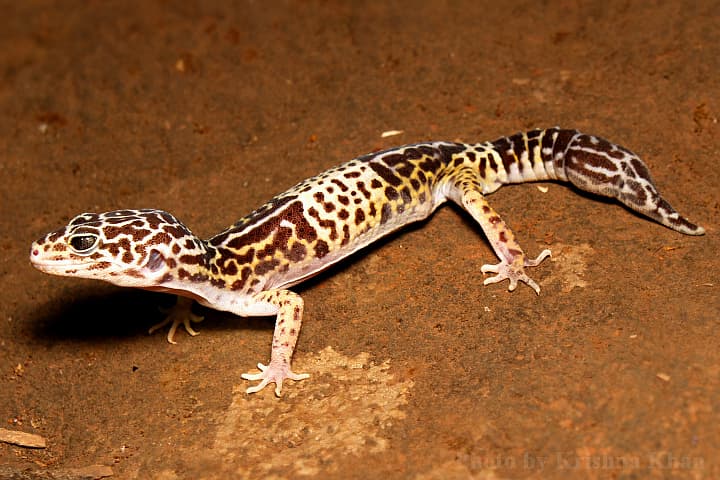
Eublepharis fuscus
The West Indian leopard gecko (Eublepharis fuscus) is a robust gecko species found in western India and potentially extending into southeastern Pakistan. Known for its dusky coloration, it inhabits forested hill tracts, scrub, and rocky areas. This nocturnal, terrestrial lizard primarily preys on scorpions and other arthropods.