
Eublepharis
Eublepharis is a genus of terrestrial geckos found in eastern and southwestern Asia, distinguished by their fully functional eyelids and wart-like bumps covering their bodies. Unlike many other geckos, they lack adhesive toe pads, making them unable to climb. The genus includes the widely recognized leopard gecko, a popular pet species.
Key Facts
- ›Native to eastern and southwestern Asia.
- ›Possess fully functional eyelids, a distinguishing feature.
- ›Covered in numerous wart-like bumps.
- ›Lack adhesive toe pads, preventing them from climbing smooth surfaces.
- ›Primarily nocturnal animals.
- ›Includes the popular leopard gecko (Eublepharis macularius).
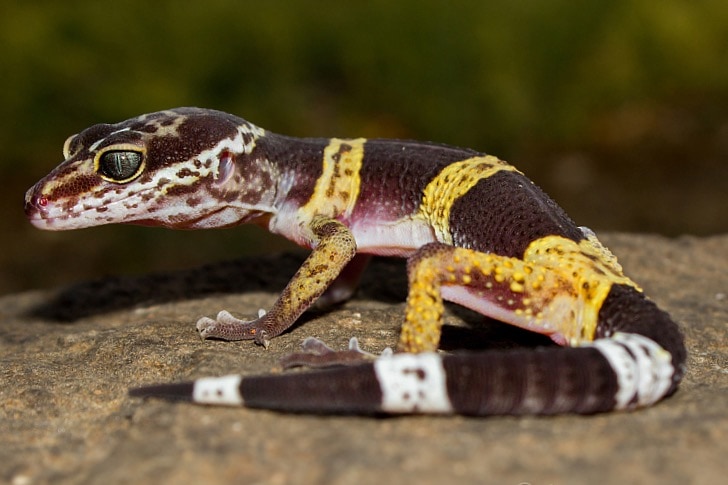
Eyelid Geckos
Eastern Asia, Southwestern Asia
Sturdily Built., Tail Is Shorter Than Snout-To-Vent Length., Body Covered With Numerous Wart-Like Bumps., Toes Lack Adhesive Lamellae Or Membranes., Have Fully Functional Eyelids.
Primarily Nocturnal.
About Eublepharis
The genus Eublepharis comprises a group of terrestrial geckos native to eastern and southwestern Asia. First described by zoologist John Edward Gray in 1827, the name Eublepharis itself derives from Greek roots meaning 'good eyelid,' highlighting a key characteristic of these reptiles: they possess fully functional eyelids, distinguishing them from many other gecko species that have fused, transparent eyelids.
Physical Characteristics and Habitat
Members of the Eublepharis genus are recognized for their sturdy build. Their tails are notably shorter than their snout-to-vent length, and their bodies are adorned with numerous wart-like bumps. A significant anatomical distinction is the absence of adhesive lamellae or membranes on their toes, which means Eublepharis geckos are unable to climb smooth vertical surfaces like many of their gecko relatives. They are terrestrial in nature, inhabiting the diverse landscapes of their native Asian regions.
Behavior and Species
Eublepharis geckos are primarily nocturnal, meaning they are most active during the night. This genus includes one of the most popular reptile pets worldwide, the leopard gecko (Eublepharis macularius), which has been widely bred for various color morphs and patterns. While species within the Goniurosaurus kuroiwae superspecies were formerly classified under Eublepharis, they are now recognized as distinct.
Source: Wikipedia ↗
Frequently Asked Questions
What are the key physical characteristics of Eublepharis geckos?
Eublepharis geckos are sturdily built with a tail shorter than their snout-to-vent length. Their bodies are covered in numerous wart-like bumps, and unlike many other geckos, they have fully functional eyelids.
Where are Eublepharis geckos found geographically?
This genus of geckos is native to eastern and southwestern Asia. They inhabit a range across these regions.
Can Eublepharis geckos climb walls like other geckos?
No, Eublepharis geckos cannot climb like many of their gecko relatives. Their toes do not possess adhesive lamellae or membranes, which are necessary for clinging to smooth surfaces.
What does the name 'Eublepharis' mean?
The etymology of the name 'Eublepharis' comes from the Greek words 'eu' meaning good or true, and 'blephar' meaning eyelid. This name reflects their distinct characteristic of having fully functional eyelids.
Are Eublepharis geckos active during the day or night?
Eublepharis geckos are primarily nocturnal. This means they are most active during the night.
Is the leopard gecko part of the Eublepharis genus?
Yes, the popular pet species known as the leopard gecko is included in the genus Eublepharis, specifically identified as Eublepharis macularius.
Related Lizards

Agama armata
The Agama armata, also known as the tropical spiny agama or northern ground agama, is a small, ground-dwelling lizard native to sub-Saharan Africa. It is characterized by its grey, brown, or red coloration with pale crossbars, and males display vibrant green or blue heads during breeding seasons. This species is found across a wide range of southern and eastern African countries.

Amphiglossus melanurus
The spotted skink, scientifically known as Flexiseps melanurus, is a species of skink found exclusively on the island of Madagascar. This lizard is characterized by its distinctive spotted appearance. Its natural habitat and specific ecological role within Madagascar's diverse ecosystems are key areas of interest for herpetologists.

Short-limbed supple skink
The short-limbed supple skink, also known as Linnaeus's writhing skink, is a species of skink found across southern China and Southeast Asia. It is characterized by its short limbs and is a common inhabitant of various terrestrial environments within its extensive range.