
Eumeces
Eumeces·Scincidae
Eumeces is a genus of skinks belonging to the family Scincidae, primarily found in Africa and the Middle East. Recent taxonomic revisions have led to the reclassification of many species once within Eumeces into different genera, with the genus now largely restricted to African species of the E. schneiderii group, indicating its paraphyletic nature.
Key Facts
- ›The genus Eumeces traditionally encompassed a wide range of skink species.
- ›Recent taxonomic studies have shown Eumeces to be paraphyletic, necessitating reclassification.
- ›Many former Eumeces species have been moved to new genera like Plestiodon, Eurylepis, and Mesoscincus.
- ›The genus Eumeces is now primarily recognized for African species formerly grouped within the Eumeces schneiderii complex.
- ›The type species, E. pavimentatus, is often considered a subspecies of Eumeces schneiderii.
- ›The International Commission on Zoological Nomenclature has not verified proposals to change the genus's type species.
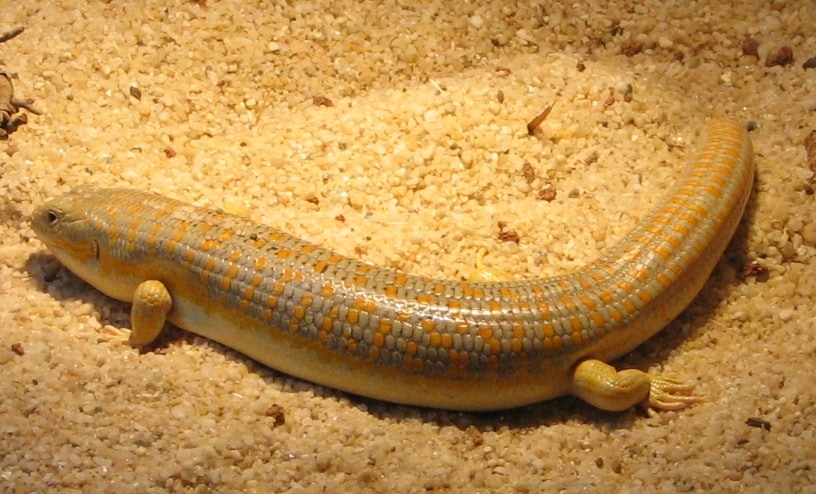
Africa, Middle East
About Eumeces
Eumeces: A Genus of Skinks
The genus Eumeces is a group of lizards belonging to the family Scincidae, commonly known as skinks. Historically, this genus encompassed a broader range of species found across Africa and the Middle East. However, recent significant taxonomic revisions have reshaped our understanding of Eumeces.
Taxonomic Revisions
Two major taxonomic studies in recent years have concluded that the genus Eumeces is paraphyletic. This means that it does not include all of the descendants of a common ancestor, indicating that it is not a strictly natural evolutionary grouping. As a result, these revisions have led to the "slicing up" of the genus into several distinct genera.
One notable aspect of these revisions involved proposals to change the type species of Eumeces to Lacerta fasciata. The aim behind this suggestion was to preserve the genus name Eumeces for the most species-rich clade. However, this particular proposal has not been officially verified by the International Commission on Zoological Nomenclature, and arguments have been made against its validity.
Current Classification
Following these taxonomic reevaluations, the genus Eumeces is now understood to primarily include the African species that were historically part of the Eumeces schneiderii group. Several species previously classified under Eumeces have been reassigned to new genera, including Plestiodon, Eurylepis, and Mesoscincus. For instance, Eumeces indothalensis is now classified as Eurylepis indothalensis, and Eumeces altamirani is now Mesoscincus altamirani.
Source: Wikipedia ↗
Frequently Asked Questions
What family do Eumeces skinks belong to?
Eumeces skinks belong to the family Scincidae, which is the family of skinks. This family is known for its diverse range of lizard species with smooth, overlapping scales.
How has the classification of Eumeces changed recently?
Recent taxonomic revisions have revealed that the genus Eumeces is paraphyletic, meaning it does not include all of its descendants. Consequently, many species formerly classified under Eumeces have been moved to new genera.
Which species are still considered part of the Eumeces genus?
Following taxonomic revisions, the genus Eumeces is now primarily recognized for African species that were part of the Eumeces schneiderii group. Specific recognized species include E. algeriensis, E. blythianus, E. cholistanensis, E. indothalensis, E. persicus, E. schneiderii, and E. zarudnyi.
What were some of the proposed changes to the Eumeces genus?
One proposal involved changing the type species for Eumeces to Lacerta fasciata, aiming to keep the name Eumeces with the most species-rich clade. However, this proposal has not been verified by the International Commission on Zoological Nomenclature.
What does it mean for a genus to be paraphyletic?
A paraphyletic genus is one that includes a common ancestor but not all of its descendants. This indicates that the genus is not a natural evolutionary grouping and often requires splitting into multiple distinct genera.