
Iguanidae
The Iguanidae family encompasses a diverse group of lizards, including iguanas, chuckwallas, and their extinct relatives. These reptiles are typically found in tropical and warm climates, characterized by dorsal spines, a dewlap, sharp claws, and a long tail. While many species are herbivorous and arboreal, their specific diets and habitats vary widely across their distribution.
Key Facts
- ›Iguanidae includes well-known lizards like the green iguana, chuckwallas, and marine iguanas.
- ›They are predominantly found in the Americas, with some species dispersed to Pacific Islands.
- ›Most iguanids are herbivores, feeding on available plant life.
- ›Key physical features often include dorsal spines, a dewlap, and sharp claws.
- ›Many species are oviparous, laying eggs and exhibiting some nest-guarding behavior.
- ›They are poikilothermic, relying on external heat sources like the sun for thermoregulation.

Iguanas, Chuckwallas
the Americas, Caribbean, Pacific Islands
Tropical Climates, Warm Climates, Arboreal Environments, Terrestrial Environments
Possess Dorsal Spines Across Their Back., Feature A Dewlap On the Neck., Equipped With Sharp Claws., Have A Long, Whip-Like Tail., Exhibit A Stocky, Squat Build., Diverse In Size and Appearance.
Herbivorous, Feeds On Available Plant Life
- Most Are Arboreal, Living In Trees.
- Some Species Are More Terrestrial.
- Exhibit Nest-Guarding Behavior.
- Rely On Basking Under the Sun For Thermoregulation.
Exotic Pet Trade, Illegal Introductions Into Ecosystems
About Iguanidae
The Iguanidae Family: A Diverse Group of Lizards
The Iguanidae family is a significant group of lizards that includes the well-known iguanas, hardy chuckwallas, and their extinct prehistoric relatives. This diverse lineage is characterized by a common set of physical traits and a wide range of ecological adaptations.
Key Characteristics and Distribution
Iguanids are generally found in tropical and warm climates, with their primary distribution across the Americas, from the deserts of the Southwestern United States through Mexico, Central America, and extending throughout South America. Some species, like the widespread green iguana (Iguana iguana), have also been introduced to various Pacific Islands, sometimes as a consequence of the exotic pet trade. Physically, many iguanids possess distinctive dorsal spines running along their back, a prominent dewlap on their neck, sharp claws, and a long, whip-like tail, all contributing to their characteristic stocky build.
Habitat and Diet
While many members of the Iguanidae family are arboreal, meaning they live in trees, other species are more terrestrial, preferring to inhabit the ground. Their diets are predominantly herbivorous, consisting of the plant life available within their specific habitats. Like all reptiles, they are poikilothermic, relying on external heat sources, such as basking in the sun, to regulate their body temperature.
Reproduction
Reproduction within the Iguanidae family is typically oviparous, with females laying eggs. Although parental care is generally minimal once the eggs hatch, some species do exhibit nest-guarding behavior to protect their developing young.
Source: Wikipedia ↗
Frequently Asked Questions
What types of lizards belong to the Iguanidae family?
The Iguanidae family is a broad group that includes iguanas, chuckwallas, and their ancient relatives. This diverse family showcases a wide range of physical characteristics and adaptations.
Where are Iguanidae lizards typically found?
The vast majority of modern iguana genera are native to the Americas, spanning from the Southwestern United States down to northern Argentina. Some species have also been introduced to Pacific Islands through human activity.
What do Iguanidae lizards eat?
Most iguanids are herbivores, meaning their diet consists primarily of plant matter. The specific types of plants consumed depend on the availability within their particular habitat.
What are some defining physical characteristics of Iguanidae?
Many species in this family possess distinctive dorsal spines along their back, a prominent dewlap on their neck, sharp claws for climbing or defense, and a long, whip-like tail. They generally have a stocky build.
How do Iguanidae lizards reproduce?
Across many species within the Iguanidae family, reproduction is oviparous, meaning they lay eggs. While they may exhibit some nest-guarding behavior, there is generally little to no parental care provided after the eggs hatch.
Are all Iguanidae lizards arboreal?
While many iguanids are arboreal and live in trees, some species are more terrestrial, preferring to inhabit the ground. This variation in lifestyle is linked to their specific habitat and adaptations.
Related Lizards

Green iguana
The green iguana is a large, arboreal, and primarily herbivorous lizard native to Central and South America, and the Caribbean. Known for its distinctive dorsal spines, dewlap, and vibrant coloration that can vary by region, it is also a popular but demanding pet. This species plays a significant ecological role and has become notably invasive in various subtropical and tropical regions globally.

White-spotted supple skink
The white-spotted supple skink is a small, diurnal, terrestrial lizard found across tropical Asia, particularly in South Asia. It is characterized by its long, slender body, small legs, and distinctive white spots on its sides, contrasting with a light brown or reddish-brown back dotted with tiny black spots. This insectivorous species inhabits a range of environments within its geographic distribution.
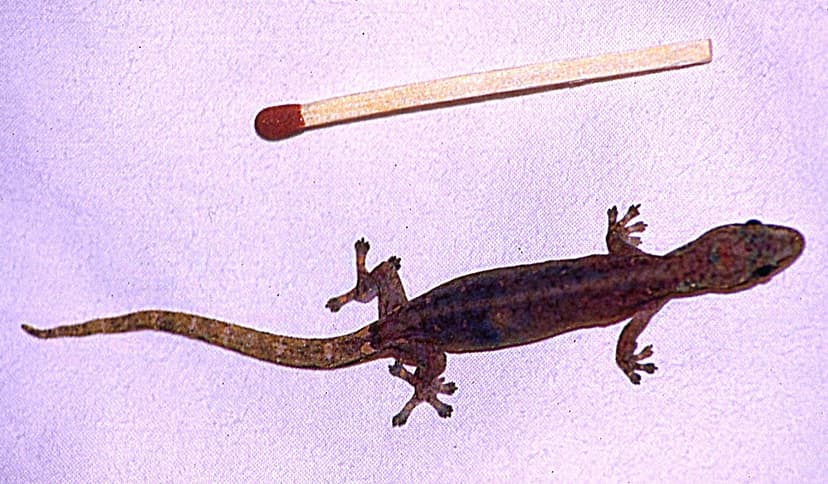
Hemiphyllodactylus typus
Hemiphyllodactylus typus, commonly known as the Indopacific tree gecko or common dwarf gecko, is a widespread gecko species found across South Asia, Southeast Asia, East Asia, and various islands in the Indian and Pacific Oceans. It is a small, slender lizard adapted to arboreal life, inhabiting diverse environments from forests to human settlements.