
Ophisaurus ventralis
The eastern glass lizard (Ophisaurus ventralis) is a species of legless lizard endemic to the Southeastern United States, often mistaken for a snake due to its lack of limbs. It is characterized by its streamlined body, moveable eyelids, external ear openings, and a lateral groove separating its scales. This species inhabits wetlands, moist flatwoods, and even coastal dunes, and is known for its opportunistic diet and remarkable tail autotomy defense mechanism.
Key Facts
- ›Ophisaurus ventralis is a legless lizard, often confused with snakes.
- ›It possesses moveable eyelids and external ear openings, distinguishing it from snakes.
- ›Adults can reach total lengths of 46-108 cm (18-43 in).
- ›Found in wetlands, moist flatwoods, and coastal dunes of the Southeastern United States.
- ›An opportunistic feeder, consuming insects, small mammals, eggs, and sometimes fruits.
- ›Can detach its tail (autotomy) to distract predators and escape.
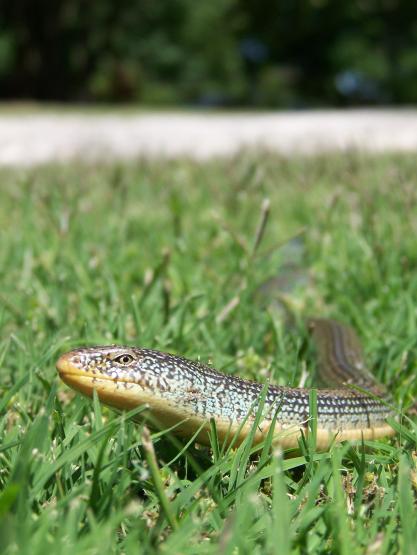
Eastern Glass Lizard
- Southeastern United States
- Extreme Southeastern Virginia
- South Florida
- Louisiana
- Coastal Plains of the Southeastern United States
- Mississippi River
- Oklahoma
- Missouri
Wetlands, Moist Soils, Flatwoods Adjacent To Wetlands, Sandy Soils, Tidal Areas, Coastal Dunes, Crayfish Burrows
- Legless, Streamlined Body Often Confused With Snakes.
- Possesses Moveable Eyelids and External Ear Openings.
- Has A Lateral Groove Separating Different Types of Scales.
- Adults Measure 46–108 cm In Total Length; Head-Body Length Up To 30.5 cm .
- 99 Or More Scales Along the Lateral Groove.
- No Dark Longitudinal Stripes Below the Lateral Groove Or Under the Tail.
- No Distinct Mid-Dorsal Stripe.
- Neck Marked With Mostly Vertical Or Highly Irregular White Marks, With White Markings On Posterior Corners of Scales.
- Palatine Teeth Are Prominent.
- Older Specimens Have Numerous Longitudinal Dark Lines Or Dashes Dorsally, Occasionally Covering the Entire Mid-Dorsal Area.
- Older Adults May Be Greenish Above and Yellow Below.
- Juveniles Are Khaki-Colored With Two Dark Stripes Down the Back.
- Inflexible Jaws.
Insects, Small Mammals, Eggs, Small Birds, Fruits, Vegetation, Grasshoppers, Crickets, Beetles, Spiders, Small Mice, Snails, Eggs of Other Reptiles, Eggs of Ground-Nesting Birds, Smaller Conspecifics
- Active During the Day .
- Forage In Open Habitats.
- Seek Refuge Beneath Debris.
- Forage Both Above Ground and Underground In Burrows.
- Rely On Sense of Smell and Sharp Eyesight For Hunting.
- Exhibit Tail Autotomy As A Defense Mechanism.
- Tail Fragment Wriggles After Detachment To Distract Predators.
Skunks, Raccoons, Foxes, Snakes, Cats
Direct Mortality Due To Prescribed Fire
About Ophisaurus ventralis
Eastern Glass Lizard (Ophisaurus ventralis)
The eastern glass lizard, scientifically known as Ophisaurus ventralis, is a notable species of legless lizard native to the Southeastern United States. Often mistaken for a snake due to its lack of limbs, it is distinguished by key reptilian features such as moveable eyelids and external ear openings, which are absent in snakes. This species is the longest and heaviest among glass lizards in its genus.
Description and Characteristics
Adult eastern glass lizards can reach impressive lengths, typically ranging from 46 to 108 cm (18 to 43 inches) in total length, with a head-body length not exceeding 30.5 cm (12.0 inches). Their bodies are streamlined, and a distinctive lateral groove runs along their sides, separating different types of scales. Coloration varies with age; juveniles are khaki with two dark stripes, while older adults may exhibit a greenish dorsal side and a yellow underside, a unique trait among Ophisaurus species. They possess prominent palatine teeth and inflexible jaws, which limit the size of prey they can consume.
Habitat and Distribution
Ophisaurus ventralis is commonly found in areas with wetlands and moist soils, favoring flatwoods with sandy substrates adjacent to water bodies. Their distribution is restricted to the coastal plains of the Southeastern United States, extending from southeastern Virginia to South Florida and west to Louisiana, with populations notably limited by the Mississippi River. Isolated records also exist in Oklahoma and Missouri. They have been observed utilizing crayfish burrows for shelter and are known to tolerate salty conditions, allowing them to inhabit coastal dunes.
Diet and Behavior
As opportunistic feeders, eastern glass lizards consume a wide variety of prey including insects, small mammals, bird eggs, and occasionally fruits and vegetation. Their diet includes items like grasshoppers, mice, spiders, and snails. They hunt during the day, relying on their keen eyesight and sense of smell. A significant behavioral trait is their ability to shed their tail (autotomy) when threatened, a writhing appendage that distracts predators and allows the lizard to escape. They are diurnal and seek refuge under debris or in burrows for safety.
Reproduction
The eastern glass lizard reproduces by laying eggs (oviparous). Females lay clutches of 5 to 15 eggs between late April and mid-July. The eggs incubate for approximately 40 to 65 days, typically hatching in late summer. Eggs are usually deposited in depressions within sandy or loamy soils, often concealed under cover. While females may encircle their clutch, they generally do not defend their eggs vigorously, though they may gather them if scattered.
Predators and Conservation
Common natural predators of the eastern glass lizard include skunks, raccoons, foxes, snakes, and domestic cats. Direct mortality from prescribed fires used in habitat management is a concern for land managers. While no specific conservation status is listed, the species' reliance on specific habitats and potential threats from environmental management practices highlight the importance of understanding and preserving its ecosystem.
Source: Wikipedia ↗
Frequently Asked Questions
What distinguishes an eastern glass lizard from a snake?
Eastern glass lizards, despite their legless appearance, can be distinguished from snakes by their possession of moveable eyelids and external ear openings. They also have a lateral groove that separates different types of scales, a feature absent in snakes. Additionally, lizards have inflexible jaws, unlike the flexible jaws found in snakes.
What is the typical habitat of the eastern glass lizard?
The eastern glass lizard is commonly found near wetlands and in moist soils, particularly in flatwoods adjacent to these areas that have sandy soils. They are also known to inhabit tidal areas like coastal dunes due to their resistance to salty conditions and have even been documented using crayfish burrows for shelter.
What do eastern glass lizards eat?
These lizards are opportunistic feeders and consume a varied diet that includes insects, small mammals, eggs, small birds, and occasionally fruits or vegetation. Their diet can consist of prey such as grasshoppers, crickets, beetles, spiders, small mice, snails, and the eggs of other reptiles and ground-nesting birds.
How does an eastern glass lizard avoid predators?
Eastern glass lizards have the ability to detach their tail (autotomy) when restrained. The detached tail continues to writhe for several minutes, serving as a distraction to predators and allowing the lizard to escape. Common predators include skunks, raccoons, foxes, snakes, and cats.
How does the eastern glass lizard reproduce?
The eastern glass lizard is oviparous, meaning it lays eggs. Females typically lay between 5 to 15 eggs from late April to mid-July, which have an incubation period of 40 to 65 days. The eggs are usually laid in depressions in sandy or loamy soil, often under cover.
What is the size of an adult eastern glass lizard?
Adult eastern glass lizards can grow to a total length of 46 to 108 cm (18 to 43 inches). However, their head-body length is considerably shorter, reaching a maximum of 30.5 cm (12.0 inches).
Related Lizards
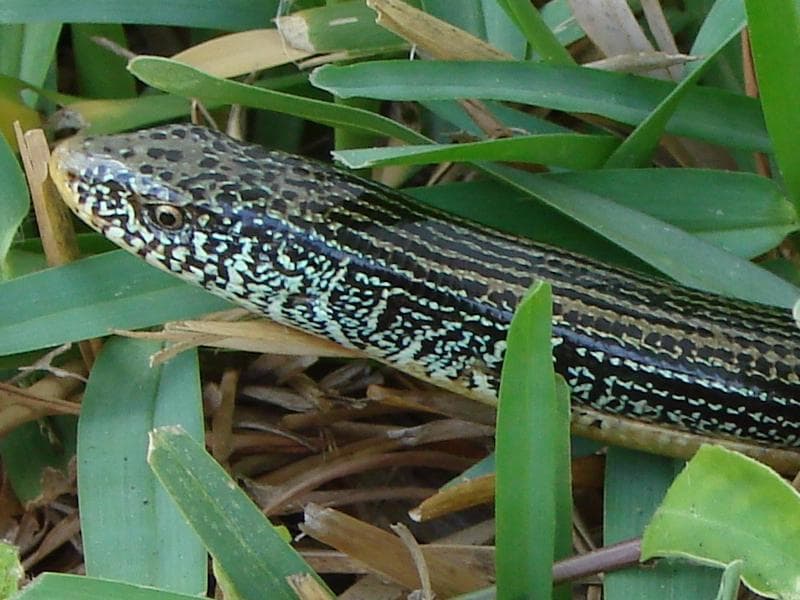
Eastern glass lizard
The Eastern glass lizard (Ophisaurus ventralis) is a legless lizard found in the Southeastern United States, often mistaken for a snake due to its appearance. It is distinguished from snakes by its movable eyelids, external ear openings, and a lateral groove separating its scales. This species inhabits wetlands, moist soils, and coastal areas, and is an opportunistic omnivore.

Blanus cinereus
The Iberian worm lizard (Blanus cinereus) is a limbless reptile resembling a worm, characterized by its small, underdeveloped eyes and smooth scales. It inhabits a variety of Mediterranean habitats across Portugal and central and southern Spain, where it lives a subterranean life. This species relies heavily on chemosensory signaling to navigate, detect prey, and avoid predators, compensating for its near-complete inability to see.

Florida wormlizard
The Florida worm lizard, also known as the graveyard snake or thunderworm, is a unique amphisbaenian species found primarily in Florida. It is characterized by its limbless, worm-like body covered in ringed scales and a shovel-shaped snout adapted for burrowing. This reclusive reptile spends most of its life underground, emerging only during heavy rains.