
Plains short-horned lizard
The Great Plains short-horned lizard is a species of horned lizard native to Canada and the United States. These lizards are characterized by their flattened bodies, short horns on their heads, and a diet primarily consisting of ants.
Key Facts
- ›Native to Canada and the United States.
- ›Belongs to the horned lizard family.
- ›Characterized by short horns on its head.
- ›Primarily feeds on ants.
- ›Possesses a flattened body shape.
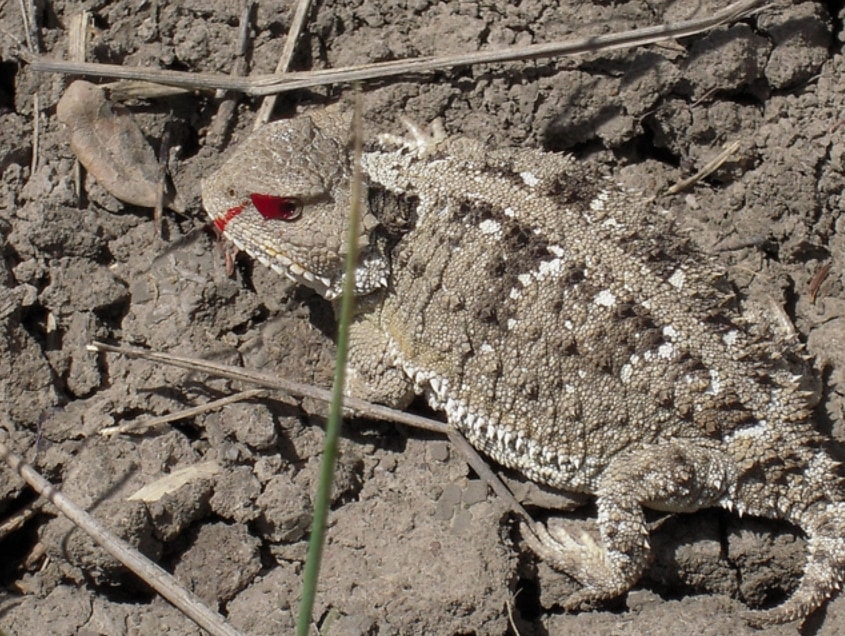
Great Plains Short-Horned Lizard
Canada, United States
Flattened Body., Short Horns On the Head.
Ants
About Plains short-horned lizard
The Great Plains Short-Horned Lizard
The Great Plains short-horned lizard, scientifically known as Phrynosoma brevirostris, is a distinct species of horned lizard found in North America. Its native range encompasses both Canada and the United States, where it inhabits various environments.
Key Characteristics
This lizard is easily recognized by its flattened body shape and the presence of short horns adorning its head, which give it its common name. A significant aspect of its biology is its specialized diet, which primarily consists of ants. This dietary preference plays a crucial role in its ecological niche within its habitat.
Source: Wikipedia ↗
Frequently Asked Questions
What are the primary geographic locations for the Great Plains short-horned lizard?
The Great Plains short-horned lizard is native to both Canada and the United States. Its range extends across these two North American countries.
What are the defining physical features of this lizard?
This species is a type of horned lizard, easily identified by the short horns present on its head. It also has a characteristically flattened body.
What does the Great Plains short-horned lizard eat?
The diet of the Great Plains short-horned lizard is primarily composed of ants. This ant-based diet is a key aspect of its ecological role.
Related Lizards

Algerian psammodromus
The Algerian psammodromus is a species of lizard recognized for its metallic brownish dorsal coloration often accented by conspicuous white or yellowish stripes. It inhabits dense bushy vegetation in southwestern Europe and northwestern Africa, preying primarily on terrestrial arthropods. This species faces threats primarily from habitat loss.

Blanus cinereus
The Iberian worm lizard (Blanus cinereus) is a limbless reptile resembling a worm, characterized by its small, underdeveloped eyes and smooth scales. It inhabits a variety of Mediterranean habitats across Portugal and central and southern Spain, where it lives a subterranean life. This species relies heavily on chemosensory signaling to navigate, detect prey, and avoid predators, compensating for its near-complete inability to see.

Cnemidophorus sexlineatus viridis
The prairie racerunner (Cnemidophorus sexlineatus viridis) is a subspecies of lizard found in the midwestern United States. This slender-bodied reptile is characterized by its dark green or brown coloration, seven yellow stripes running the length of its body, and a tail nearly twice its body length. It is a diurnal and insectivorous species, most active in the early morning and seeking shelter as the day heats up.