
Rhampholeon spectrum
Rhampholeon spectrum·Chamaeleonidae·Unknown
The spectral pygmy chameleon (Rhampholeon spectrum), also known as the western pygmy chameleon or Cameroon stumptail chameleon, is a small "dwarf" or "leaf" chameleon found in forested areas of mainland Africa. They are characterized by their small size, reaching no more than 10 cm, short prehensile tails, and a tendency to frequent the ground and low shrubbery. While capable of color change, they typically display somber shades of tan to gray, though they can exhibit striking streaks and blotches.
Key Facts
- ›Small size, not exceeding 10 cm (4 in) in length.
- ›Possesses a short, prehensile tail.
- ›Inhabits the ground and low shrubbery in forested areas.
- ›Capable of color change, usually in shades of tan to gray, but can display striking patterns.
- ›Features independently rotating eye sockets, opposable digits, and projectile tongues like larger chameleons.
- ›Males can be identified by their wider tail bases.

Spectral Pygmy Chameleon, Western Pygmy Chameleon, Cameroon Stumptail Chameleon
Cameroon, Equatorial Guinea, Gabon, Central African Republic, Republic of the Congo, Nigeria
Forested Areas, Ground, Low Shrubbery
- Small Size, Not Exceeding 10 cm .
- Very Short, Prehensile Tails.
- Coloration Generally In Somber Shades of Tan To Gray.
- May Display A Ventral Stripe From the Eye To Above the Tail Base, Though Not Always Present.
- Capable of Striking Coloration In the Form of Streaks and Blotches.
- Possesses Independently Rotating Eye Sockets.
- Has Opposable Digits On Both Front and Back Feet.
- Features A Projectile Tongue.
- Males Are Distinguished By Wider Tail Bases Compared To Females.
Small Invertebrates
Extremely Sedentary., Not Territorial., Prefers Cooler Temperatures.
About Rhampholeon spectrum
Spectral Pygmy Chameleon
The spectral pygmy chameleon, scientifically known as Rhampholeon spectrum, is a small lizard belonging to the "dwarf" or "leaf" chameleon group native to mainland Africa. This species is also recognized by common names such as the western pygmy chameleon or the Cameroon stumptail chameleon, reflecting its physical characteristics and geographic origins.
Description and Habitat
Adult spectral pygmy chameleons are notably small, with their total length not exceeding 10 centimeters (approximately 4 inches). They are characterized by very short, prehensile tails. These chameleons tend to inhabit the ground and low shrubbery within forested environments, often preferring cooler temperatures. Their coloration is typically subdued, ranging from somber shades of tan to gray, though they are capable of more striking patterns, including streaks and blotches. A ventral stripe from the eye to above the tail base may also be present, though not consistently displayed.
Despite their modest size and terrestrial habits, spectral pygmy chameleons share key anatomical features with their larger chameleon relatives. These include independently rotating eye sockets, opposable digits on both their front and hind feet, and a projectile tongue used for capturing prey. Males can be distinguished from females by the presence of wider tail bases.
Behavior and Diet
Behaviorally, Rhampholeon spectrum is known for being extremely sedentary and, unlike many other chameleon species, is not territorial. Their diet consists of small invertebrates, which they likely ambush from their low-lying perches. Details regarding their reproductive habits remain sparsely documented in scientific literature.
Source: Wikipedia ↗
Frequently Asked Questions
What are the common names for Rhampholeon spectrum?
Rhampholeon spectrum is also commonly referred to as the spectral pygmy chameleon, the western pygmy chameleon, or the Cameroon stumptail chameleon. These names reflect its appearance and geographic origin.
What is the typical size of a spectral pygmy chameleon?
These chameleons are quite small, with adults not exceeding 10 centimeters (approximately 4 inches) in length. Their compact size contributes to their ability to hide within their environment.
Where is Rhampholeon spectrum found?
The spectral pygmy chameleon is found in mainland Africa. Its distribution includes at least Cameroon, Equatorial Guinea, and Gabon, with potential presence in the Central African Republic, the Republic of the Congo, and Nigeria.
What kind of habitat does this chameleon prefer?
Rhampholeon spectrum typically inhabits forested areas, where they frequent the ground and low shrubbery. They seem to prefer cooler temperatures within these environments.
Can spectral pygmy chameleons change color?
Yes, Rhampholeon spectrum is capable of color change. While they generally display somber shades of tan to gray, they can also exhibit quite striking coloration in the form of streaks and blotches.
What do spectral pygmy chameleons eat?
These chameleons feed on small invertebrates. Their sedentary nature likely aids them in ambushing small prey in their surroundings.
How do males and females differ?
Males of the species can be differentiated from females by having wider tail bases. This is a subtle physical characteristic used for identification.
Related Lizards
Whistling lizard
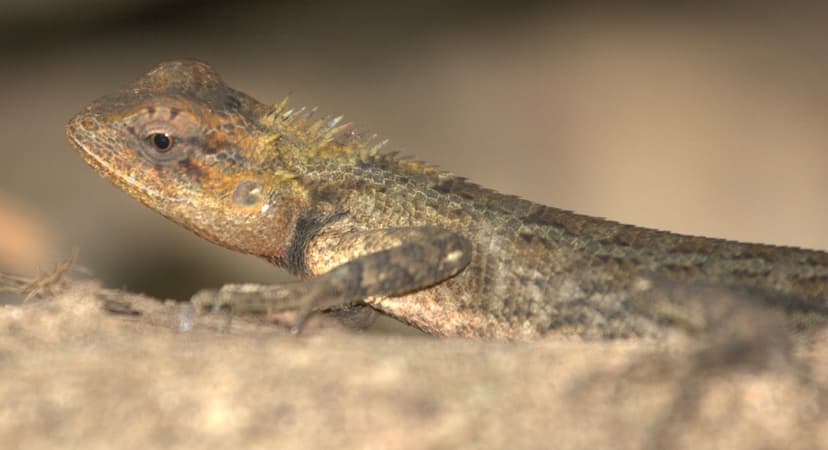
The whistling lizard, scientifically known as Calotes liolepis, is a species of agamid lizard endemic to Sri Lanka. It is distinguished by its ability to change color for camouflage, a long tail, and the unique habit of emitting a high-pitched whistle when alarmed. This species inhabits submontane forests and forested areas below 100 meters in elevation.

Brown anole
The brown anole (Anolis sagrei) is a small to medium-sized lizard native to Cuba and surrounding islands, known for its light brown coloration and ability to change shades. It is a highly invasive species, particularly in the United States, where it outcompetes and consumes native lizards. The brown anole primarily inhabits the ground and low vegetation in urban and suburban areas.

Chamaeleonidae
Chamaeleonidae, commonly known as chameleons, are a family of Old World lizards renowned for their distinctive color-shifting abilities, used for camouflage and social signaling. They possess specialized zygodactylous feet, prehensile tails, and independently mobile eyes, along with projectile tongues for capturing prey. These diurnal reptiles inhabit diverse environments across Africa, Madagascar, southern Europe, and southern Asia, ranging from rainforests to deserts.