
Scincella bilineata
The two-lined ground skink, scientifically known as Kaestlea bilineata, is a species of skink native to the Nilgiri Hills and Travancore Hills in India. This lizard is characterized by its distinctive two-lined appearance, though further details on its physical attributes and ecology are limited in available records.
Key Facts
- ›Found in the Nilgiri Hills and Travancore Hills of India.
- ›Belongs to the genus Kaestlea, a group of scincid lizards from the Western Ghats.
- ›The species name 'bilineata' refers to its 'two-lined' characteristic.
- ›Its classification has been revised within the Scincidae family.
- ›Information on its specific diet, behavior, and lifespan is not extensively detailed.

Two-Lined Ground Skink
India
- Characterized By Two Distinct Lines Along Its Body.
About Scincella bilineata
Kaestlea bilineata: The Two-Lined Ground Skink
The two-lined ground skink, scientifically designated as Kaestlea bilineata, is a species of skink native to the southern Indian subcontinent. Its known range encompasses the Nilgiri Hills and the Travancore Hills, regions characterized by their varied topography and biodiversity.
Taxonomy and Classification
This species belongs to the family Scincidae, commonly referred to as skinks, a diverse group of lizards known for their smooth, overlapping scales. Kaestlea bilineata is a member of the genus Kaestlea, which was established to accommodate certain scincid lizards found in the Western Ghats of southwestern India. The specific epithet bilineata suggests a notable physical characteristic, likely referring to two prominent lines or stripes on the lizard's body, though detailed descriptions of its morphology are not extensively documented in general references.
Distribution and Habitat
The natural habitat of Kaestlea bilineata is restricted to the hilly regions of southern India, specifically the Nilgiri and Travancore Hills. These areas are part of the broader Western Ghats mountain range, a biodiversity hotspot. The specific ecological niche and habitat preferences within these hills are subjects that require further detailed study.
Ecology and Behavior
Information regarding the diet, behavior, reproductive methods, and lifespan of Kaestlea bilineata is not widely detailed in readily available scientific literature. As a skink, it is likely to be terrestrial, but its specific activity patterns, social interactions, and ecological role within its habitat remain areas for future research. Similarly, its conservation status and any specific threats it may face are not extensively recorded.
Scientific Interest
The classification and revision of genera like Kaestlea have been the subject of scientific inquiry, aiming to better understand the evolutionary relationships within the Scincidae family. The study of species like Kaestlea bilineata contributes to the broader understanding of reptile diversity in the Indian subcontinent.
Source: Wikipedia ↗
Frequently Asked Questions
What is the scientific name of the two-lined ground skink?
The scientific name for the two-lined ground skink is Kaestlea bilineata. This binomial nomenclature helps in its precise identification within the scientific community.
Where is the two-lined ground skink found?
The two-lined ground skink is naturally found in the Nilgiri Hills and the Travancore Hills, both located in India. These regions form its primary geographic distribution.
What does 'bilineata' mean in the scientific name?
The 'bilineata' in its scientific name, Kaestlea bilineata, refers to the characteristic 'two-lined' appearance of this skink species. This likely describes a prominent marking on its body.
What family does Kaestlea bilineata belong to?
Kaestlea bilineata belongs to the family Scincidae, which is commonly known as the skink family. It is specifically placed within the subfamily Lygosominae.
Related Lizards
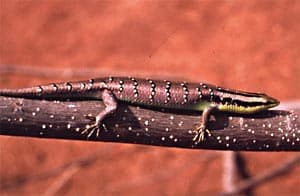
Barred tree skink
The barred tree skink (Dasia johnsinghi) is a species of skink found in the southern Western Ghats of India. Little is known about its specific characteristics, but as a skink, it is likely a small, agile lizard with smooth scales.
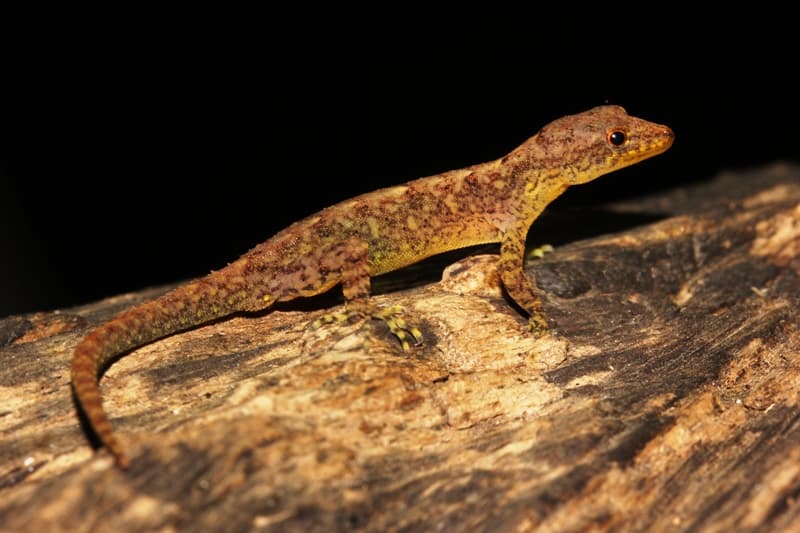
Mahabal's day gecko
Mahabal's day gecko (Cnemaspis mahabali) is a species of gecko native to India. This lizard is known for its presence in the northern Western Ghats region. Specific details regarding its distinctive features, habitat, and behavior are limited in available records.

Hemidactylus anamallensis
Dravidogecko anamallensis, also known as the Anamalay Hill gecko, is a species of gecko native to the South Indian hills of Palni, Anamalai, and Tirunelveli. This species was reassigned to the genus Dravidogecko in 2019 following molecular phylogenetic studies that indicated a separate evolutionary origin from other Hemidactylus species.