
Thecadactylus rapicauda
The turnip-tailed gecko (Thecadactylus rapicauda) is a large gecko species known for its distinctive swollen tail, which stores fat and can be shed to distract predators. It inhabits palm trees across a wide range from Mexico to Brazil and islands in the Lesser Antilles, and is active at night, capable of vocalizing chirps. Its coloration can vary significantly, and individuals possess the ability to change their skin tone.
Key Facts
- ›Reaches a snout-to-vent length of up to 120 mm.
- ›Possesses a swollen tail used for fat storage and defense.
- ›Can change its coloration from pale gray to deep orange.
- ›Vocalizes with chirps, primarily when active at night.
- ›Found between 5 and 30 feet up palm tree trunks.
- ›Can shed its tail to evade predators.
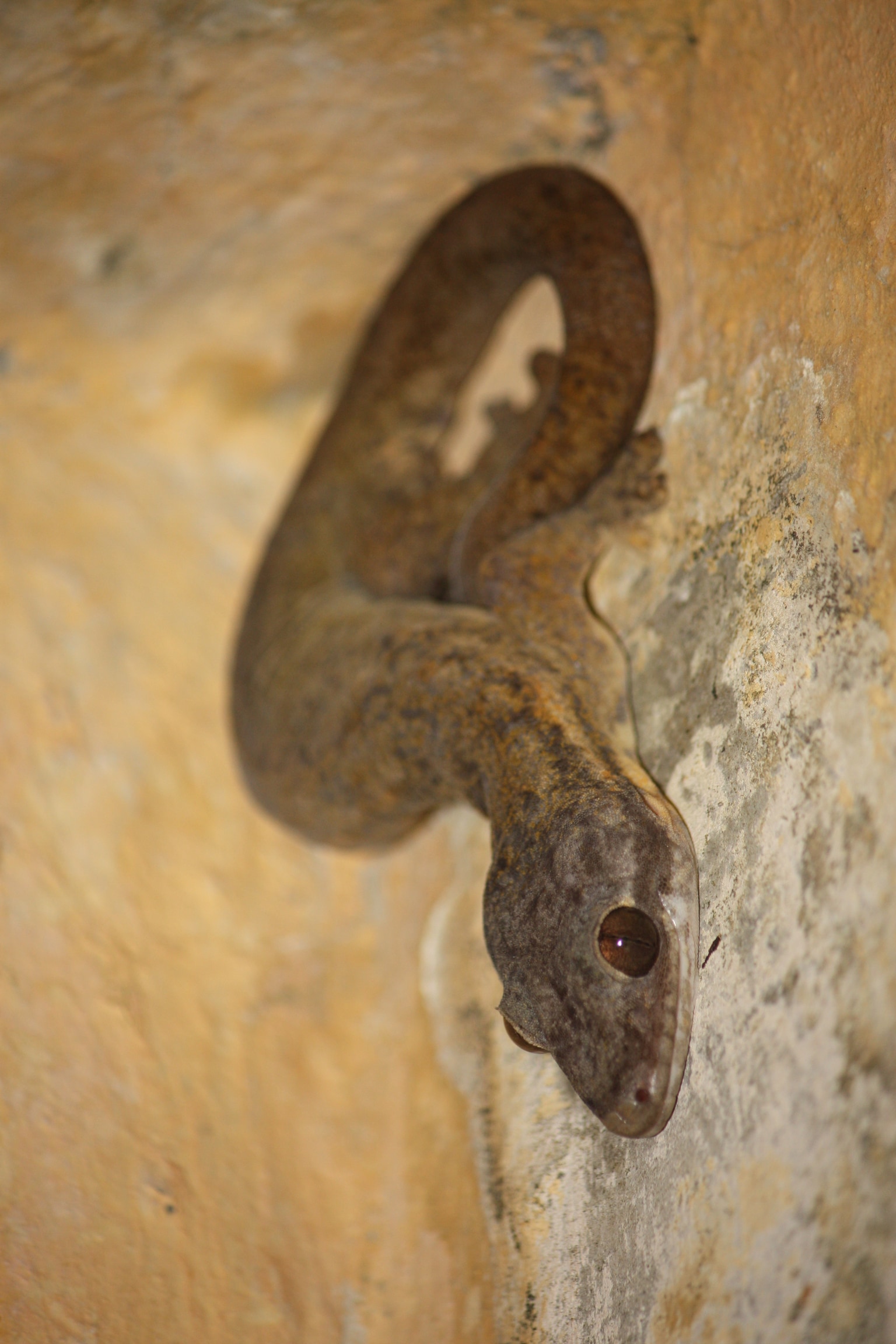
Turnip-Tailed Gecko
Mexico, Central America, South America, Lesser Antilles
Palm Trees, Arboreal
- Large Gecko Reaching Up To 120 mm Snout-To-Vent Length.
- Swollen Tail Used For Fat Storage.
- Coloration Varies From Pale To Dark Gray To Deep Orange.
- Individuals Can Change Color.
Unknown From Provided Text.
- Nocturnal.
- Can Vocalize A Series of Chirps, Mainly When Active At Night.
- Waves Tail As A Sign of Aggression.
- Can Shed Tail To Distract Predators.
Phyllostomid Bat
About Thecadactylus rapicauda
Thecadactylus rapicauda: The Turnip-Tailed Gecko
The turnip-tailed gecko, scientifically known as Thecadactylus rapicauda, is a notable species of gecko recognized for its substantial size and distinctive physical adaptations. This species is widely distributed across diverse geographic regions, extending from Mexico southward through Central America and into South America, reaching as far south as Brazil. It also inhabits numerous islands within the Lesser Antilles archipelago.
Key Characteristics and Habitat
Thecadactylus rapicauda is characterized by its large build, with adults reaching a snout-to-vent length of up to 120 millimeters. A prominent feature is its swollen tail, which serves the crucial function of fat storage. This tail is also utilized in defensive behaviors; the gecko may wave it aggressively or shed it entirely to distract pursuing predators. The coloration of the turnip-tailed gecko is variable, ranging from pale to dark gray, and can even extend to deep orange. Intriguingly, individuals possess the ability to alter their skin coloration.
These geckos are primarily nocturnal, exhibiting their activity during the night. During this time, they are known to vocalize with a series of chirps. Their preferred habitat is arboreal, and they are commonly found between 5 and 30 feet up the trunks of palm trees, indicating a preference for these structures within their tropical and subtropical environments.
Taxonomy and Predators
For a considerable period, Thecadactylus rapicauda was believed to be the sole member of its genus. However, in 2007, the species T. solimoensis was described, expanding the genus's known diversity. Among its natural predators, the phyllostomid bat species Chrotopterus auritus has been identified. Parasitic organisms, such as the malarial parasite Plasmodium aurulentum, have also been documented in association with this gecko species.
Source: Wikipedia ↗
Frequently Asked Questions
What is the turnip-tailed gecko's scientific name?
The scientific name for the turnip-tailed gecko is Thecadactylus rapicauda. This species was long considered the sole member of its genus until another species, T. solimoensis, was identified in 2007.
Where can the turnip-tailed gecko be found?
The turnip-tailed gecko has a wide distribution, ranging from Mexico southward through Central America and into South America as far south as Brazil. It is also found on numerous islands within the Lesser Antilles.
What are the distinctive physical features of Thecadactylus rapicauda?
The cadactylus rapicauda is a large gecko, measuring up to 120 mm in snout-to-vent length. Its most notable feature is its swollen tail, which serves as a fat reserve. Its color can vary from pale to dark gray or deep orange, and individuals have the ability to change their skin color.
Is the turnip-tailed gecko active during the day or night?
The turnip-tailed gecko is nocturnal, meaning it is primarily active during the night. It can be heard vocalizing a series of chirps, especially while it is active after dark.
What are the natural predators of Thecadactylus rapicauda?
One known predator of the turnip-tailed gecko is the phyllostomid bat, specifically Chrotopterus auritus. The gecko also has defense mechanisms, such as shedding its tail, to evade threats.
What is the habitat of the turnip-tailed gecko?
This species is frequently found in arboreal environments, typically residing 5 to 30 feet up the trunks of palm trees. Its habitat spans a broad geographic area, indicating adaptability to various tropical and subtropical regions.
Related Lizards

Andaman giant gecko
The Andaman giant gecko (Gekko verreauxi), also known as the Andamanese giant gecko, is a large gecko species indigenous to the Andaman Islands of India. Reaching over 30 cm in total length, it is one of the world's largest geckos, characterized by its shy nature and excellent camouflage, which aids its survival in its arboreal and semi-arboreal habitats.

Cyrtodactylus adleri
Cyrtodactylus adleri is a species of bent-toed gecko native to the Nicobar Islands of India. It is distinguished from similar species by its dark spots on the dorsum, specific scale arrangements, and the presence of a pre-anal groove. This nocturnal and arboreal lizard prefers forest habitats.

Matoatoa brevipes
Matoatoa brevipes is a gecko species endemic to Madagascar, specifically found along its southwestern coast. This nocturnal lizard inhabits hollow tree branches within dry, open spiny forests. It belongs to the Gekkonidae family and is characterized by its adaptation to this unique arid environment.