
Urosaurus ornatus
The ornate tree lizard (Urosaurus ornatus) is a widespread lizard species found in the southwestern United States and northwestern Mexico. It is known for its striking sexual dimorphism, particularly the variation in throat coloration among males, which correlates with different reproductive strategies and social hierarchies. These lizards inhabit a variety of environments, from deserts to riparian areas, and are often studied for their physiological responses to stress.
Key Facts
- ›Found in the southwestern United States and northwestern Mexico.
- ›Males exhibit diverse throat coloration (e.g., orange, blue-spotted orange) linked to aggression and reproductive strategies.
- ›Can be arboreal, semi-arboreal, or saxicolous (rock-dwelling).
- ›Diet primarily consists of insects but can include plants and vegetables.
- ›Females lay clutches of 2-7 eggs, with size influenced by female body size and environmental conditions.
- ›The species has been used to study physiological changes during the fight-or-flight response.
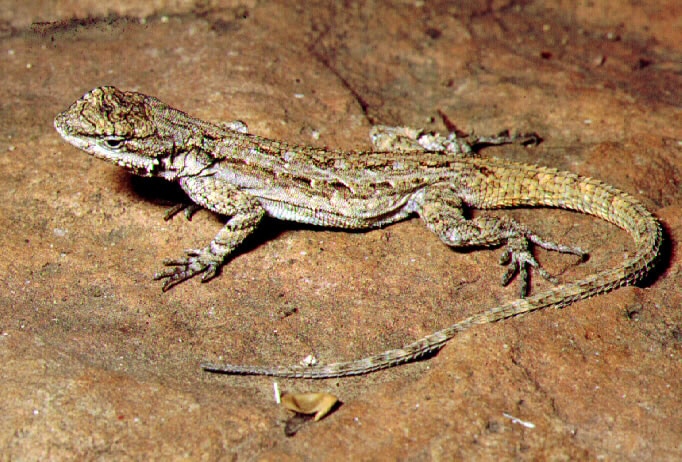
Ornate Tree Lizard, Tree Lizard
Southwestern United States, Northwestern Mexico
Desert, Riparian Habitats, Montane Habitats, Areas With Trees and Shrubs, Rocky Areas
- Snout-To-Vent Length Up To 59 mm .
- Adult Males Possess Paired Turquoise Patches of Skin On the Abdomen.
- Females Lack Abdominal Coloration.
- Males Exhibit Variation In Throat Coloration, Including Solid Orange Or Orange With Blue Spots.
- the Blue Spot On the Throat Fan Can Vary In Size.
Insects, Insect Larvae, Plants, Vegetables
- Males With Blue-Spotted Throats Are More Aggressive and Defend Territories.
- Orange-Colored Males Are Less Aggressive and Can Be Nomadic During Dry Years.
- Throat Coloration Influences Social Status and Reproductive Behavior.
- Exhibit Anti-Predator Behaviors Including Hiding and Flight Initiation.
- Activity Patterns Are Influenced By Temperature and Season, Generally Active From February To November.
- Males Have Enlarged Testes From June To November.
- Females Have Enlarged Ovarian Follicles From March To August.
About Urosaurus ornatus
Urosaurus ornatus: The Ornate Tree Lizard
The ornate tree lizard, scientifically known as Urosaurus ornatus, is a common and widely distributed lizard species found across the southwestern United States and northwestern Mexico. This species is notable for its adaptability, inhabiting a diverse range of environments including deserts, riparian areas, montane regions, and rocky outcrops. It is often referred to as the "ornate tree lizard" due to its semi-arboreal nature, though it can also be found on the ground and among rocks.
Appearance and Variation
Adult ornate tree lizards typically reach a snout-to-vent length of up to 59 millimeters (2.3 inches). A striking feature of this species is the sexual dimorphism, particularly in adult males, which possess distinctive paired turquoise patches of skin on their abdomen, absent in females. Furthermore, male ornate tree lizards exhibit significant variation in throat coloration, a trait that has been a subject of extensive research. While some populations may only display one or two color types, up to nine different color patterns have been documented within the species. These color morphs, primarily characterized by variations in orange and blue on the throat fan (dewlap), are closely linked to an individual's social status, aggression levels, and reproductive strategies.
Social Hierarchies and Reproduction
The differences in throat coloration among males are not merely aesthetic; they play a crucial role in establishing social hierarchies and influencing reproductive success. Males with a blue spot within an orange throat patch (OB males) tend to be more aggressive and territorial, often defending areas containing multiple females. In contrast, males with a solid orange throat (O males) are typically less aggressive and may exhibit more nomadic behavior, especially during dry periods. The blue patch on the throat is thought to act as a signal of fighting ability and social status, with larger blue spots often indicating greater dominance. This coloration is also a factor in sexual selection, as females tend to mate with males possessing larger blue spots.
Reproduction in Urosaurus ornatus generally occurs from late March through August. Females can lay multiple clutches per year, with each clutch typically containing two to seven eggs. The size of a female's clutch is influenced by her own body size and environmental conditions, with larger females and wetter years often correlating with larger clutch sizes. Hatchlings reach sexual maturity within about a year of hatching.
Ecological Significance and Research
The ornate tree lizard's complex social structure and the influence of its varied male morphs on behavior and physiology have made it a valuable subject for scientific study. Researchers have utilized this species to investigate physiological changes related to the fight-or-flight response, stress, and competitive interactions. Studies have also documented its life history and reproductive costs in natural populations, particularly in New Mexico and Arizona. The species' ability to adapt to a wide range of climatic conditions within its broad geographic range further contributes to its ecological significance.
Source: Wikipedia ↗
Frequently Asked Questions
What is the ornate tree lizard's scientific name?
The scientific name for the ornate tree lizard is Urosaurus ornatus.
Where does the ornate tree lizard live?
Urosaurus ornatus is native to the southwestern United States, including states like California, Nevada, Utah, Colorado, Wyoming, Arizona, New Mexico, and Texas. It also inhabits northwestern Mexico in states such as Sonora, Sinaloa, Chihuahua, and Coahuila.
What does the ornate tree lizard eat?
The ornate tree lizard primarily feeds on insects and their larvae. However, their diet can also include plants and vegetables, and they have been known to consume inanimate objects if mistaken for food. Their diet varies seasonally.
Are there different types of male ornate tree lizards?
Yes, male ornate tree lizards exhibit variations in throat coloration, leading to different morphs such as orange (O) and orange-blue (OB) types. These color differences are associated with distinct hormonal profiles, behaviors, and reproductive strategies.
How does throat color affect behavior in male ornate tree lizards?
Throat coloration in male ornate tree lizards plays a significant role in social hierarchies and reproductive behavior. Males with blue spots (OB) are generally more aggressive and territorial than those with only orange throats (O), and the size of the blue spot can indicate dominance.
What is the reproductive cycle of the ornate tree lizard?
Female ornate tree lizards typically lay 2-7 eggs per clutch, with reproduction occurring from late March through August. Females may lay more than one clutch per year. Hatchlings reach sexual maturity within one year.
What are the main predators of the ornate tree lizard?
While specific predators are not detailed, like most small lizards, they are likely prey for various birds of prey, snakes, and other predatory animals found within their habitat. Their anti-predator behaviors include hiding and fleeing.
Related Lizards

Chinese water dragon
The Chinese water dragon is a large, diurnal lizard native to subtropical forests in southern China and Southeast Asia. These semi-arboreal reptiles are known for their green coloration, prominent crests in males, and their reliance on unpolluted streams for escape and habitat. Their diet primarily consists of arthropods, but they are omnivorous and will consume vertebrates and plants.

Asian water monitor
The Asian water monitor (Varanus salvator) is a large lizard native to South and Southeast Asia, recognized as the second-largest lizard species after the Komodo dragon. These semiaquatic reptiles are excellent swimmers and inhabit riparian areas, adapting well to environments near human civilization. They are carnivorous, with a diverse diet, and play a role in ecosystems by consuming carrion.
Varanus salvator
The Asian water monitor (Varanus salvator) is a large lizard native to South and Southeast Asia, known for its semi-aquatic lifestyle and adaptability to various habitats, including urban environments. It is recognized as the second-largest lizard species, after the Komodo dragon, and plays a role in ecosystem health by consuming carrion. Despite significant exploitation for its skin, its wide distribution and adaptable nature have led to its classification as Least Concern by the IUCN.