
Varanus eremius
The rusty desert monitor (Varanus eremius), also known as the pygmy desert monitor, is a small monitor lizard native to the desert and semi-desert regions of Australia. It is characterized by its reddish-brown coloration with irregular black or deep-brown spots and cream-colored and deep-brown longitudinal stripes on its tail. This ground-dwelling species primarily preys on other lizards.
Key Facts
- ›Native to the desert and semi-desert areas of South Australia, Western Australia, and the Northern Territory.
- ›Reaches a total length of approximately 50 cm.
- ›Upper coloration is reddish-brown with irregular black or deep-brown spots, and its tail features longitudinal stripes.
- ›Primarily feeds on other lizards, making up about 76% of its diet by volume.
- ›Spends its life on the ground and rarely climbs trees.
- ›Known to host physalopteran nematodes due to its lizard prey, but worm development is arrested in a cystic stage.

Pygmy Desert Monitor, Rusty Desert Monitor
Australia, South Australia, Western Australia, Northern Territory, Queensland
- Reaches A Total Length of About 50 cm.
- Upper Side Coloration Is Light To Dark Reddish-Brown With Numerous, Irregularly Distributed, Black Or Deep-Brown Spots.
- May Have Smaller Primrose Or Cream-Colored Spots.
- Tail Shows Alternating Cream-Colored and Deep-Brown Longitudinal Stripes, Often Broken Into Scattered Spots Near the Base.
- Conspicuous Black Stripe Extends From the Snout To the Eye.
Other Lizards, Large Grasshoppers, Scorpions, Centipedes, Cockroaches, Caterpillars
Spends Its Life On the Ground., Seldom Climbs Trees.
Carnivore, Insectivore, Saurian
About Varanus eremius
The Rusty Desert Monitor (Varanus eremius)
The rusty desert monitor, scientifically designated as Varanus eremius, is a small lizard species indigenous to Australia. It is also commonly referred to as the pygmy desert monitor and is recognized for its distinct coloration and ground-dwelling habits. This species belongs to the subgenus Odatria, a group that includes other small monitor lizards.
Distribution and Habitat
Varanus eremius holds the distinction of being the most widespread among the pygmy goannas. Its natural habitat encompasses the arid and semi-arid regions of South Australia, Western Australia, and the Northern Territory. There is also a possibility that its range extends into Queensland. These environments are characterized by their dry conditions and sparse vegetation.
Physical Characteristics
Adult rusty desert monitors typically reach a total length of approximately 50 centimeters. The dorsal side of the lizard displays a coloration ranging from light to dark reddish-brown, adorned with numerous irregularly distributed spots of black or deep brown. In some individuals, smaller spots of a primrose or cream hue may also be present. The tail of Varanus eremius is marked by alternating longitudinal stripes of cream and deep brown, which can often fragment into scattered spots near the tail's base. A notable feature is the presence of a conspicuous black stripe that extends from the snout to the eye.
Behavior and Diet
This species is primarily terrestrial, spending its entire life on the ground and rarely ascending trees. The diet of the rusty desert monitor, as indicated by analyses of stomach contents, consists predominantly of other lizards, which constitute about 76% of their intake by volume. Their prey also includes large grasshoppers and, on occasion, scorpions, centipedes, cockroaches, and caterpillars.
Parasites and Health
Due to their diet of lizard prey, which are known hosts for physalopteran nematodes, rusty desert monitors in the wild often exhibit a higher prevalence and intensity of larval cysts. These cysts are found in the stomach tissue and body cavity. However, a unique aspect of this species is that the development of these worms is arrested in a cystic stage within Varanus eremius, which apparently reduces the burden of adult worms on the host's body.
Source: Wikipedia ↗
Frequently Asked Questions
What is the rusty desert monitor?
The rusty desert monitor, scientifically known as Varanus eremius, is a species of small monitor lizard found in Australia. It is also referred to as the pygmy desert monitor and belongs to the subgenus Odatria.
Where does the rusty desert monitor live?
This species is most widespread among pygmy goannas and inhabits the desert and semi-desert areas of South Australia, Western Australia, and the Northern Territory. Its range may also extend into Queensland.
What does the rusty desert monitor look like?
The rusty desert monitor typically reaches a total length of around 50 cm. Its upper body is reddish-brown with scattered black or deep-brown spots, and its tail displays alternating cream and deep-brown longitudinal stripes. A distinctive black stripe runs from its snout to its eye.
What does the rusty desert monitor eat?
The diet of the rusty desert monitor consists mainly of other lizards, accounting for approximately 76% of its food intake by volume. It also consumes large grasshoppers and occasionally scorpions, centipedes, cockroaches, and caterpillars.
What are the behavioral traits of the rusty desert monitor?
This lizard is terrestrial, spending its life on the ground and seldom climbing trees. Little is officially documented about its social structure or specific activity patterns beyond its ground-dwelling nature.
Are there any known issues with parasites in the rusty desert monitor?
Due to its diet of primarily lizard prey, which can host physalopteran nematodes, the rusty desert monitor in the wild often has a higher prevalence of larval cysts. However, the development of these worms is arrested in a cystic stage, which appears to reduce the burden of adult worms on the host.
Related Lizards
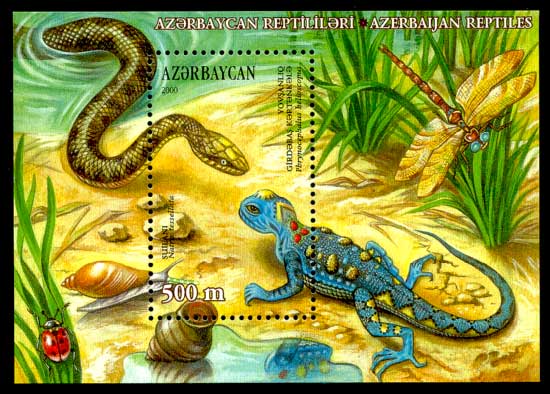
Persian toad-headed agama
The Persian toad-headed agama (Phrynocephalus persicus) is a small, diurnal desert lizard found in the arid regions of Iran and potentially Azerbaijan. Characterized by its cryptic coloration that matches its sandy environment, this agamid species exhibits unique behaviors and physiological adaptations for desert life. It is known for its short lifespan and a diet primarily consisting of arthropods.

Eremias arguta
The steppe-runner (Eremias arguta) is a lizard species found across a wide range of countries in Eastern Europe and Asia. It inhabits steppe and semi-desert environments, characterized by its adaptation to arid conditions.
Steppe-runner
The Steppe-runner is a species of lizard native to a wide range across Eastern Europe and Central Asia. It is characterized by its adaptation to open, arid environments and is known for its agility in escaping predators.