
Varanus panoptes
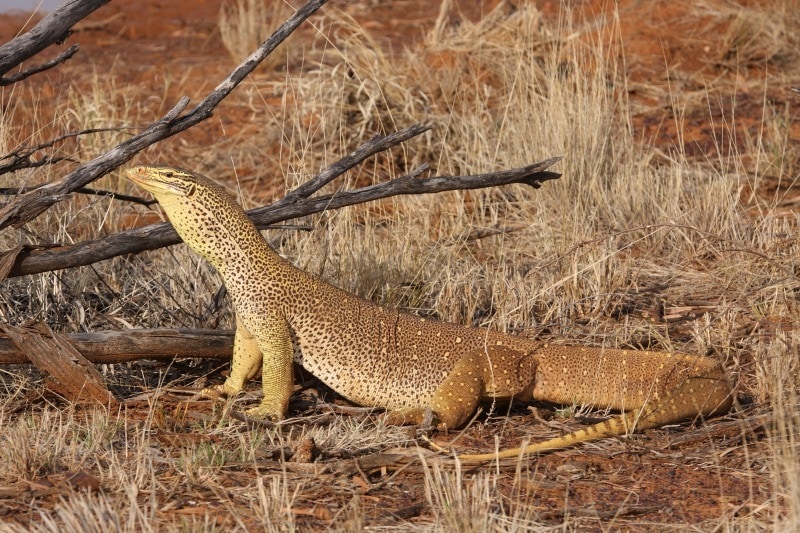
The yellow-spotted monitor, also known as the Argus monitor (Varanus panoptes), is a large terrestrial lizard found across northern and western Australia and southern New Guinea. It is recognized by its distinctive dark spots arranged in rows along its back and is one of Australia's largest lizards. This species is a versatile predator with a fast life cycle and a remarkable ability to dig deep burrows.
Key Facts
- ›Found in northern and western Australia and southern New Guinea.
- ›Possesses distinctive dark spots on its back, often interspersed with paler spots.
- ›Can reach lengths of up to 1.6 meters and is the third largest lizard in Australia.
- ›Exhibits sexual dimorphism, with males growing larger and faster than females.
- ›Known for digging exceptionally deep burrows, averaging 2.6 meters.
- ›Its diet is highly varied, including fish, crabs, birds, rodents, and other reptiles.
Argus Monitor, Yellow-Spotted Monitor, Floodplains Goanna, Horn's Monitor
Australia, New Guinea
Terrestrial, Floodplains, Burrows, Riparian Areas
- Ground-Dwelling Monitor Lizard.
- Resembles the Sand Goanna .
- Large, Dark Spots Arranged In Rows Along the Back, Becoming Distinct In the Center and Interspersed With Smaller, Paler Spots.
- Bands of Color Occur Toward the Tip of the Tail.
- Overall Coloration Is Brownish In the Nominate Subspecies and Reddish In V. P. Rubidus.
- Most Individuals Are Yellow With A Background of Brown Or Dark Tan, But Coloration Varies Individually and By Location.
- Lean Build, Not As Bulky As Some African and Asian Monitor Species.
- Sexual Dimorphism: Females Average 90 cm Total Length, Males Average 120-150 cm.
- Largest Specimens Can Reach 1.6 Meters In Length and Weigh Up To 7 kg.
Fish, Crabs, Small Birds, Rodents, Insects, Other Monitors, Freshwater Velesunio Mussels
- Primarily Terrestrial, Spending Much Time On the Ground.
- Avid Diggers, Creating Large Burrows Or Utilizing Existing Ones.
- Forage In Trees and Water.
- Fast Runners, Capable of Fleeing Up To 100 Meters To Safety.
- Riparian Habits, Often Found Near Permanent Water Sources.
- Exhibit 'Tripoding' Behavior To Spot Prey Or Enemies.
- Hunt By Keying In On Movement.
- In Captivity, Observed Swinging Rodent Prey By the Tail, Possibly To Stun.
- May Utilize Communal Warrens, Sometimes With Multiple Individuals.
- Possible Communal Nesting Within Warrens.
- Dive Underwater To Forage For Mussels During Dry Seasons.
- Can Be Taught To Avoid Cane Toads Through Exposure To Non-Lethal Young Toads.
Carnivore, Insectivore, Piscivore, Crustacean-Eater
Black-Headed Pythons, Olive Pythons
- Cane Toad Poisoning
- Potential Impact of Cane Toads On Population Structure and Numbers
About Varanus panoptes
The yellow-spotted monitor, scientifically known as Varanus panoptes, is a prominent monitor lizard species native to Australia and southern New Guinea. Also recognized as the Argus monitor or, in northern Australia, the floodplains goanna, this species is distinguished by its robust build and striking appearance, featuring large, dark spots arranged in orderly rows along its back.
Habitat and Distribution
Varanus panoptes inhabits a variety of terrestrial environments across northern and western Australia, extending into southern New Guinea. They are often found in riparian areas and are known for their ability to dig extensive burrows, which can reach remarkable depths. These burrows serve as crucial shelters, protecting them from environmental extremes and potential predators.
Physical Characteristics
This lizard is one of Australia's largest, with males typically growing larger than females. Males can reach average total lengths of 120-150 cm, while females average around 90 cm, with exceptional individuals exceeding 1.6 meters. Their coloration varies, with the nominate subspecies generally being brownish and Varanus panoptes rubidus exhibiting a reddish hue. Most individuals display a yellow base color with brown or dark tan markings.
Behavior and Diet
Argus monitors are active foragers, primarily terrestrial but also known to hunt in trees and water. They are swift runners and employ a unique 'tripoding' behavior, standing on their hind legs for a better vantage point. Their diet is opportunistic and broad, encompassing fish, crabs, birds, rodents, insects, and even other reptiles. They are also known to dive for freshwater mussels during drier periods.
Reproduction and Life Cycle
The species exhibits a relatively fast life cycle for large monitors, with some individuals reaching sexual maturity in less than a year. Females lay between 6 and 13 eggs, typically in January and February, within their deep nesting burrows. These burrows are thought to provide stable conditions for egg incubation.
Ecological Role and Threats
Varanus panoptes plays a significant role as an ecosystem engineer due to its high abundance and generalist diet. Their burrowing activities benefit other species, and their predatory impact helps regulate prey populations. However, the species faces severe threats, most notably from the invasive cane toad. Their tendency to consume novel prey makes them particularly vulnerable to toad poisoning, leading to significant population declines in affected areas. Conservation efforts, including captive breeding and educational programs to teach avoidance of toxic toads, are underway.
Source: Wikipedia ↗
Frequently Asked Questions
What is the scientific name for the yellow-spotted monitor?
The scientific name for the yellow-spotted monitor is Varanus panoptes. It is also commonly referred to as the Argus monitor or floodplains goanna in some regions of Australia.
Where are yellow-spotted monitors found?
Varanus panoptes is naturally found in the northern and western regions of Australia, including Arnhem Land, the Kimberley, and Cape York Peninsula. It also inhabits southern New Guinea.
What do yellow-spotted monitors eat?
These monitors are versatile predators with a diet that includes almost anything they can overpower. This includes fish, crabs, small birds, rodents, insects, and even other monitors like dwarf monitors and spiny-tailed goannas.
How large can yellow-spotted monitors get?
Male Argus monitors can reach an average total length of 4–5 feet (120–150 cm), while females average around 3 feet (90 cm). The largest specimens can reach up to 1.6 meters (5 ft 3 in) and weigh up to 7 kg (15 lb).
Are yellow-spotted monitors good diggers?
Yes, yellow-spotted monitors are avid diggers and are known for creating exceptionally deep burrows, averaging 2.6 meters. These burrows are believed to protect eggs from temperature fluctuations, drying out, and cannibalism.
What are the main threats to yellow-spotted monitors?
A significant threat to yellow-spotted monitor populations, particularly in the Top End of Australia, is the infestation of cane toads. These monitors are more vulnerable due to their 'risky' foraging habits, which lead them to consume novel prey like cane toads.
Do yellow-spotted monitors exhibit any unusual behaviors?
Yes, Argus monitors are known to 'tripod,' which involves raising up on their hind legs and using their tail for support. This behavior is used to spot potential prey or enemies from a distance and is also observed in captivity.
Related Lizards

Varanus
Monitor lizards, belonging to the genus Varanus, are a diverse group of lizards recognized for their long necks, powerful tails and claws, and well-developed limbs. They are found across Africa, Asia, and Oceania, with some species also existing as invasive populations. Monitor lizards exhibit a wide range of diets, from primarily carnivorous to partially herbivorous, and possess a complex venom system.

Nile monitor
The Nile monitor is a large lizard native to Sub-Saharan Africa, known for its muscular build, powerful jaws, and striking coloration. It is an adaptable predator found near water bodies and is also recognized for its invasive populations in parts of North America. Despite its size, it is often kept as a pet, though its aggressive nature and significant care requirements pose challenges.

Varanus dumerilii
Dumeril's monitor (Varanus dumerilii), also known as the brown rough-necked monitor, is a species of lizard endemic to Southeast Asia. Primarily found in dense evergreen forests and mangrove swamps, these monitors are characterized by their dark brown coloration and distinct yellow crossbars on the back, with juveniles displaying a striking orange-red or yellow head. They are known crab specialists but have a varied diet and are diurnal and arboreal in their behavior.