
West Cuban anole
The West Cuban anole (Anolis bartschi) is a medium-sized lizard endemic to western Cuba. It is distinguished by the complete absence of a dewlap in both sexes, a rare trait among anoles. This species inhabits forests within limestone karst areas.
Key Facts
- ›Endemic to Pinar del Río Province in western Cuba.
- ›Adult males typically have a snout-to-vent length of 7.5 cm, while females measure 6.4 cm.
- ›Both males and females completely lack a dewlap.
- ›Prefers forest habitats within limestone karst regions.
- ›Reproduces by laying eggs (oviparous).
- ›Females may lay eggs communally in cliff cavities.
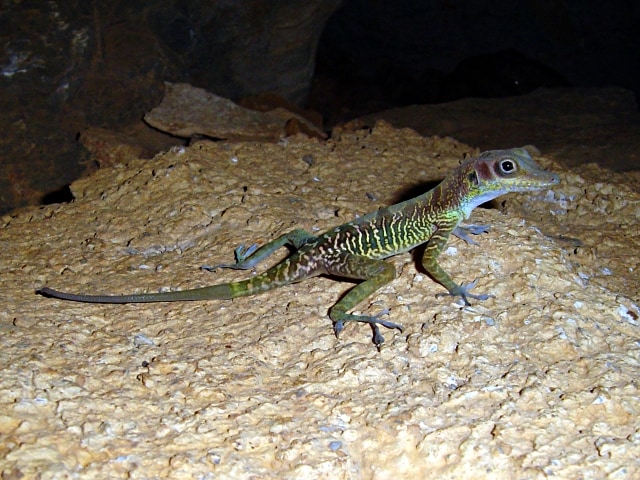
Pinar Del Rio Cliff Anole, Western Cliff Anole, West Cuban Anole
Cuba
Forest, Limestone Karst Areas
- Medium-Sized Anole.
- Adult Males Have A Typical Snout-To-Vent Length of 7.5 cm .
- Adult Females Have A Typical Snout-To-Vent Length of 6.4 cm .
- Completely Lacks A Dewlap In Both Sexes.
- Females May Lay Eggs Communally In Cavities In Steep Cliffs.
About West Cuban anole
The West Cuban anole, scientifically known as Anolis bartschi, is a reptile species endemic to the western part of Cuba, specifically the Pinar del Río Province. This lizard is characterized by its medium size and a unique anatomical feature: the complete absence of a dewlap in both males and females, a trait shared by only a few other anole species.
Habitat and Distribution
The preferred natural habitat of the West Cuban anole consists of forests found within limestone karst areas. Its geographic range is limited to western Cuba, making it a specialized inhabitant of this region.
Reproduction
This species is oviparous, reproducing by laying eggs. A particularly interesting behavior observed in the West Cuban anole is that females may lay their eggs communally. These communal nests are typically found in cavities located on steep cliffs, suggesting specific ecological requirements for successful breeding.
Source: Wikipedia ↗
Frequently Asked Questions
What are the common names for Anolis bartschi?
Anolis bartschi is commonly known as the Pinar Del Rio cliff anole, the western cliff anole, and the west Cuban anole. These names reflect its geographic origin and habitat.
Where can the West Cuban anole be found?
The West Cuban anole is exclusively found in the Pinar del Río Province of western Cuba. Its natural habitat is restricted to this specific region.
What makes the West Cuban anole unique among anoles?
A distinctive feature of the West Cuban anole is the complete absence of a dewlap in both male and female individuals. This trait is shared by very few other anole species.
What kind of habitat does the West Cuban anole prefer?
This lizard species thrives in forest environments situated within limestone karst landscapes. These areas provide the specific conditions it requires for survival.
How does the West Cuban anole reproduce?
The West Cuban anole is oviparous, meaning it reproduces by laying eggs. Notably, females may collaborate to lay their eggs in communal nests found within cliff cavities.
What is the typical size of an adult West Cuban anole?
Adult males typically reach a snout-to-vent length of around 7.5 centimeters (3.0 inches), while females are slightly smaller, with an average snout-to-vent length of 6.4 centimeters (2.5 inches).
Related Lizards

Aaron Bauer's house gecko
Aaron Bauer's house gecko is a species of lizard found in the Western Ghats of Maharashtra, India. It is notable for its relatively large size within its genus, reaching up to 13 cm in snout-to-vent length. This species prefers rocky outcrops within forested areas as its natural habitat.

Adolfus jacksoni
Adolfus jacksoni, also known as Jackson's forest lizard, is a species of lizard belonging to the Lacertidae family, native to East Africa. It prefers forest habitats at significant altitudes and exhibits diurnal and semi-arboreal behaviors. This oviparous species lays clutches of three to five eggs, and communal nesting sites have been observed.

Agama
Agama are a genus of small to moderate-sized, long-tailed lizards native to Africa, particularly sub-Saharan regions. Known for their insectivorous diet and ability to adapt to various habitats, including human settlements, they display striking color changes based on mood and gender. These diurnal reptiles are characterized by powerful hind legs for swift movement and are recognized by their common names, some referencing their head-bobbing displays.