
Ansellia
Ansellia africana, commonly known as the African ansellia or leopard orchid, is a large, perennial orchid species found throughout tropical and subtropical Africa. It is distinctive for its "trash basket" growth habit, where aerial roots form a basket to catch leaf litter for nutrients, and its large, showy flowers that are typically yellow or greenish-yellow with brown spots.
Key Facts
- ›Native to tropical and southern Africa, often found in the canopy of trees near coasts and rivers.
- ›Characterized by large, yellow pseudobulbs and a unique "trash basket" of aerial roots for nutrient collection.
- ›Produces paniculate inflorescences with 10 to 100 delicately scented flowers, each about 6 cm across.
- ›Flowers are short-lived, lasting about 10 days, but are produced in abundance under high light conditions.
- ›Considered an easy species to grow, requiring very bright light and a dry rest period to encourage blooming.
- ›The plant itself can grow very large, with some specimens weighing over a tonne.
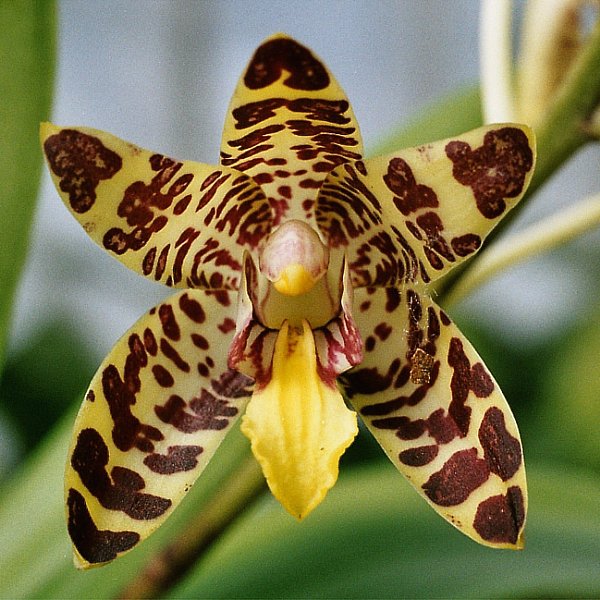
African Ansellia, Leopard Orchid
Epiphyte, Terrestrial
Yellow, Greenish Yellow, Brown Spots
Any Time of the Year, Multiple Times A Year
About Ansellia
Ansellia africana
Ansellia africana, commonly known as the African ansellia or leopard orchid, is a striking and robust member of the Orchidaceae family, native to tropical and southern Africa. This species is notable for its unique "trash basket" growth habit, where its white, needle-like aerial roots form a dense structure around the pseudobulbs. This basket effectively collects falling leaf litter and detritus, which the orchid utilizes for nutrients, often with the help of fungal symbionts.
Description and Habitat
These large, perennial orchids are typically epiphytic, growing attached to the branches of tall trees, often found near coasts and rivers at lower elevations. However, they can also grow as terrestrial plants. The pseudobulbs of Ansellia africana are fusiform and can reach significant sizes, up to 60 cm (24 inches) in length. The plants are known to grow into spectacular clumps, with some specimens estimated to weigh over a tonne, large enough to provide nesting sites for birds like eagle owls. The leaves are leathery and lance-shaped, arising from the top of the pseudobulbs. The roots are a distinctive feature: absorbing roots penetrate the substrate, while the non-absorbing aerial roots form the characteristic trash basket.
Flowers and Blooming
Ansellia africana produces paniculate inflorescences that can be up to 85 cm (33 inches) long, bearing numerous flowers, typically between 10 and 100. The flowers are delicately scented and measure approximately 6 cm (2.4 inches) across. Their color ranges from yellow to greenish-yellow, often adorned with brown spots. The flowers are short-lived, usually lasting no more than 10 days, but they are produced in abundance when the plant receives sufficient light. While in habitat they often bloom at the end of dry spells, cultivated plants can bloom multiple times a year if given high light levels and subjected to short dry periods. The species exhibits wide variability in flower shape, color, and markings across its distribution.
Cultivation
Ansellia africana is considered an easy orchid to cultivate. To encourage blooming, it requires very bright light, around 2000 foot candles, and a dry rest period of approximately six weeks in the fall. While naturally drought-tolerant and capable of enduring months without water in habitat, maintaining even moisture throughout the year generally leads to better growth. Plants receiving adequate light will develop a yellowish hue in their leaves, a normal characteristic due to CAM photosynthesis, whereas very green leaves indicate insufficient light. Due to their trash basket habit and tendency to culture mycorrhizal fungi, these orchids can break down their growing medium more rapidly than other species. Their roots, unlike those of most epiphytic orchids, are not significantly photosynthetic, appearing white and pale.
Source: Wikipedia ↗
Frequently Asked Questions
What is the "trash basket" habit of Ansellia africana?
Ansellia africana is known as a "trash basket" orchid because its white, needle-like aerial roots grow upwards to form a basket. This structure collects decaying leaves and detritus, which the plant then absorbs for nutrients.
What do the flowers of Ansellia africana look like?
The flowers of Ansellia africana are typically yellow or greenish-yellow, often marked with brown spots. They have a three-lobed lip with three yellow projections and are delicately scented. Each flower measures about 6 cm across.
What are the growing requirements for Ansellia africana?
Ansellia africana is an easy orchid to grow but requires very bright light, around 2000 foot candles, to bloom well. It also benefits from a dry rest of about six weeks in the fall. While drought-tolerant in habitat, keeping the plants evenly moist throughout the year generally leads to better performance.
Where is Ansellia africana found in the wild?
This orchid is native to tropical and southern Africa. It is typically found along coasts and rivers, growing in the canopy of trees at elevations generally below 700 meters, though occasionally up to 2,200 meters.
How large can Ansellia africana plants grow?
Ansellia africana can grow into very large clumps, with pseudobulbs reaching up to 60 cm in length. Some plants have been estimated to weigh over a tonne, and even large birds like eagle owls have been observed nesting within their clumps.
Related Orchid species
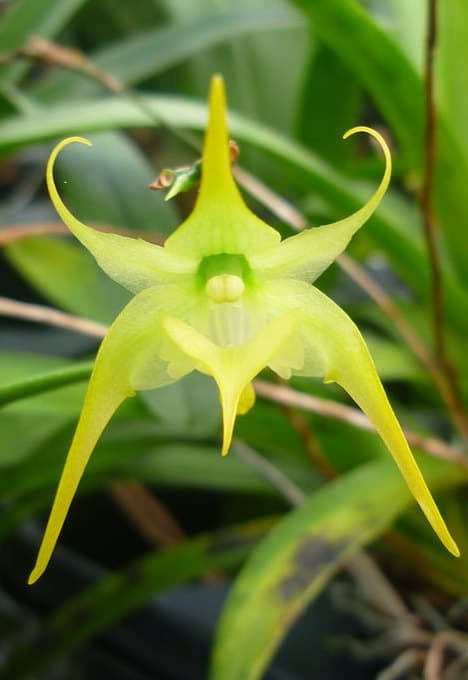
Aeranthes
Aeranthes, also known as Aerth in horticulture, is a genus of orchids comprising 47 species. These orchids are primarily found in the shady, humid tropical forests of Zimbabwe, Madagascar, and islands in the Western Indian Ocean. Their name, meaning 'aerial flower,' reflects the appearance of their blooms, which are almost translucent greenish-yellow and feature long, narrow shoots.

Disa
Disa is a genus of approximately 182 species of flowering plants in the orchid family, Orchidaceae. Primarily found in tropical and southern Africa, with extensions into the Arabian Peninsula, Madagascar, and Réunion, these orchids are distinguished by their unique floral structures that often feature prominent sepals and small petals and lips, adapted for specific pollinators. Some species are also cultivated for their ornamental value, notably Disa uniflora, known as 'The Pride of Table Mountain'.

Bonatea
Bonatea is a genus of orchids primarily found in tropical and southern Africa, with one species reaching into Yemen and Saudi Arabia. These orchids are characterized by their diverse geographic distribution and are recognized for their unique botanical features within the orchid family.