
Rufous owl
The rufous owl (Ninox rufa), also known as the rufous boobook, is a large owl species native to Australia, Indonesia, and Papua New Guinea. Its common name derives from its rufous-coloured adult plumage, and it is distinguished by its generalist nocturnal predation and typically solitary nature, though it can be fiercely defensive of its nest and young. It is considered a species of least concern by the IUCN, despite experiencing a population decline.
Key Facts
- ›The rufous owl is a large species, measuring 46–57 cm in length with a wingspan of 100–120 cm.
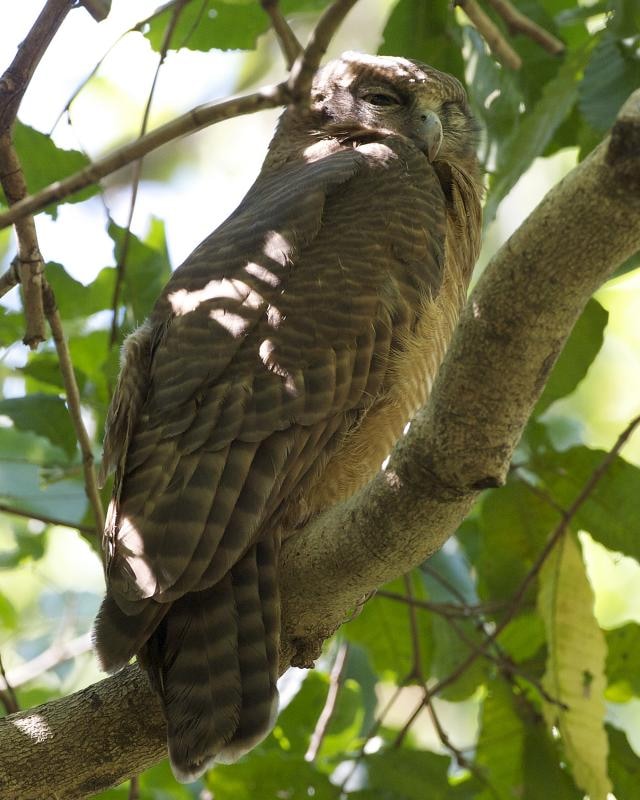
- ›Adult plumage is characterized by dark reddish-brown upperparts with light brown barring and rufous underparts with thin cream bars.
- ›They are predominantly nocturnal predators with a diverse diet including birds, insects, and small mammals.
- ›Rufous owls inhabit rainforests and their margins, as well as other forests, moist savannas, and inland wetlands.
- ›The species is found across northern Australia, New Guinea, and the Aru Islands.
- ›While generally not vocal, they communicate with calls of various pitches, especially during the breeding season.
Rufous Boobook
Rainforests, Margins of Rainforests, Other Forests, Moist Savannas, Inland Wetlands
Australia, Indonesia, Papua New Guinea
Birds, Insects, Small Mammals, Flying Foxes, Possums, Rodents
About Rufous owl
The rufous owl (Ninox rufa), also referred to as the rufous boobook, is a large owl species belonging to the family Strigidae. First described in 1846, its common name directly reflects the distinctive rufous-coloured feathers that characterize its adult plumage. This species, while considered uncommon, boasts a wide geographic distribution that encompasses parts of Australia, Indonesia, and Papua New Guinea, making it the only exclusively tropical owl found in Australia.
Description and Habitat
Adult rufous owls typically measure between 46 and 57 cm in length, with a wingspan ranging from 100 to 120 cm. Their plumage is predominantly dark reddish-brown on the upperparts, marked with light brown barring, while the underparts are rufous with fine cream bars. They possess striking golden-yellow eyes and a light grey, hooked bill. Females tend to be slightly lighter in weight than males. The rufous owl inhabits terrestrial ecosystems, primarily favouring rainforests and their immediate margins. Additional habitats include other forest types, moist savannas, and inland wetlands.
Behavior and Diet
Rufous owls are characterized by their shy and elusive nature, though they are known to exhibit aggression when their nests or young are threatened. They are almost exclusively nocturnal predators, spending their days roosting. Their diet is highly diverse, consisting of birds, insects, and a range of small mammals, including flying foxes and possums. Hunting strategies employed include perching and ambushing, snatching prey in flight, or swooping from above to capture prey on the ground or from water.
Reproduction and Conservation
The breeding season for the rufous owl typically runs from June to September, depending on local climate conditions. Males attract females with a double call, and the female lays one or two eggs in a nest, often situated high in trees. Both parents aggressively defend the nest and young. According to the IUCN Red List, the rufous owl is classified as a species of least concern. Despite a noted population decline, it is not considered rapid enough to warrant a more threatened status. Nevertheless, the species faces threats from habitat destruction through deforestation and forest fires.
Source: Wikipedia ↗
Frequently Asked Questions
What does the rufous owl look like?
The rufous owl is a large owl with dark reddish-brown upperparts and rufous underparts, both featuring barring and cream markings. Adults have golden-yellow eyes and a grey hooked bill with black bristles at its base. Their heads are relatively small for their body size.
Where does the rufous owl live?
This owl species has a wide geographic range, being native to the Aru Islands, New Guinea, and northern Australia. In Australia, they are found in areas like Arnhem Land, the northern Kimberleys, and the eastern Cape York Peninsula.
What do rufous owls eat?
The rufous owl is a skilled hunter with a very diverse diet. They prey on a variety of animals including birds, insects, and small to medium-sized mammals such as flying foxes and possums. They employ several hunting techniques, including snatching prey from the air or ground.
When do rufous owls breed?
The breeding season for the rufous owl typically occurs from June to September, influenced by the warmth of their habitat. During this period, males and females communicate with calls to initiate mating. The female lays one or two eggs in a nest, often high in trees.
What is the conservation status of the rufous owl?
The rufous owl is classified as a species of least concern on the IUCN Red List. Although its population is decreasing, the rate of decline is not considered rapid enough to warrant a more threatened status. However, they face threats from habitat clearing and hunting.
Related Owl species

Andaman scops owl
The Andaman scops owl is a small owl species native to the Andaman Islands of India, characterized by its predominantly brown plumage with white speckles and striking yellow eyes. First described in 1873, this nocturnal hunter inhabits semi-open areas and is known for its distinctive pulsating hoot. Despite some population decline due to deforestation, it is currently listed as 'Least Concern' by the IUCN.

Bare-shanked screech owl
The bare-shanked screech owl is a large owl found in the mountain forests of Costa Rica, Panama, and northwestern Colombia. It is distinguished by its bare lower legs and yellowish-pink toes. This species primarily hunts at night for large insects, shrews, and small rodents.

Buffy fish owl
The buffy fish owl (Ketupa ketupu), also known as the Malay fish owl, is a species of fish owl native to Southeast Asia. It is distinguished by its prominent ear tufts, powerful talons adapted for fishing, and a distinctive morose facial expression due to its bill placement. Primarily inhabiting tropical forests and wetlands, it is a nocturnal predator with a varied diet.