
Sandy scops owl
The sandy scops owl, also known as the cinnamon scops owl, is a small owl species native to the African tropical rainforest. It is characterized by its pale rufous plumage, plain face, pale yellow bill, and yellow eyes, with a distinctive pale stripe along its shoulders. This owl is rarely seen, and much of its behavior and habits remain little known.
Key Facts
- ›Found in lowland evergreen forests, open canopy forests, and scrubland across tropical Africa.
- ›Possesses pale rufous brown plumage with fine white spots and buff bars.
- ›Distinguished by a plain face, pale yellow bill, yellow eyes, and a noticeable pale shoulder stripe.
- ›Likely crepuscular and insectivorous, with a diet including grasshoppers and crickets.
- ›Breeding season is thought to occur in February and March.
- ›Scientific name is Otus icterorhynchus.

Cinnamon Scops Owl
Lowland Evergreen Forest, Open Canopy Forest, Scrub, Open Forest Mosaic Land
Africa
Grasshoppers, Crickets
About Sandy scops owl
The sandy scops owl (Otus icterorhynchus), also known as the cinnamon scops owl, is a small owl species found within the African tropical rainforest. It belongs to the family Strigidae and is thought to be basal in the lineage of the genus Otus, though genetic testing is limited.
Distribution and Habitat
This owl inhabits a scattered range across tropical Africa, with documented sightings in countries including Guinea, Liberia, Ivory Coast, Ghana, Cameroon, Gabon, Congo, the Democratic Republic of Congo, and the Central African Republic. Its preferred habitats include lowland evergreen forests, open canopy forests, scrubland, and areas of open forest mosaic.
Description and Behavior
The sandy scops owl is characterized by its pale rufous coloration, a plain facial disc, a pale yellow bill, and striking yellow eyes. A distinctive pale stripe runs along its shoulders. The plumage of adults is pale rufous brown, finely spotted with white and barred with buff, with paler and more rufous underparts. The tail and flight feathers are rufous with black barring. The species is rarely observed, and much of its behavior remains a subject of limited knowledge. It is likely crepuscular, meaning it is most active during twilight hours, and its diet is believed to consist primarily of insects such as grasshoppers and crickets. The breeding season is presumed to occur in February and March.
Vocalization
The call of the sandy scops owl is described as a long, whistling sound that descends in pitch, often transcribed as "twooo."
Source: Wikipedia ↗
Frequently Asked Questions
What is the scientific name for the sandy scops owl?
The scientific name for the sandy scops owl is Otus icterorhynchus. It is also sometimes referred to as the cinnamon scops owl.
Where is the sandy scops owl found?
The sandy scops owl has a scattered distribution across the African tropical rainforest. It has been recorded in countries such as Guinea, Liberia, Ivory Coast, Ghana, Cameroon, Gabon, Congo, the Democratic Republic of Congo, and the Central African Republic.
What are the physical characteristics of the sandy scops owl?
Adults are pale rufous brown, finely spotted with white and barred with buff. They have a plain face, a pale yellow bill, and yellow eyes. A pale stripe along the shoulders is a distinctive feature.
What does the sandy scops owl eat?
The sandy scops owl is believed to be insectivorous. Its diet likely includes grasshoppers and crickets, though detailed information is scarce.
When does the sandy scops owl breed?
The breeding season for the sandy scops owl is thought to occur during February and March, though precise details are not widely documented.
Related Owl species
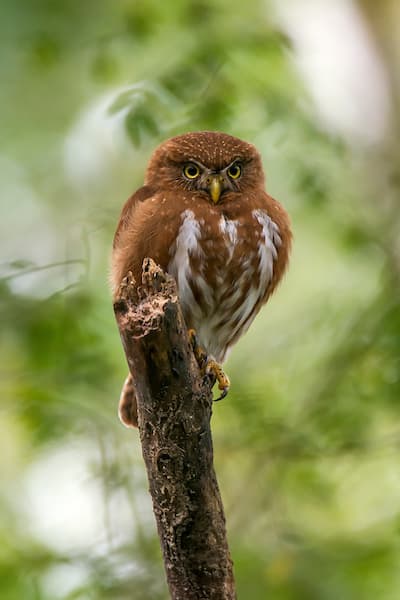
East Brazilian pygmy owl
The East Brazilian pygmy owl (Glaucidium minutissimum) is one of the smallest owls in South America, characterized by its rounded head without ear tufts and distinctive rufous-brown plumage with white spots. It inhabits tropical and subtropical moist evergreen forests and open bush canopies in southeastern Brazil and eastern Paraguay. This species is primarily active during twilight hours, feeding on insects and small vertebrates.
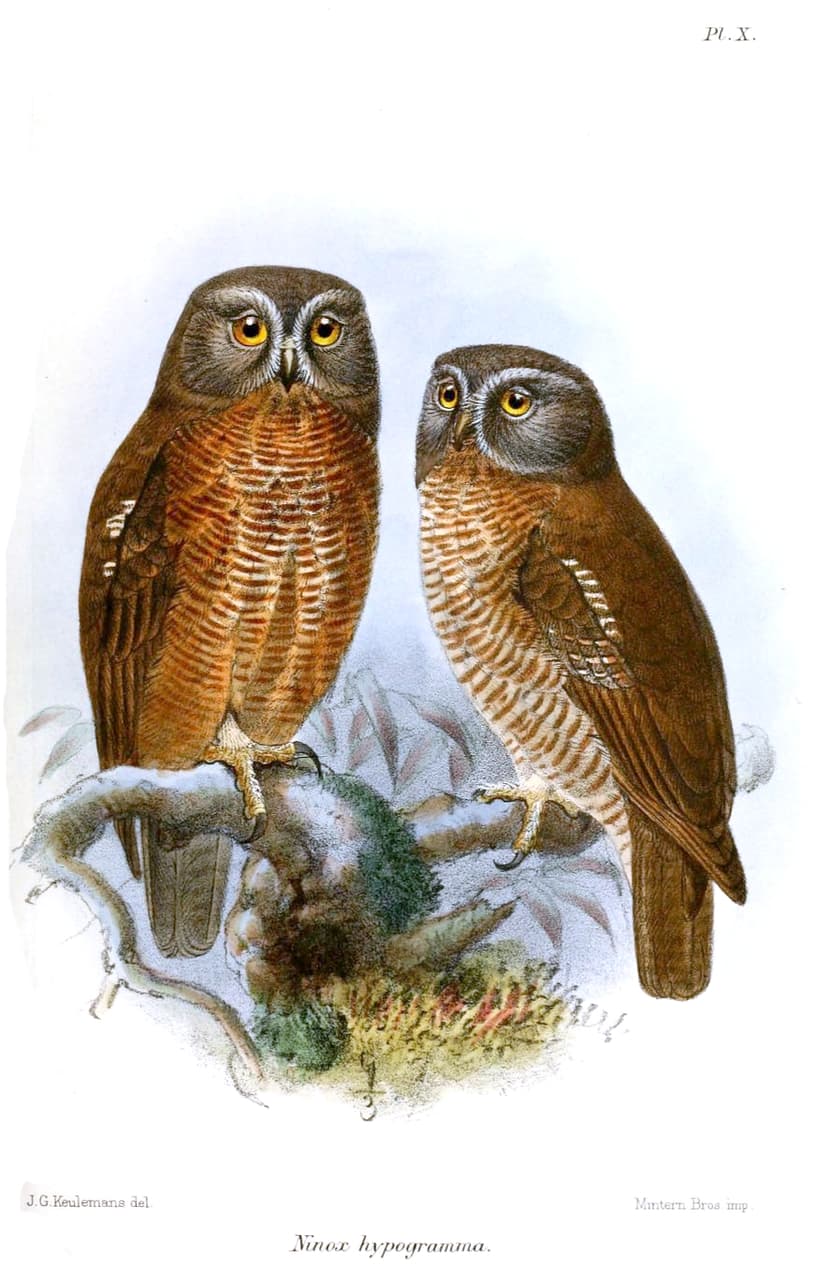
Halmahera boobook
The Halmahera boobook is a species of owl native to the Indonesian islands of Halmahera, Ternate, and Bacan. Its primary habitat is subtropical or tropical moist lowland forests. This owl was formerly recognized as a subspecies of the Moluccan boobook but is now considered a distinct species.
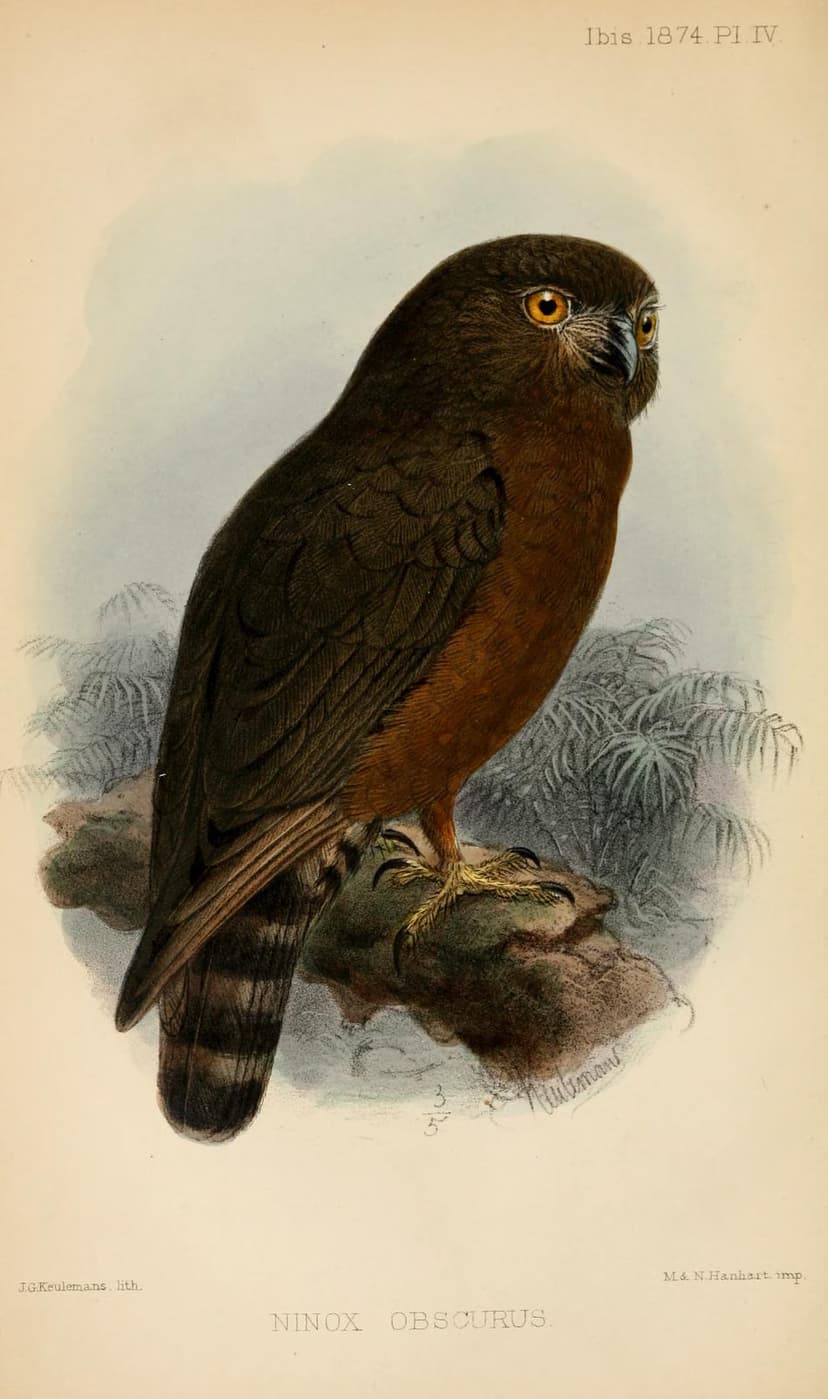
Hume's boobook
Hume's boobook (Ninox obscura) is a species of owl native to the Andaman Islands. This owl inhabits subtropical or tropical moist lowland forests and mangrove forests. It is currently considered a rare species due to ongoing habitat loss.