
White-browed owl
The white-browed owl (Athene superciliaris) is a species of owl endemic to Madagascar, belonging to the family Strigidae. It is distinguished by its large, rounded head without ear tufts, bold white eyebrows, and brown upperparts with white spotting. This nocturnal predator primarily inhabits forests and cultivated areas across the island.
Key Facts
- ›Endemic to the island of Madagascar.
- ›Formerly placed in the genus Ninox, now in Athene based on genetic data.
- ›Characterized by a dumpy build, large rounded head, and prominent white eyebrows.
- ›Primarily feeds on insects and small vertebrates, often caught from a perch.
- ›Nests in shallow scrapes on the ground, laying 3-5 white eggs.
- ›Strictly a nocturnal species.
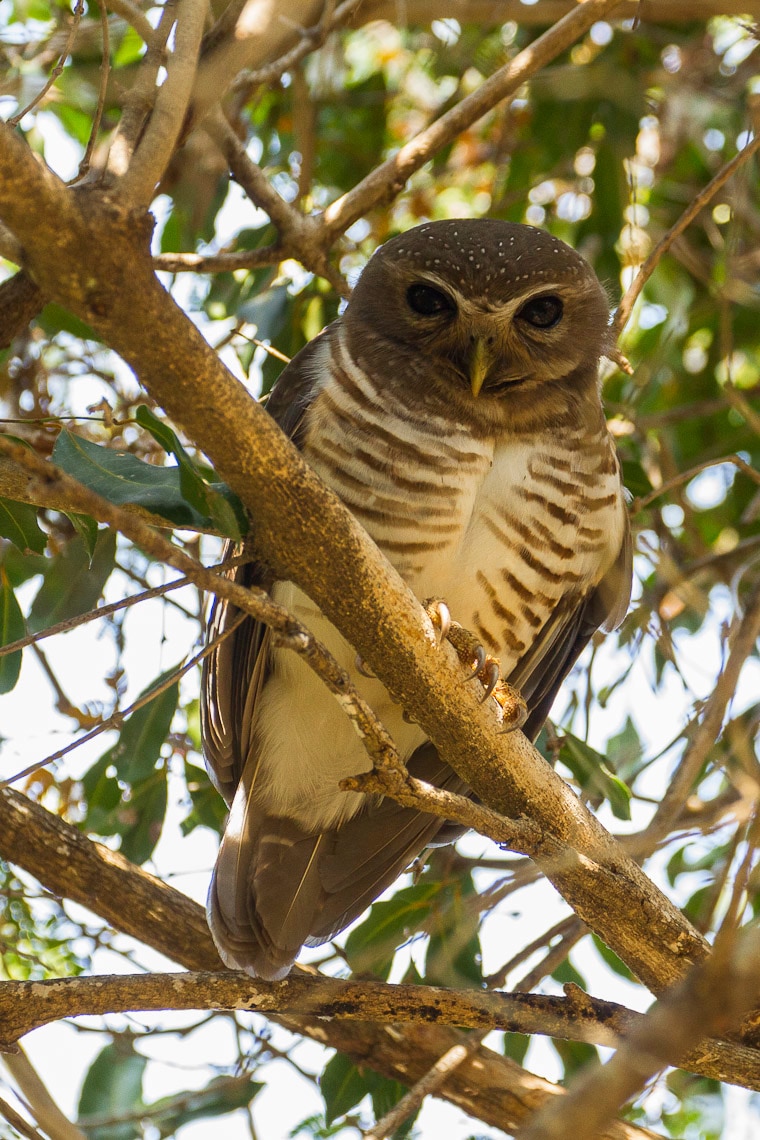
White-Browed Hawk-Owl, Madagascar Hawk-Owl
Drier Forests, Gallery Forests, Cultivated Areas, Secondary Forest, Lowlands
Madagascar
Insects, Small Vertebrates, Bats
About White-browed owl
The white-browed owl (Athene superciliaris), also known by the common names white-browed hawk-owl or Madagascar hawk-owl, is a species of owl native to the island of Madagascar. It belongs to the family Strigidae and was formerly placed in the genus Ninox before recent genetic data led to its reclassification into the genus Athene.
Description and Characteristics
This owl is characterized by its dumpy build and a large, rounded head that lacks ear tufts. Adult plumage features brown upperparts with notable white spotting on the crown, mantle, and wing coverts. The facial disc is grey-brown, distinguished by bold white eyebrows and a buff chin. Its underparts are buff and broadly barred with dark brown. The underwings, vent, and legs are a plain, pale buff, and the tail is plain brown. The bill and cere are horn-coloured, the eyes are dark brown, and the legs and feet are pale yellow. Adults typically measure about 25 cm (9.8 inches) in length with a wingspan of approximately 70 cm (28 inches).
Distribution and Habitat
The white-browed owl is endemic to Madagascar, with populations found in the northeast, south, and southwest of the island. It is most commonly observed in the drier forests and gallery forests of the southern and western parts of Madagascar, being less prevalent in the humid rainforests of the northeast. The species also inhabits cultivated areas and secondary forests, primarily residing in lowland regions up to an elevation of 800 meters (2,600 feet) above sea level.
Behavior and Diet
The white-browed owl is a strictly nocturnal species. Its behavior during the breeding season, which spans from October to December, is not extensively documented. Nests are made in shallow scrapes on the ground, where 3 to 5 white eggs are laid. Its diet primarily consists of insects and small vertebrates, which it typically catches from a perch. The owl may also hunt insects and bats in flight.
Vocalizations
The vocalizations of the white-browed owl include a howling "woohoo" made at intervals, which can begin quite hoarsely. Another distinctive call is a loud "kuang," noted for being louder and higher pitched at its start, and this may serve as an aggression call.
Source: Wikipedia ↗
Frequently Asked Questions
What is the scientific name of the white-browed owl?
The scientific name of the white-browed owl is Athene superciliaris. It was previously classified under the genus Ninox but has since been reclassified to Athene based on recent genetic studies.
Where is the white-browed owl found?
The white-browed owl is found exclusively on the island of Madagascar. Its range covers the northeast, south, and southwest regions of the island.
What does the white-browed owl look like?
It is a dumpy owl with a large, rounded head and no ear tufts. Adults have brown upperparts with white spots, a grey-brown facial disc with bold white eyebrows, and buff underparts barred with dark brown.
What does the white-browed owl eat?
The white-browed owl's diet mainly consists of insects and small vertebrates. It catches its prey from a perch and may also hunt insects and bats in flight.
When does the white-browed owl breed?
The breeding season for the white-browed owl typically occurs between October and December. They build nests in shallow scrapes on the ground and lay between 3 to 5 white eggs.
What are the sounds made by the white-browed owl?
The white-browed owl produces a howling 'woohoo' sound at intervals, which can start quite hoarsely. It also makes a loud 'kuang' call, which is louder and higher pitched at its beginning, possibly indicating aggression.
Related Owl species
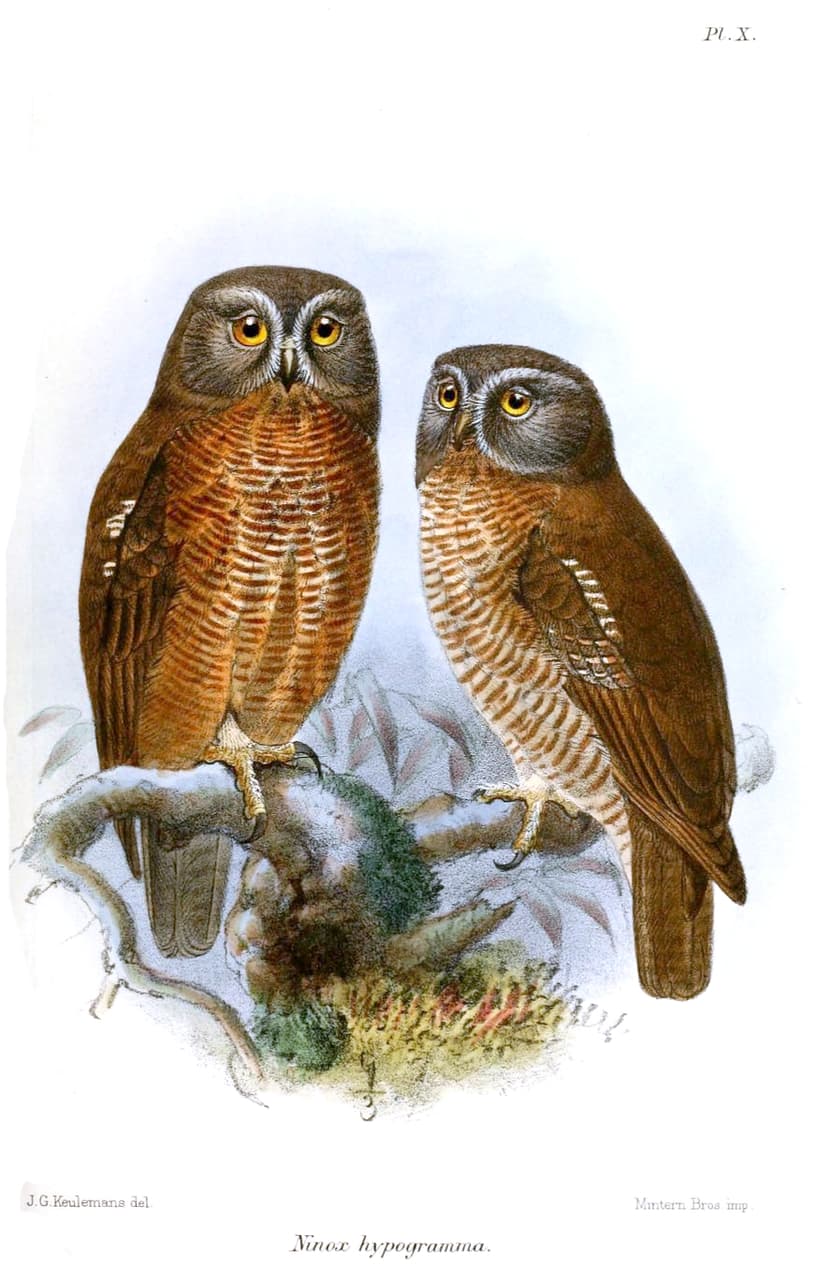
Halmahera boobook
The Halmahera boobook is a species of owl native to the Indonesian islands of Halmahera, Ternate, and Bacan. Its primary habitat is subtropical or tropical moist lowland forests. This owl was formerly recognized as a subspecies of the Moluccan boobook but is now considered a distinct species.
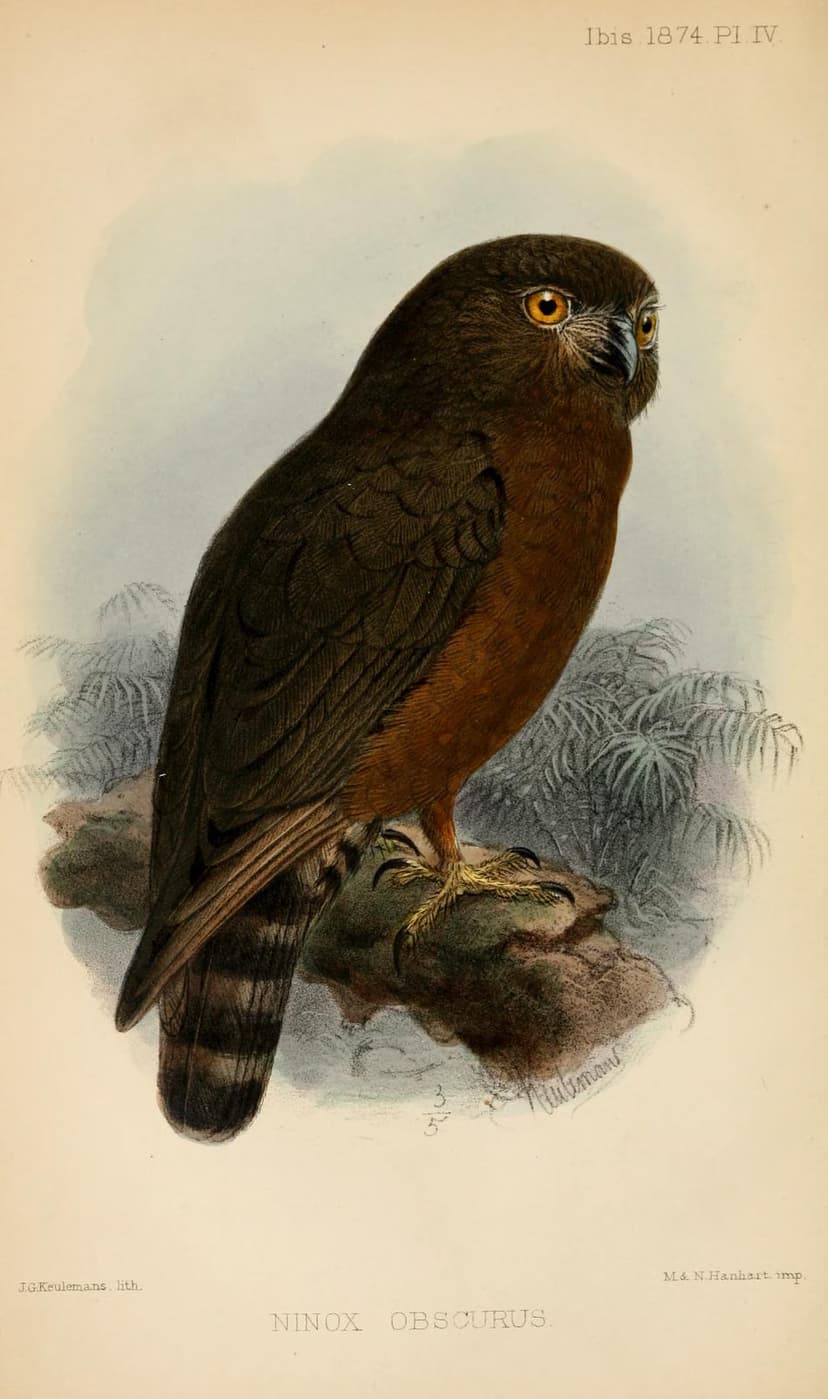
Hume's boobook
Hume's boobook (Ninox obscura) is a species of owl native to the Andaman Islands. This owl inhabits subtropical or tropical moist lowland forests and mangrove forests. It is currently considered a rare species due to ongoing habitat loss.
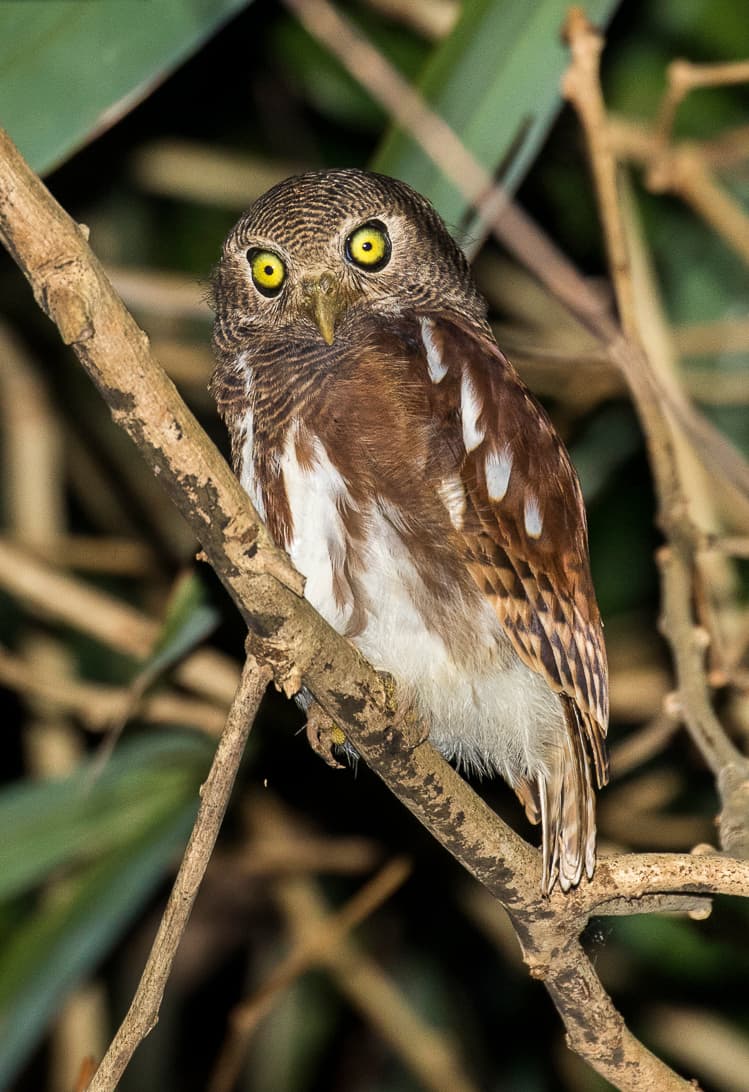
Javan owlet
The Javan owlet is a species of owl native to the Indonesian islands of Java and Bali. It inhabits subtropical or tropical moist lowland forests. This small owl belongs to the family Strigidae.