
Finsch's pygmy parrot
Finsch's pygmy parrot is a small parrot species belonging to the Psittacidae family, native to the tropical rainforests of Papua New Guinea and the Solomon Islands. It is distinguished by its unique green head and neck, a characteristic not found in other members of its genus, Micropsitta. The species is known for its arboreal lifestyle, feeding on fungi, lichens, and seeds, and nesting in arboreal ant or termite mounds.
Key Facts
- ›Measures approximately 9.5 cm (3.7 in) in length and weighs around 12 g (0.42 oz).
- ›Features a distinctive green head and neck, setting it apart from other pygmy parrots.
- ›Inhabits tropical rainforests up to 900 meters in elevation.
- ›Feeds on fungi, lichens, and seeds, often foraging upside down and using its tail as a prop.
- ›Nests in arboreal ant or termite mounds, constructing tunnels for roosting and nesting.
- ›Typically found in pairs or small social groups.
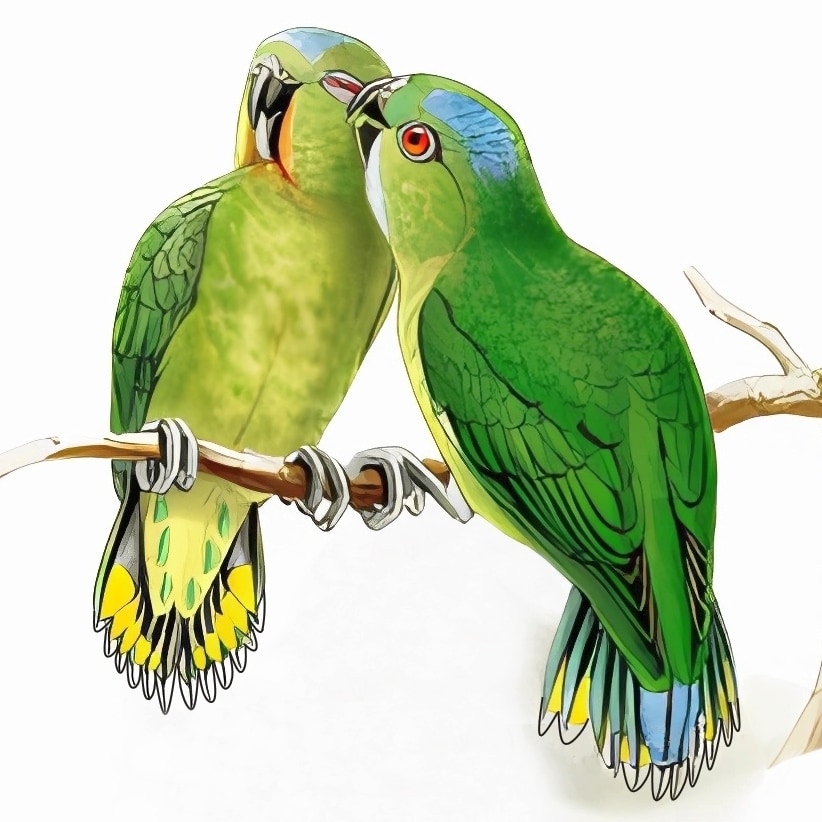
Emerald Pygmy Parrot, Green Pygmy Parrot
Papua New Guinea, Solomon Islands, Bismarck Archipelago
Tropical Rainforests, Forest Interior, River Edge Vegetation
Green Head and Neck
Fungi, Lichens, Seeds
Series of Repeated Whistles, Shrill Squawking, Chattering
Nesting In Old Arboreal Ant/Termite Mounds, Constructing A Tunnel Into the Mound
About Finsch's pygmy parrot
Finsch's pygmy parrot, scientifically known as Micropsitta finschii, is a small avian species belonging to the parrot family Psittacidae. It is also commonly referred to as the emerald pygmy parrot or the green pygmy parrot. This species is native to the lush tropical rainforests found across various islands of Papua New Guinea, the Solomon Islands, and the Bismarck Archipelago. The common and scientific names serve as a tribute to Friedrich Hermann Otto Finsch, a German ethnographer, naturalist, and colonial explorer.
Description and Identification
A unique characteristic of Finsch's pygmy parrot is its predominantly green head and neck, a feature that distinguishes it from other species within the genus Micropsitta. Adults typically measure around 9.5 cm (3.7 inches) in length and weigh approximately 12 grams (0.42 ounces). Subtle variations in plumage coloration between males and females are present, with differences often noted around the beak and abdomen, although these vary by subspecies.
Habitat and Distribution
These parrots inhabit tropical rainforest environments, extending to elevations of up to 900 meters (3,000 feet). They are most commonly observed within the forest interior and along the vegetation bordering rivers. Finsch's pygmy parrots are arboreal, meaning they live in trees, and are described as abundant within their natural habitats.
Behavior and Diet
Finsch's pygmy parrots exhibit specialized foraging techniques, climbing tree bark vertically or moving along the undersides of branches while hanging upside down, using their tail feathers as a prop. Their diet primarily consists of fungi and lichens scraped from tree bark, supplemented by seeds, particularly from the casuarina tree. Some individuals have been observed associating with mixed bird flocks.
Reproduction and Nesting
Socially, Finsch's pygmy parrots are often found in pairs or small groups, typically consisting of three to six individuals, frequently including socially monogamous mating pairs. The breeding season occurs between March and May, with clutches usually containing one or two eggs. Both parents actively participate in caring for their altricial young, and parent-offspring interactions tend to be prolonged. Detailed information regarding incubation and chick-rearing periods remains unavailable, partly due to the low survival rate of captive individuals.
Source: Wikipedia ↗
Frequently Asked Questions
What are the common names for Micropsitta finschii?
Finsch's pygmy parrot is also commonly known as the emerald pygmy parrot and the green pygmy parrot. These names reflect its predominant green plumage.
Where does Finsch's pygmy parrot live?
This species is found in the tropical rainforest regions of islands within Papua New Guinea, the Solomon Islands, and the Bismarck Archipelago. They inhabit these areas up to an elevation of 900 meters.
How can male and female Finsch's pygmy parrots be distinguished?
Male and female individuals can be identified by slight differences in coloration, which vary among subspecies. For instance, in some subspecies, males have a blue patch around the lower beak, while females have a pink patch.
What is the diet of Finsch's pygmy parrot?
Their diet consists primarily of fungi and lichens found on tree bark. They also consume seeds, particularly from the casuarina tree, and are observed foraging upside down, using their tails for support.
How do Finsch's pygmy parrots nest?
These parrots are arboreal and nest in old arboreal ant or termite mounds. They construct a tunnel within these mounds, which also serves as a roosting site.
What are the vocalizations of Finsch's pygmy parrot like?
Their song is characterized by a series of repeated whistles, often described as a 'tweet-tweet' where the second note is prolonged and higher in pitch. They also produce shrill squawking and chattering sounds.
What is the social behavior of Finsch's pygmy parrot?
Finsch's pygmy parrots are often observed in pairs or small groups of three to six individuals. These groups frequently include socially monogamous mating pairs.
Related Parrot species

Alexandrine parakeet
The Alexandrine parakeet is a large, predominantly green parrot native to South and Southeast Asia, distinguished by its prominent red shoulder patch and massive red beak with yellow tips. Named in honor of Alexander the Great, who introduced these birds to Europe, they are known for their intelligence, vocal abilities, and long lifespan, making them popular in aviculture. Despite their established presence in some areas, they face conservation challenges due to habitat loss and illegal trade.

Australian king parrot
The Australian king parrot is a striking parrot species native to the humid, forested eastern regions of Australia. It is distinguished by the vibrant red plumage of the adult male, contrasting with the predominantly green female. These parrots are known for their relatively quiet nature and devotion to their human companions when kept as pets.

Bismarck hanging parrot
The Bismarck hanging parrot (Loriculus tener) is a small parrot species endemic to the forests of the Bismarck Archipelago in Papua New Guinea. It is distinguished by its predominantly green plumage, a bright red throat patch, and a black beak. This species faces threats from habitat loss and is sometimes considered a subspecies of the orange-fronted hanging parrot.