
Micropsittini
Micropsitta·Psittacidae·8-10
The Micropsittini, commonly known as pygmy parrots, are the smallest members of the parrot order, distinguished by their diminutive size and primarily green plumage with bright accents. Native to the forests of New Guinea and surrounding islands, these birds are known for their agile climbing behavior and unique diet that includes fungi and lichens. Pygmy parrots are notably difficult to keep in captivity, with past attempts resulting in rapid mortality, likely due to stress and dietary challenges.
Key Facts
- ›Pygmy parrots are the smallest parrots, measuring between 8 to 10 cm (3.1 to 3.9 in) in length.
- ›They are found in the forests of New Guinea and nearby islands.
- ›Their diet includes fungi and lichens, a unique characteristic among parrots.
- ›Pygmy parrots have stiff tail feathers that aid in climbing.
- ›They have never been successfully kept or bred in captivity, with attempts leading to quick deaths.
- ›Adult males and females show varying degrees of sexual dimorphism.
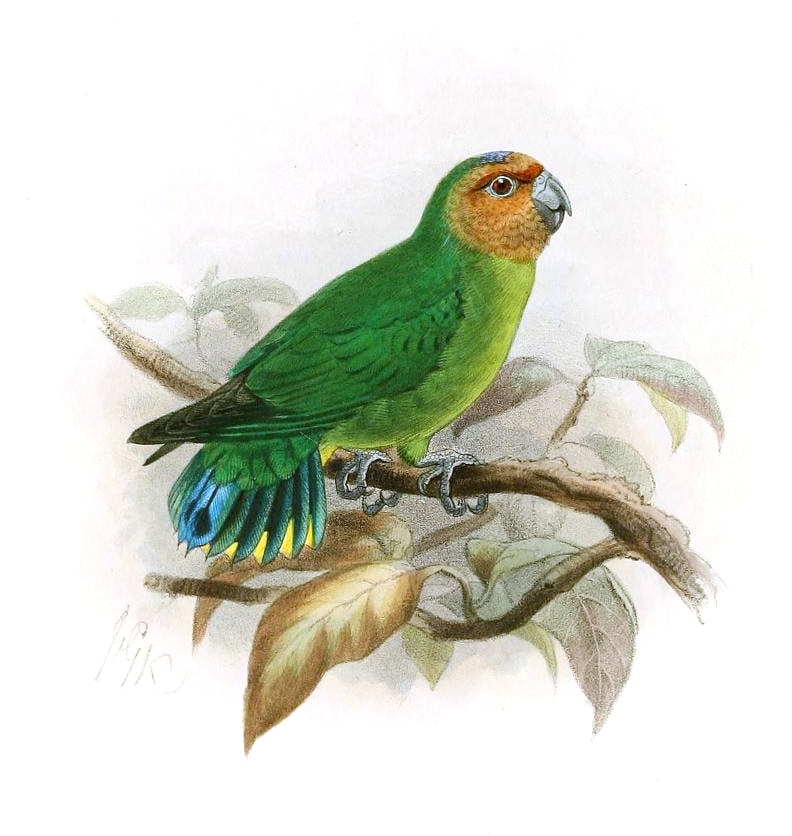
Pygmy Parrots
New Guinea, Oceania
Forests
Green, Bright Highlights
Smallest Parrot Species, Stiffened Tail Feathers, Long Toes and Long, Curved Claws, Prominent Cere
Fungi, Lichens
About Micropsittini
Micropsittini: The Pygmy Parrots
Pygmy parrots, belonging to the genus Micropsitta, represent the smallest members of the parrot order. These diminutive birds are characterized by their primarily green plumage, often accented with bright, distinctive highlights. They are native to the forest ecosystems of New Guinea and its surrounding islands, where they exhibit remarkable agility in climbing through foliage.
Physical Description and Adaptations
Pygmy parrots typically measure between 8 to 10 centimeters (3.1 to 3.9 inches) in length. Their anatomy is well-suited for an arboreal lifestyle; they possess long toes with long, curved claws for gripping branches, and their tail feathers are notably stiffened, often forming projections at the tail's end. These stiff feathers are believed to aid in their climbing behavior, acting as a prop. The cere, a fleshy covering at the base of the beak, is prominent in these birds. While juveniles are generally duller in appearance, adult males and females exhibit varying degrees of sexual dimorphism, meaning there are visible differences between the sexes.
Diet and Captivity Challenges
A particularly unique aspect of pygmy parrots is their diet, which includes fungi and lichens, playing a significant role in their nutrition. The precise dietary requirements for these birds are not well understood. This dietary specialization, combined with their sensitivity to stress, contributes to their extreme difficulty in captivity. Pygmy parrots are among the few bird species that have never been successfully kept, let alone bred, in captivity. All attempts to do so have unfortunately resulted in the rapid death of these small birds, with stress and dietary deficiencies cited as probable causes.
Source: Wikipedia ↗
Frequently Asked Questions
What are pygmy parrots?
Pygmy parrots are the smallest species within the parrot order, belonging to the genus Micropsitta. They are characterized by their tiny size, primarily green coloration with bright highlights, and a unique diet.
Where do pygmy parrots live?
These parrots are native to the forests of New Guinea and the islands in its vicinity. They inhabit these arboreal environments, spending considerable time climbing through the foliage.
What makes pygmy parrots unique?
Pygmy parrots are notable for their extremely small size, their diet which includes fungi and lichens, and their inability to thrive in captivity. They also possess stiff tail feathers that assist them in their climbing behavior.
Can pygmy parrots be kept as pets?
No, pygmy parrots have never been successfully kept or bred in captivity. All documented attempts have resulted in the rapid demise of these birds, likely due to stress and dietary deficiencies.
How do pygmy parrots climb?
Pygmy parrots utilize their large feet, strong beaks, and stiffened tail feathers to navigate and climb through foliage. These adaptations allow them to move efficiently within their forest habitat.
Related Parrot species

Alexandrine parakeet
The Alexandrine parakeet is a large, predominantly green parrot native to South and Southeast Asia, distinguished by its prominent red shoulder patch and massive red beak with yellow tips. Named in honor of Alexander the Great, who introduced these birds to Europe, they are known for their intelligence, vocal abilities, and long lifespan, making them popular in aviculture. Despite their established presence in some areas, they face conservation challenges due to habitat loss and illegal trade.

Australian king parrot
The Australian king parrot is a striking parrot species native to the humid, forested eastern regions of Australia. It is distinguished by the vibrant red plumage of the adult male, contrasting with the predominantly green female. These parrots are known for their relatively quiet nature and devotion to their human companions when kept as pets.

Bismarck hanging parrot
The Bismarck hanging parrot (Loriculus tener) is a small parrot species endemic to the forests of the Bismarck Archipelago in Papua New Guinea. It is distinguished by its predominantly green plumage, a bright red throat patch, and a black beak. This species faces threats from habitat loss and is sometimes considered a subspecies of the orange-fronted hanging parrot.