
Red-and-blue lory
The red-and-blue lory is a small, vividly colored parrot endemic to Indonesia, specifically found on the island of Karakelong in the Talaud Islands. Its striking plumage features a mix of red, blue, purple, and black, making it easily recognizable. This species is primarily arboreal and feeds on nectar and pollen, with a significant population decline attributed to habitat loss and illegal trapping.
Key Facts
- ›Endemic to the Talaud Islands of Indonesia, primarily inhabiting Karakelong island.
- ›Characterized by a striking plumage of red, blue, purple, and black.
- ›Strictly arboreal, living their lives in trees and not foraging on the ground.
- ›Diet consists mainly of nectar and pollen, supplemented with insects and fruit.
- ›Classified as Endangered by the IUCN due to habitat degradation and illegal pet trade.
- ›Subject to CITES Appendix I, prohibiting international commercial trade of wild-caught individuals.
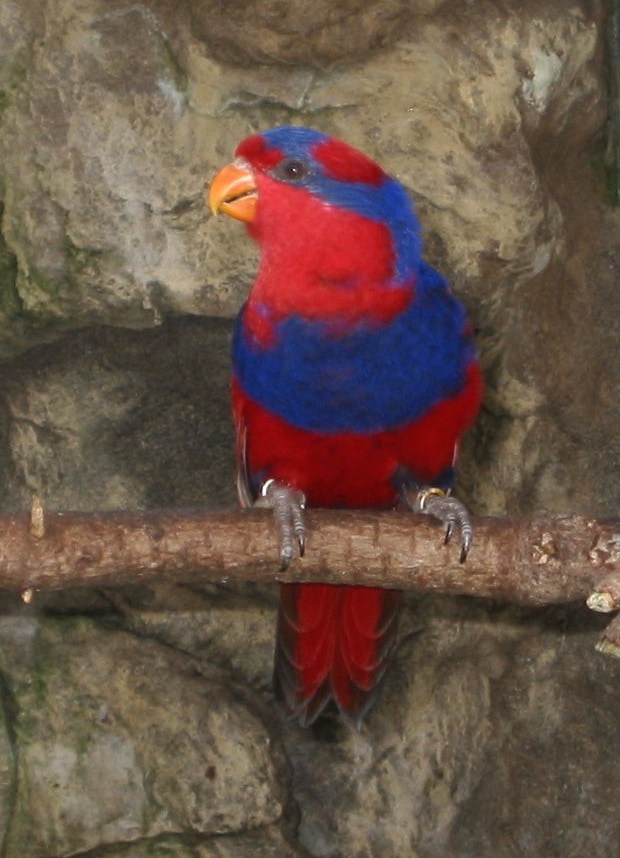
Red-and-Blue Lorikeet, Talaud Islands Red-and-Blue Lory
Indonesia
- Forests from sea level to approximately 1,500 meters above sea level
- Palm plantations
Bright orange beak, Intense purple crown, Red back of the head, Indigo-violet stripe from cere corner to nape, Deep blue band across the breast
Nectar, Pollen, Insects, Fruit
Raucous and Noisy In the Wild, Silent While Feeding
Short, Harsh Chattering Screeches
Mature Trees Are Needed For Nesting
About Red-and-blue lory
The red-and-blue lory (Trichoglossus histrio), also known as the red-and-blue lorikeet, is a small, vibrantly colored parrot endemic to Indonesia. This species is found primarily on Karakelong island within the Talaud Islands archipelago. Its striking plumage, characterized by a mix of red, blue, purple, and black, makes it one of the more visually distinctive parrots.
Taxonomy and Distribution
Historically, the red-and-blue lory was found on the Sangihe Islands and other parts of the Talaud Islands, but populations have largely disappeared from these areas. Two subspecies are recognized, one of which, the Sangir red-and-blue lory (T. h. histrio), is considered extinct, likely due to deforestation. The Challenger's red-and-blue lory (T. h. challengeri) is the surviving subspecies, though its taxonomic status has seen revisions.
Description
Adult red-and-blue lories measure approximately 30 cm (12 inches) in length. They are sexually monomorphic, meaning males and females are visually identical. The beak is bright orange and sharply curved. Key plumage features include bright red feathers near the cere, an intense purple crown, a red back of the head, and a violet nape. An indigo-violet stripe extends from the cere corner to the nape. The body is predominantly bright red, with a deeper red on the rump and lower belly. A broad band of deep blue adorns the breast, and the back is a deep violet-purple. Wing and tail feathers range from red to red-violet, while wing coverts are black and red with black tips. Leg feathers are bluish-purple, feet are medium gray, and claws are black. The cere is very dark gray, and the irises are dark brown.
Habitat and Ecology
These parrots are strictly arboreal, spending their entire lives in trees and never foraging on the ground. They inhabit forests from sea level up to about 1,500 meters. Their diet consists mainly of nectar and pollen, supplemented by occasional insects and fruits. While they can be raucous and noisy in the wild, they are noted to be silent while feeding. Mature trees are essential for nesting. Outside of the breeding season, they form social flocks, often congregating in palm plantations. Although nonmigratory, they will fly between neighboring islands in search of food.
Conservation Status
The red-and-blue lory is classified as Endangered by the IUCN. It is also listed on CITES Appendix I, prohibiting international commercial trade of wild-caught individuals. Threats include illegal trapping for the pet trade, habitat degradation from logging, insecticide spraying, and exotic diseases. Despite legal protections, illegal trade persists, with a significant portion of poached specimens being shipped to the Philippines. The population is estimated to be between 2,400 and 8,400 individuals in the wild as of 2025, and is in rapid decline.
Source: Wikipedia ↗
Frequently Asked Questions
What are the main colors of the red-and-blue lory?
The red-and-blue lory displays a vibrant plumage dominated by bright red. It also features an intense purple crown, violet nape, a broad band of deep blue across the breast, and indigo-violet stripes. Wing and tail feathers are red to red-violet, with black and red wing coverts.
Where does the red-and-blue lory live?
This parrot species is endemic to Indonesia and is now confined to the Talaud Islands, with most individuals found on Karakelong island. Historically, it was also present on the Sangihe Islands and other parts of the Talaud Islands, but these populations have largely disappeared.
What is the diet of the red-and-blue lory?
The red-and-blue lory has a diet primarily based on nectar and pollen, which is typical for lories and lorikeets. They also supplement their food intake with occasional insects and fruits found in their forest habitat.
Why is the red-and-blue lory endangered?
The red-and-blue lory faces endangerment due to several factors, including illegal trapping for the pet trade, logging and habitat degradation, and insecticide spraying on plantations. The loss of mature trees needed for nesting is a significant threat.
What is the conservation status of the red-and-blue lory?
The red-and-blue lory is classified as Endangered by the IUCN. It is also listed under CITES Appendix I, which strictly prohibits international commercial trade of wild-caught specimens.
What are the vocalizations of the red-and-blue lory?
The voice of the red-and-blue lory consists of short, harsh chattering screeches. While they can be raucous and noisy in the wild, they are noted to be silent when they are feeding.
Related Parrot species

Green rosella
The Green rosella (Platycercus caledonicus), also known as the Tasmanian rosella, is the largest species in the rosella genus and is native to Tasmania and the Bass Strait islands. It is distinguished by its predominantly yellow head and underparts, violet-blue cheeks, and a red band above its beak. This parrot inhabits a variety of wooded environments and is primarily herbivorous, feeding on seeds, fruits, and flowers.

Northern rosella
The northern rosella (Platycercus venustus) is a parrot species native to northern Australia, recognized for its distinctive dark head and neck contrasted with pale cheeks. This species inhabits woodland and open savanna, feeding primarily on seeds, flowers, and berries, and occasionally insects. It is known for being shyer and quieter than other rosellas.

Budgerigar
The budgerigar, also known as the common parakeet or budgie, is a small, seed-eating parrot native to Australia. Naturally green and yellow with black markings, captive breeding has produced a wide array of colors. These nomadic, social birds are highly popular pets worldwide due to their small size, affordability, and remarkable ability to mimic human speech.