
Australian Wildlife Park Albany
Australia·Historic Site/Museum·20th Century
Albany's Historic Whaling Station, formerly known as Cheynes Beach Whaling Station, is a defunct whaling operation in Albany, Western Australia, that has been transformed into an award-winning tourist attraction. Situated in Frenchman Bay, the station operated from the 1950s to 1978 and now offers visitors insights into the region's whaling history.
Key Facts
- ›The site was built in the 1950s and operated as a whaling station until 1978.
- ›It is located in Frenchman Bay in King George Sound, Albany, Western Australia.
- ›The station was renamed Whaleworld in 1985 and is now known as Albany's Historic Whaling Station.
- ›It processed humpback and sperm whales, with a total of 1136 humpbacks and 14,695 sperm whales caught between 1952 and 1978.
- ›The station's infrastructure includes large steel and concrete sheds, workshops, offices, tanks, and boilers.
- ›It operated a fleet of whale chasers, including the Cheynes line of four steamers.
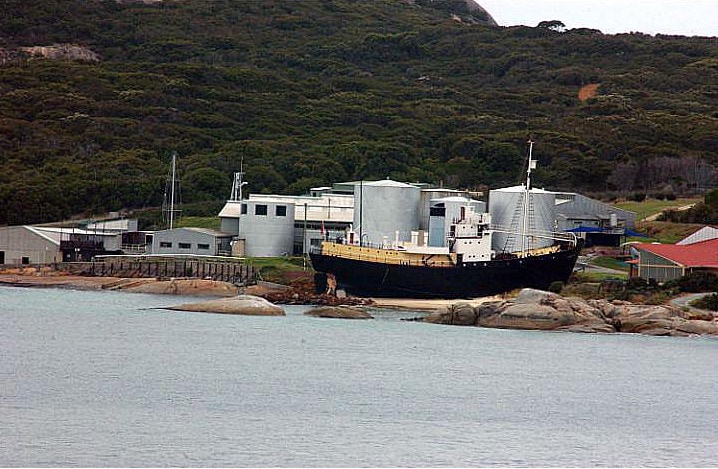
Cheynes Iv Museum Ship
About Australian Wildlife Park Albany
Albany's Historic Whaling Station
Albany's Historic Whaling Station, formerly known as Cheynes Beach Whaling Station, is a significant historical site and award-winning tourist attraction located in Frenchman Bay, Albany, Western Australia. The station was originally established in the 1950s and operated as a commercial whaling facility until 1978, playing a key role in the region's maritime industry.
History and Operations
The genesis of the Cheynes Beach Whaling Company traces back to commercial fishing operations in the 1920s, with whaling recommencing in the early 1950s. The company was formed by a syndicate of eight fishermen, led by G. R. Birss and C. Westerberg from Albany. The whaling station itself was constructed at the Frenchman Bay site in 1952, utilizing a substantial amount of repurposed equipment, including an alcohol distillation plant from Collie. The facility was designed to process whales caught in the surrounding waters, featuring large steel and concrete sheds, workshops, offices, tanks, and boilers. The flensing deck was built over a natural rock slipway, with steam winches used to haul whale carcasses ashore.
During its operational years, the station processed both humpback and sperm whales. In its initial season in 1953, it produced 508 tonnes of whale oil from humpback whales. By 1954, the output increased significantly, with 1,016 tonnes of whale oil derived from 120 whales. Following a decline in humpback whale stocks and international restrictions, the company transitioned to hunting sperm whales in 1962. The enterprise remained profitable, with substantial net profits recorded in 1969 and 1970, driven by record sperm whale catches and high global demand for whale oil, which was used in diverse applications, including by NASA and in the manufacturing of Swiss watches.
Transition to Museum
Whaling activities ceased in 1978 when the last legal whale was caught in Australian waters. The Cheynes Beach Whaling Company officially closed that year. In 1980, the site was transferred to the Jaycees Community Foundation, which, with government and private funding, transformed the former industrial complex into a museum. The museum, initially named Whaleworld, opened in May 1985 and is now known as Albany's Historic Whaling Station. The site preserves much of its original infrastructure, offering visitors a tangible connection to the area's whaling past.
Notable Features
Albany's Historic Whaling Station maintains a fleet of whale chasers, most notably the 'Cheynes' line of four steamers. While Cheynes I was deliberately sunk in 1959, Cheynes II broke free and grounded in 1992, and Cheynes III was sunk in 1982 to create a dive site. Cheynes IV, however, remains at the station, preserved as a museum ship. The adjacent Australian Wildlife Park Albany is a separate 1.3-hectare wildlife park offering close encounters with native Australian animals.
Source: Wikipedia ↗
Frequently Asked Questions
What is Albany's Historic Whaling Station?
Albany's Historic Whaling Station is a former whaling station that has been converted into a museum and tourist attraction. It provides a look into the history of whaling in the region, particularly the operations of the Cheynes Beach Whaling Company.
When did the Cheynes Beach Whaling Station operate?
The Cheynes Beach Whaling Station was built in the 1950s and operated as a whaling facility until 1978. Whaling activities at the site commenced in the early 1950s.
What types of whales were caught at the station?
The station primarily processed humpback whales and later, sperm whales. Between 1952 and 1978, a total of 1136 humpbacks and 14,695 sperm whales were caught.
What happened to the station after whaling ceased?
The Cheynes Beach Whaling Company closed in 1978, and the site was given to the Jaycees Community Foundation in 1980. The foundation converted it into a museum named Whaleworld, which officially opened in May 1985 and is now known as Albany's Historic Whaling Station.
Are any of the whale chaser boats still visible?
Yes, one of the whale chaser boats, Cheynes IV, remains beached at Albany's Historic Whaling Station and serves as a museum ship. Other vessels in the Cheynes fleet met different fates, including being sunk or breaking free.
Related Zoos

Armadale Reptile Centre
The Armadale Reptile Centre is a zoo located in Armadale, Western Australia, dedicated to herpetology and Australian native wildlife, with some exotic reptiles also present. Opened in 1995, it serves as a rescue and rehabilitation facility for sick or injured wildlife, in addition to showcasing over 50 reptile species and various other Australian animals.

Auburn Botanic Gardens
The Auburn Botanic Gardens are a significant botanical garden located in Auburn, a suburb of Sydney, New South Wales, Australia. Established in 1977, these gardens span 24 acres and feature diverse flora, fauna, and notable attractions like Japanese gardens and a fauna reserve, drawing thousands of visitors annually.

Australia Zoo
Australia Zoo, formerly the Beerwah Reptile and Fauna Park, is a large zoological garden located in Beerwah, Queensland, Australia. It was founded in 1970 by Bob and Lyn Irwin and has grown significantly, particularly under the management of their son, Steve Irwin, becoming a major tourist attraction and a hub for wildlife conservation efforts. The zoo is known for its extensive animal collection and innovative exhibits, as well as its commitment to animal welfare and rehabilitation through its Wildlife Warriors organization.