
Bondla Wildlife Sanctuary
Bondla Wildlife Sanctuary is the smallest of Goa's wildlife sanctuaries, covering 7.98 km2 in northeastern India. It is a significant tourist attraction and the only location in Goa with a zoo, providing sanctuary to injured animals and focusing on successful breeding programs, particularly for the gaur.
Key Facts
- ›Located in northeastern Goa, India, across Sattari, Ponda, and Sanguem talukas.
- ›Covers an area of 7.98 km², making it the smallest wildlife sanctuary in Goa.
- ›Houses Goa's only zoo, making it a popular destination for tourists and schoolchildren.
- ›Known for its successful breeding of gaur and providing rehabilitation for injured animals.
- ›Features a moist deciduous forest with patches of semi-evergreen trees.
- ›Home to over 275 species of birds and a diverse range of mammals, reptiles, amphibians, and insects.
Gaur, Leopard, Bear, Cobra, Gegeneophis Nadkarnii
Gaur Breeding Program, Rehabilitation of Injured Animals, Breeding and Research On Animals
About Bondla Wildlife Sanctuary
Bondla Wildlife Sanctuary, located in northeastern Goa, India, is the smallest of the state's wildlife sanctuaries, spanning 7.98 km². It is a significant destination for both tourists and schoolchildren, primarily because it houses the only zoo in Goa. The sanctuary serves as a crucial refuge for animals, including leopards injured in human-wildlife conflicts, and "dancing" bears and cobras that require new lives after their previous treatment. Bondla Zoo is particularly recognized for its successful breeding initiatives, especially for the gaur, and provides an environment conducive to animal breeding and research.
Geography and Flora
The sanctuary is situated 38 km from Madgaon and 46 km from Panaji, adjacent to the Mhadei Wildlife Sanctuary and Bhagwan Mahaveer Sanctuary and Mollem National Park. Its forest composition is primarily moist deciduous, interspersed with pockets of semi-evergreen trees. The sanctuary's flora includes state trees like Matti and Indian rosewood, alongside other common trees and exotic plants found in its gardens. The optimal period for visiting the sanctuary is from October to March, when the climate is temperate.
Fauna
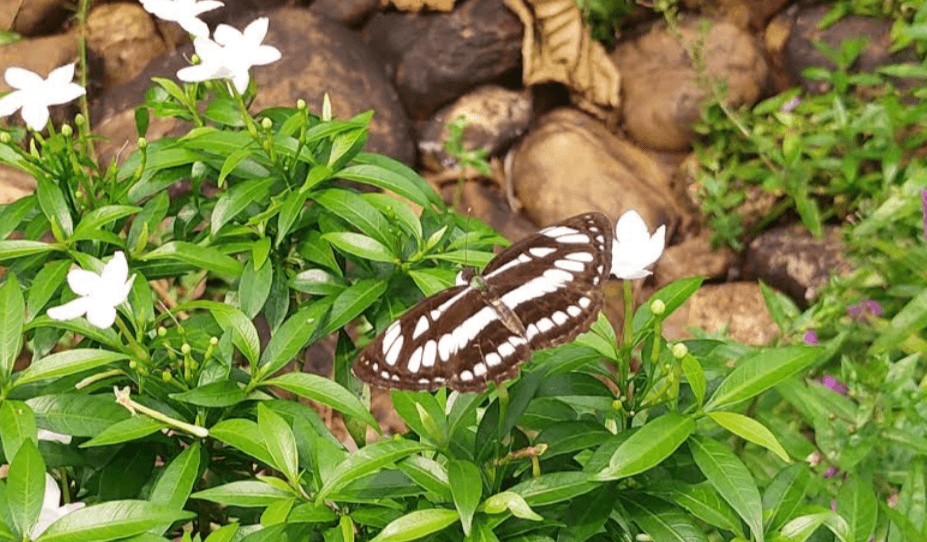
Bondla Wildlife Sanctuary boasts a rich biodiversity. It is home to over 275 species of birds, with notable examples including the Greater racket-tailed drongo, Malabar trogon, and Flame-throated bulbul. The mammal population includes giant squirrels, malabar grey langurs, leopards, bears, gaurs, and jungle cats. Reptile sightings can include species like the Roux's forest lizard and various snakes. The sanctuary is also a habitat for amphibians such as the critically endangered Amboli bush frog and the Malabar gliding frog. A significant discovery within the sanctuary was Gegeneophis nadkarnii, a species of caecilian. Insect life is also abundant, with a recent assessment identifying 91 species of butterflies.
Zoo and Rehabilitation
The zoo, located centrally within the sanctuary, exhibits a range of animals such as leopards, jackals, various deer species, bears, crocodiles, and numerous bird species. Beyond exhibition, Bondla Wildlife Sanctuary actively engages in rehabilitation programs. Animals that have encountered human settlements are housed in the park's rehabilitation centers. Species successfully rehabilitated include crocodiles, pythons, palm civets, jackals, and several types of deer and langurs.
Park Facilities
Within the sanctuary, visitors can explore a botanical garden featuring exotic and rare plant types. Nature trails, trekking, and hiking routes are available, often guided by local experts. A Nature Education Center, complete with a library, is also present, offering facilities for screening movies and documentaries upon request. The park experienced a temporary closure in 2025 due to a viral infection that led to the deaths of several civets and cats.
Source: Wikipedia ↗
Frequently Asked Questions
What is Bondla Wildlife Sanctuary?
Bondla Wildlife Sanctuary is a protected area in northeastern Goa, India, notable for being the smallest wildlife sanctuary in the region. It is a popular destination that includes Goa's only zoo.
What is the size of Bondla Wildlife Sanctuary?
The sanctuary covers a total area of 7.98 square kilometers, making it the smallest among Goa's wildlife sanctuaries.
What kind of animals can be found at Bondla Wildlife Sanctuary?
The sanctuary is home to a variety of fauna, including over 275 bird species, mammals like leopards, bears, gaurs, giant squirrels, and langurs, as well as numerous reptiles, amphibians, and butterfly species. The zoo within the sanctuary houses animals such as crocodiles, deer, and various birds.
What is the significance of the zoo at Bondla Wildlife Sanctuary?
The zoo at Bondla Wildlife Sanctuary is the only one in Goa and serves as a popular attraction for visitors, especially schoolchildren. It plays a role in animal rehabilitation and is recognized for its successful breeding programs, particularly for the gaur.
What rehabilitation programs does Bondla Wildlife Sanctuary offer?
The sanctuary has rehabilitation centers for animals that have come into close proximity with human settlements. Successfully rehabilitated animals include crocodiles, various snake species, civets, jackals, and deer.
When is the best time to visit Bondla Wildlife Sanctuary?
The ideal time to visit Bondla Wildlife Sanctuary is between October and March, when the weather conditions are most favorable with moderate temperatures.
Related Zoos

Sipahijola Wildlife Sanctuary
Sipahijola Wildlife Sanctuary is a protected wildlife area located in the West Tripura district of the Indian state of Tripura. It serves as both a sanctuary for various animal species and an academic research center, featuring several lakes and a temperate climate.

Al Hefaiyah Conservation Centre
The Al Hefaiyah Mountain Conservation Centre is a wildlife sanctuary and visitor center located in Sharjah, United Arab Emirates, dedicated to the preservation of endangered mountain species. Opened in 2016, it features landscape enclosures designed to house fauna in their natural environments, playing a crucial role in conservation efforts for the region's unique biodiversity.

Australian Reptile Park
The Australian Reptile Park is a significant wildlife sanctuary located in Somersby, New South Wales, Australia. It is renowned for its extensive reptile collection and its crucial role in venom collection for antivenom production, having saved thousands of lives. The park also houses a diverse array of Australian mammals and birds, alongside engaging educational programs.