
Hong Kong Zoological and Botanical Gardens
The Hong Kong Zoological and Botanical Gardens (HKZBG) is one of the world's oldest zoological and botanical centers, established in 1864 and opening its first stage in 1871. Situated on the northern slope of Victoria Peak, it serves as Hong Kong's oldest park, providing a natural environment with a diverse collection of plants and animals. The gardens are a significant historical site, having undergone name changes and renovations throughout their existence, and continue to be a free public space for recreation and education.
Key Facts
- ›Founded in 1864, with its first stage opening in 1871.
- ›Occupies an area of 5.6 hectares (14 acres).
- ›Houses over 1,000 species of plants and approximately 400 birds, 50 mammals, and 20 reptiles.
- ›Features thematic gardens including Bamboo, Camellia, Magnolia, Palm, Bauhinia, and Azalea Gardens.
- ›Has hosted notable visitors such as Prince Philip, Duke of Edinburgh, and Princess Anne of England.
- ›Admission to the gardens is free.

Bamboo Garden, Camellia Garden, Magnolia Garden, Palm Garden, Bauhinia Garden, Azalea Garden, Greenhouse
Hoffmann's Two-Toed Sloth, Red Necked Wallaby, Golden Lion Tamarin, Gibbon, Orangutan, Ring-Tailed Lemur, Black-and-White Ruffed Lemur, Bornean Orangutan Twins, Asian Small-Clawed Otter, Red-Crowned Crane, Bali Mynah, Black-Faced Spoonbill, Siu Fa
About Hong Kong Zoological and Botanical Gardens
The Hong Kong Zoological and Botanical Gardens (HKZBG) stands as a significant historical and natural landmark in Hong Kong, recognized as one of the oldest zoological and botanical centers globally. Founded in 1864, its initial phase was unveiled to the public in 1871, making it the oldest park in the city. Situated on the northern slopes of Victoria Peak, the gardens cover an area of 5.6 hectares (14 acres) and provide a naturalistic environment, distinguishing itself by housing a greater variety of plants, animals, and facilities compared to the nearby Hong Kong Park.
History and Naming
Originally known as Bing Tau Fa Yuen, its name has been subject to historical shifts. "Bing Tau" is interpreted as 'the head of the soldiers' or 'commander-in-chief,' a moniker attributed to its historical proximity to Government House. An alternative theory suggests it might be a phonetic transliteration of the word 'botanical.' During the Japanese occupation of Hong Kong, the park was renamed Taishō Kōen. The gardens played a role in inspiring the establishment of The Garden Company Limited, leading to its name incorporating 'Garden.' A significant period of closure occurred from 1931 to 1933 for the construction of an underground reservoir.
Botanical Collections
The botanical collection at HKZBG is extensive, featuring over 1,000 species of plants, predominantly from tropical and sub-tropical regions. Notable among these are rare species such as the dawn redwood and the local Ailanthus, alongside plants that flower year-round like the Hong Kong orchid tree. The gardens are organized into distinct thematic areas, including:
- Bamboo Garden: Significantly larger than other thematic gardens.
- Camellia Garden: Showcasing more than 30 species, including native Hong Kong varieties like Crapnell's camellia and Grantham's camellia, as well as introduced rare species.
- Magnolia Garden: Home to five species of magnolia, such as Chinese magnolia and Southern magnolia.
- Greenhouse: Cultivating diverse species of orchids, ferns, bromeliads, vines, and carnivorous plants.
- Palm Garden: Featuring over 30 species from 22 genera of the palm family.
- Bauhinia Garden: Growing eight species, including the iconic Hong Kong orchid tree.
- Azalea Garden: Displaying over 10 azalea species, some native to Hong Kong, alongside rare varieties.
- Herb Garden: Dedicated to various herb species.
Zoological Collection
While the garden's size limits the keeping of very large mammals, its zoological collection is varied. It includes a range of primates such as the Hoffmann's two-toed sloth, golden lion tamarin, gibbon, orangutan, and various lemur species. The gardens house approximately 400 birds, 50 mammals, and 20 reptiles. Notable zoological events include the birth of Bornean orangutan twins in 2011 and the introduction of an Asian small-clawed otter and red-necked wallaby in 2021. The reptile collection features snakes, crocodilians, and tortoises. The bird collection includes over 100 species that have successfully bred, with particular attention given to endangered species like the Bali mynah and red-crowned crane. Aviaries outside the greenhouse house waterfowl, while smaller brick buildings, formerly staff quarters, accommodate smaller birds.
Welfare Concerns and Memorials
In recent years, the gardens have faced scrutiny regarding animal welfare. Reports in 2014 highlighted concerns from animal welfare organizations about outdated and inadequate facilities. Primatologist Jane Goodall also expressed concern about the condition of orangutans. In 2024, a number of monkeys died due to a bacterial infection. Despite these issues, the gardens also serve as a site for memorials. The Chinese War Memorial honors Chinese individuals who died in World War I and II, and a bronze statue of King George VI commemorates British colonial rule.
Accessibility
The main entrance to the Hong Kong Zoological and Botanical Gardens is located on Upper Albert Road, with access provided by numerous bus routes. Admission to all sections of the gardens is free of charge, making it an accessible public space for the community.
Source: Wikipedia ↗
Frequently Asked Questions
When were the Hong Kong Zoological and Botanical Gardens established?
The Hong Kong Zoological and Botanical Gardens were founded in 1864. The first stage of the park was officially opened to the public in 1871, making it one of the oldest zoological and botanical centers globally.
What is the size of the Hong Kong Zoological and Botanical Gardens?
The gardens occupy a total area of 5.6 hectares, which is equivalent to 14 acres. It is located on the northern slope of Victoria Peak in Central, Hong Kong.
What kind of plants can be found at the gardens?
The gardens boast over 1,000 species of plants, primarily from tropical and sub-tropical regions. These include rare species like the dawn redwood and local Ailanthus, as well as numerous varieties in specialized gardens such as the Camellia Garden and Palm Garden.
What animals are housed at the Hong Kong Zoological and Botanical Gardens?
The gardens house a diverse collection of animals, including primates like the golden lion tamarin and orangutan, various birds such as the red-crowned crane and Bali mynah, and reptiles like the Chinese alligator and Burmese python. While large mammals are not kept due to space constraints, the collection features over 400 birds, 50 mammals, and 20 reptiles.
Are there any notable exhibits or features within the gardens?
The gardens feature several thematic gardens, including a Bamboo Garden, a Camellia Garden with over 30 species, a Magnolia Garden, a Palm Garden with over 30 species, and an Azalea Garden. There is also a greenhouse that displays various orchids, ferns, and carnivorous plants.
What is the historical significance of the Hong Kong Zoological and Botanical Gardens?
Established in 1864, it is the oldest park in Hong Kong and one of the oldest zoological and botanical centers worldwide. It was historically known as Bing Tau Fa Yuen and was renamed Taishō Kōen during the Japanese occupation of Hong Kong.
Are there any memorials located within the gardens?
Yes, the Chinese War Memorial, dedicated to Chinese who died assisting the Allies in World War I and World War II, is located at the southern entrance. A bronze statue of King George VI is also present, commemorating the 100th anniversary of British colonial rule.
Related Zoos

Bird Lake and the Aviary (Kowloon Park)
Bird Lake and the Aviary is a notable feature within Kowloon Park, a large public park in Tsim Sha Tsui, Hong Kong. It contributes to the park's appeal for bird watching and provides a habitat for numerous bird species, complementing the park's diverse recreational and historical offerings.
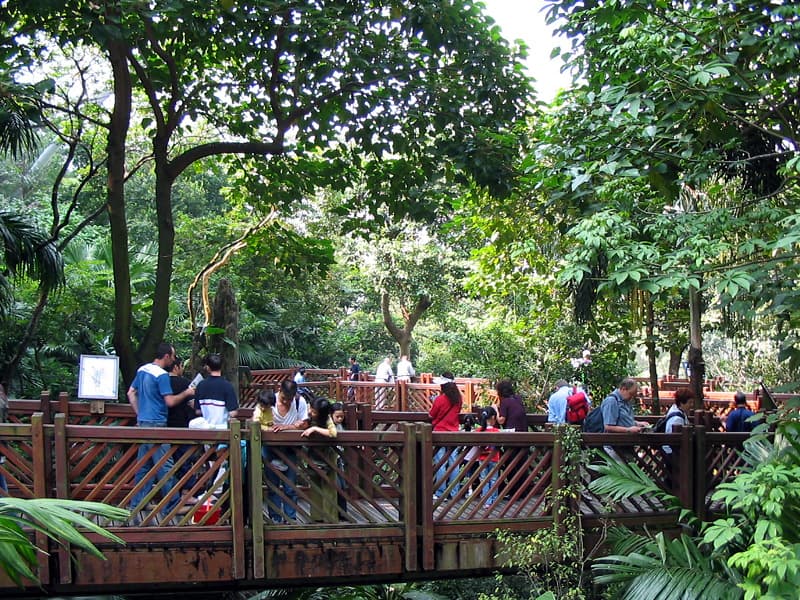
Edward Youde Aviary
The Edward Youde Aviary is a large, walk-through aviary located in Hong Kong Park, dedicated to showcasing a diverse collection of birds indigenous to Southeast Asia, Indonesia, and New Guinea. Opened in 1992, it is named after the former Governor of Hong Kong, Sir Edward Youde, and serves as a significant educational and conservation space within the urban environment.

Hong Kong Wetland Park
Hong Kong Wetland Park is a conservation, education, and tourism facility located in Tin Shui Wai, Yuen Long. It was developed as an ecological mitigation area for wetlands lost to urban development and has become a significant attraction showcasing biodiversity and conservation efforts.