
Kharkiv Zoo
Kharkiv Zoo, located in Park Shevchenko, Kharkiv, Ukraine, is a significant zoological institution and the first zoo established in Ukraine. It plays a role in wildlife conservation, housing a diverse collection of animals, including endangered species, and has a history of resilience, having been rebuilt and expanded multiple times since its founding in the late 19th century.
Key Facts
- ›Founded in the 1890s, with an "aquarium" established in 1906.
- ›Covers an area of 22 acres.
- ›Houses approximately 1,170 individual animals from 193 species.
- ›The zoo's collection includes 7 species listed in the European Red List and 14 in the Red Book of Ukraine.
- ›Features exhibits such as the "Tiger Trail", "African Savannah", and "Planet of the Apes".
- ›Underwent major renovations between 2016 and 2021 and has been a sanctuary for animals during the 2022 Russian invasion of Ukraine.

Tiger Trail, African Savannah, African Safari, Kingdom of the Elephants, Planet of the Apes, Wild Australia, South America, Inhabitants of the Mountains, Alligator Exhibits
Hector, Rosa, Desi
European Red List Species, Red Book of Ukraine Species, Cites Listed Species
About Kharkiv Zoo
Kharkiv Zoo is a prominent zoological park situated in Park Shevchenko in Kharkiv, Ukraine. It holds the distinction of being the first zoo established in Ukraine, with its origins tracing back to the 1890s. The zoo is connected with the European Association of Zoos and Aquaria, underscoring its role in international zoological standards and conservation efforts.
History and Development
The inception of Kharkiv Zoo began with an initiative by Professor Alexander Brandt in the 1890s to establish an "aquarium." In 1894, the South Russian Acclimatization Society sought to lease land from the University Garden for an exhibition. By 1895, a beekeeping and sericulture station was opened on a plot of land within the University Garden's experimental field. This site, in a building designed by architects S. I. and I. I. Zagoskin, now houses the zoo's directorate.
The initial collection was modest, featuring small predators, birds, and domestic animals. In 1900, mammals and birds arrived from the acclimatization zoo in Askania-Nova. The "aquarium" was completed in 1906 and now serves as a terrarium. Prior to the October Revolution, the zoo had developed aviaries for birds, a pond for waterfowl, and enclosures for various animals, including wolves, foxes, polar bears, monkeys, and lions.
Following the revolution, the South Russian Acclimatization Society dissolved, and the zoo experienced a period of decline. Restoration and expansion efforts commenced in 1921 with the involvement of zoologist V. G. Averin, and Mykola Petrovich Ewald became the zoo's head. By 1926–1927, new enclosures for elephants and monkeys were constructed, along with heated facilities for large predators. A zoo museum was inaugurated on May 1, 1928, coinciding with the start of a young biologists' circle. The zoo's territory was further expanded in 1929, allowing for a new pond and enclosures for birds and ungulates. The main entrance gate, designed by architect Shirshov, was built in 1932. By 1941, the zoo's area had increased tenfold, exhibiting approximately 100 species of mammals, a similar number of fish, amphibians, and reptiles, and over 200 species of birds.
During World War II, Kharkiv Zoo faced immense challenges. M. P. Ewald remained to safeguard the animal collection, and while German troops occupied Kharkiv in October 1941, they initially did not interfere with the zoo's operations and even provided some feeding assistance. However, in August 1943, during intense battles, a large number of animals perished, and valuable scientific materials and documents were lost. At the time of Kharkiv's liberation, only a few bears, monkeys, and a wolf had survived, with significant damage to enclosures and infrastructure. The total damage was estimated at 1 million Soviet rubles.
Despite these losses, the zoo was officially considered open again on August 29, 1943. In 1944, the first batch of animals was received, and a Scientific Council began work at the zoo, initiating a new phase of restoration and development. A monument dedicated to the animals that survived during World War II, including three macaques named Hector, Rosa, and Desi, was unveiled in 2008.
Modern Era and Exhibits
Kharkiv Zoo underwent significant renovations between 2016 and 2021. In response to the 2022 Russian invasion of Ukraine, it became a sanctuary for animals evacuated from private zoos across Ukraine, including Feldman Ecopark.
The zoo boasts a variety of exhibits, such as the "Tiger Trail," "African Savannah," "Kingdom of the Elephants," "Planet of the Apes," "Wild Australia," "South America," "Inhabitants of the Mountains," and alligator exhibits.
Collection and Conservation
The zoo ranks second in Ukraine in terms of collection value, after the Kyiv Zoo. Its comprehensive collection includes over 384 species of animals, with a total of approximately 8,000 individuals. This diverse collection features 137 species of fish, 2 species of amphibians, 44 species of reptiles, 97 species of birds, and 79 species of mammals. Notably, the zoo houses 7 species listed on the European Red List, 14 species on the Red Book of Ukraine, and 93 species included in the Convention on International Trade in Endangered Species of Wild Fauna and Flora (CITES), highlighting its commitment to conservation.
Source: Wikipedia ↗
Frequently Asked Questions
When was Kharkiv Zoo founded?
The history of Kharkiv Zoo began in the 1890s with an initiative to organize an "aquarium." An "aquarium" was completed in 1906, and by the October Revolution, the zoo had various enclosures and aviaries.
What is the size of Kharkiv Zoo?
Kharkiv Zoo covers an area of 22 acres. Initially, it occupied a plot of about 2.5 hectares, but its territory expanded significantly over the decades.
How many animals and species are at Kharkiv Zoo?
The zoo houses approximately 1,170 individual animals representing 193 species. It also holds over 384 species of animals in total, including fish, amphibians, reptiles, birds, and mammals.
What are some notable exhibits at Kharkiv Zoo?
Kharkiv Zoo features several distinct exhibits, including the "Tiger Trail," the "African Savannah," the "Kingdom of the Elephants," and "Planet of the Apes."
Has Kharkiv Zoo been affected by wartime events?
Yes, Kharkiv Zoo suffered significant damage and loss of animals during World War II, but was reopened shortly after Kharkiv's liberation and underwent restoration. More recently, during the 2022 Russian invasion of Ukraine, animals from other Ukrainian zoos were transferred to Kharkiv Zoo for safety.
Related Zoos

Taronga Zoo
Taronga Zoo Sydney is a government-run public zoo situated in Mosman, New South Wales, Australia, offering panoramic views of Sydney Harbour. Opened in 1916, it is managed by the Zoological Parks Board of New South Wales and is dedicated to conservation, education, and scientific research, housing over 5,000 animals across approximately 350 species.
Bor Zoo
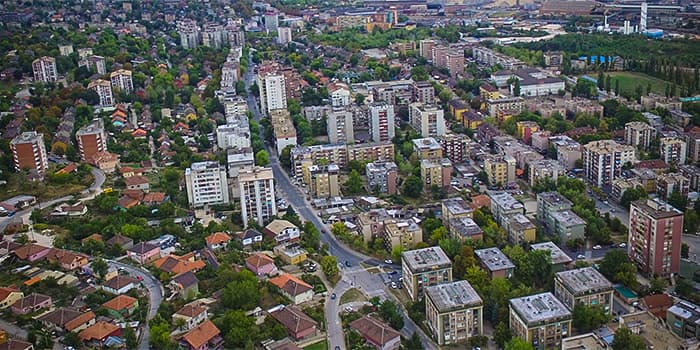
Bor Zoo is a public zoo located in Bor, Serbia, established in 2011. It is recognized as one of the most attractive zoos in southeastern Europe, housing a diverse collection of wild, exotic, domestic, and indigenous animals on its 2.5-hectare grounds.

Kyiv Zoo
The Kyiv Zoo is the largest zoo in Kyiv, Ukraine, and one of the most significant in the former Soviet Union. Established in 1909, it spans approximately 40 hectares and houses a diverse collection of animals, serving as a research center focused on acclimatization and the preservation of rare species. Despite facing historical challenges, including wartime evacuations and recent controversies regarding animal welfare, the zoo has undergone renovations and continues its conservation efforts.