
Montreal Biodome
Canada·Museum of Enclosed Ecosystems·20th century
The Montreal Biodome is an immersive museum in Montreal, Canada, that recreates five distinct ecosystems of the Americas within a former Olympic velodrome. It is a vital component of Canada's largest natural science museum complex, Space for Life, and plays a significant role in wildlife conservation and education.
Key Facts
- ›Originally built as a velodrome for the 1976 Olympic Games.
- ›Opened as the Montreal Biodome in 1992 after extensive renovations.
- ›Features replicas of five ecosystems: Tropical Rainforest, Laurentian Maple Forest, Gulf of St. Lawrence, Labrador Coast, and Sub-Antarctic Islands.
- ›Part of Space for Life, Canada's largest natural science museum complex.
- ›Accredited by the Association of Zoos and Aquariums (AZA) and Canada's Accredited Zoos and Aquariums (CAZA).
- ›Houses Canada's largest geothermal heating system, reducing greenhouse gas emissions.

Tropical Rainforest, Laurentian Maple Forest, Gulf of St. Lawrence, Labrador Coast, Sub-Antarctic Islands
Capybaras, Emperor Tamarins, Blue-and-Yellow Macaws, Tropical Gar, Wood Turtle, Western Chorus Frog, Copper Redhorse, Rockhopper Penguins, Murres, Puffins
- Wood Turtle Captive Breeding and Release
- Western chorus frog breeding and knowledge development
- Copper Redhorse Artificial Reproduction
- Rockhopper Penguin Breeding Program
- Barndoor Skate Captive Breeding Program
About Montreal Biodome
The Montreal Biodome, originally known in French as the Biodôme de Montréal, is a unique museum dedicated to showcasing enclosed ecosystems. Located in the Olympic Park in Montreal, Quebec, Canada, it allows visitors to immerse themselves in replicas of five distinct natural environments found across the Americas. These include the vibrant Tropical Rainforest, the seasonal Laurentian Maple Forest, the marine life of the Gulf of St. Lawrence estuary, the stark beauty of the Labrador Coast, and the icy landscapes of the Sub-Antarctic Islands.
History and Transformation
The structure housing the Biodome has a notable history, having been originally constructed as a velodrome (cycling stadium) for the 1976 Olympic Games. Following the Games, the building underwent significant transformation. A feasibility study in 1988 sparked the idea of converting the velodrome into an enclosed nature exhibit. Under the inspiration of then-Mayor Pierre Bourque, construction began in 1989, and the Montreal Biodome officially opened its doors to the public on June 18, 1992. It is now one of four institutions that comprise Space for Life, Canada's largest natural science museum complex.
Ecosystems and Exhibits
The Biodome's primary draw is its five meticulously recreated ecosystems. The Tropical Rainforest exhibit, the largest, replicates the high temperatures and humidity of South America, housing a diverse array of species. The Laurentian Maple Forest exhibit changes with the seasons, mirroring the natural cycles of a Quebec forest and focusing on conservation efforts for specific flora and fauna. The Gulf of St. Lawrence exhibit, a large aquatic habitat, simulates a marine estuary with millions of liters of saltwater. The Labrador Coast and Sub-Antarctic Islands exhibits offer views of seabirds and penguins, respectively, allowing observation both on land and in water.
Conservation and Scientific Contributions
Conservation is a central mission of the Montreal Biodome. It actively participates in breeding programs for species like rockhopper penguins and has focused conservation efforts on vulnerable animals such as the wood turtle, the Western chorus frog, and the copper redhorse. The Biodome has also contributed to scientific discovery, with two new species, an acarian and a bacterium, identified within its simulated environments. Furthermore, the facility hosts Canada's largest geothermal heating system, significantly reducing its environmental footprint.
Source: Wikipedia ↗
Frequently Asked Questions
What is the Montreal Biodome?
The Montreal Biodome is a museum dedicated to enclosed ecosystems, allowing visitors to explore replicas of five distinct environments found in the Americas. It is located in Montreal, Quebec, Canada, within a building originally constructed for the 1976 Olympic Games.
What ecosystems can visitors experience at the Biodome?
Visitors can walk through five recreated ecosystems: the Tropical Rainforest, the Laurentian Maple Forest, a Gulf of St. Lawrence estuary, the Labrador Coast, and the Sub-Antarctic Islands. Each exhibit is designed to replicate the climate and biodiversity of its real-world counterpart.
What was the building used for before becoming the Biodome?
The building was originally constructed as a velodrome, a cycling stadium, for the 1976 Montreal Olympic Games. It also hosted judo events during the Games.
When did the Montreal Biodome open?
The Montreal Biodome opened to the public on June 18, 1992, following renovations to convert the former velodrome into an indoor nature exhibit.
What is the mission of the Montreal Biodome?
The key mission of the Biodome is conservation. It also serves as a museum that educates visitors about different ecosystems and the importance of biodiversity.
What scientific contributions has the Biodome made?
The Biodome has been the site of scientific discoveries, including two new species: the acarian Copidognathus biodomus and the bacterium Nitratireductor aquibiodomus. It also observed a new type of hybrid bird resulting from intergeneric breeding.
What conservation programs are active at the Biodome?
The Biodome is involved in conservation programs for vulnerable species such as the wood turtle, the Western chorus frog, and the copper redhorse. It also has a successful rockhopper penguin breeding program and previously ran a captive breeding program for barndoor skates.
Has the Biodome undergone renovations?
Yes, the Biodome closed for extensive renovations from April 2018 to August 31, 2020. These renovations introduced new features like augmented reality via a mobile app, new walkways, and an ice tunnel.
Related Zoos
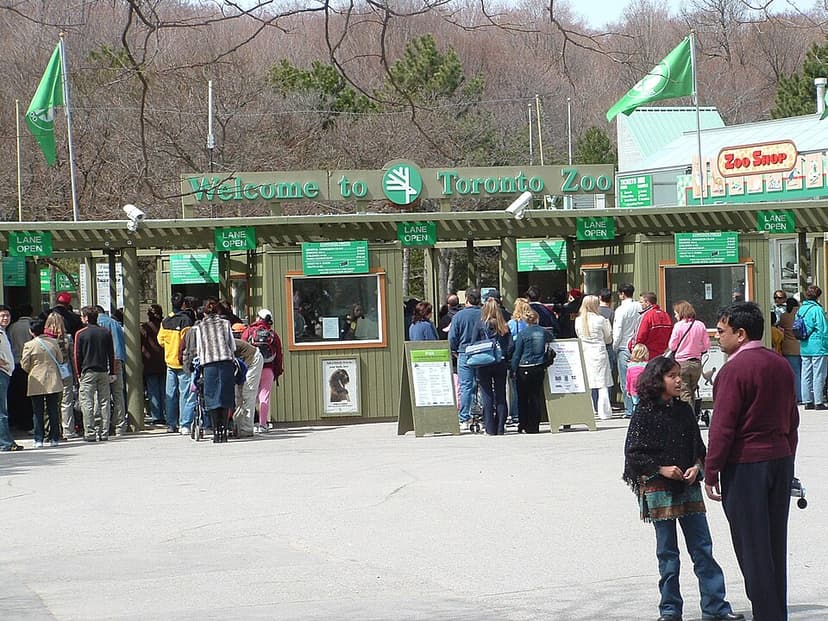
Toronto Zoo
The Toronto Zoo is Canada's largest zoo, spanning 287 hectares and attracting approximately 1.2 million visitors annually. It is organized into seven distinct zoogeographic regions, showcasing a diverse collection of over 3,000 animals from more than 300 species in naturalistic environments. The zoo plays a significant role in conservation and public education, offering immersive experiences for visitors of all ages.

Granby Zoo
The Granby Zoo, also known as Le Zoo de Granby, is a prominent zoo located in Granby, Quebec, Canada, and is recognized as one of the province's major tourist attractions. Established in 1953, it houses a diverse collection of over 1,800 animals representing 230 species from various continents, drawing over 500,000 visitors annually.

Marineland
Marineland of Canada was an animal theme park in Niagara Falls, Ontario, that operated from 1961 to 2024. Founded by John Holer, it featured performing marine mammals, land animals, and amusement rides, but faced persistent controversies regarding animal welfare and captivity. In its final years, Marineland underwent significant operational changes, including the closure of land exhibits and rides, with plans for animal relocation and park sale underway.