
National Marine Aquarium
The National Marine Aquarium, located in Plymouth, England, is the United Kingdom's largest aquarium. Opened in 1998, it serves as an educational institution dedicated to teaching visitors about the marine environment and is run by the Ocean Conservation Trust, a charity focused on ocean protection and restoration.
Key Facts
- ›Opened in May 1998.
- ›Largest aquarium in the UK.
- ›Houses over 5,000 animals.
- ›Operated by the Ocean Conservation Trust, a charity.
- ›Features four main zones: Plymouth Sound, Eddystone Reef, Atlantic Ocean, and Blue Planet.

Ocean Drifters Jellyfish Exhibit, Atlantic Ocean Tank, Biozone, Great Barrier Reef Exhibit
Moon Jellies, Japanese Sea Nettles, Upside-Down Jellyfish, Caribbean Fish, Lemon Sharks, Sand Tiger Sharks, Longhorn Cowfish, Lionfish, Giant Pacific Octopus, Seahorses, Local Sharks, Rays, Octopus
Seagrass Protection Projects, Artificial Reef Creation
About National Marine Aquarium
The National Marine Aquarium, situated in Plymouth, south-west England, is the largest aquarium in the United Kingdom. It commenced operations in May 1998 and is dedicated to educating visitors about the marine environment. The institution is managed by the Ocean Conservation Trust, a charity focused on the protection and restoration of the oceans.
Key Features and Exhibits
The aquarium is organized into four primary zones: Plymouth Sound, Eddystone Reef, Atlantic Ocean, and Blue Planet. The Plymouth Sound zone features 17 tanks displaying approximately 80 species of fish and invertebrates native to the local waters, including sharks, rays, and octopuses. The Eddystone Reef exhibit is notable for its life-size models of whales and dolphins and a large tank showcasing animals found on the Eddystone reef.
The Atlantic Ocean zone houses the 'Ocean Drifters' jellyfish exhibit, which opened in 2009 and features moon jellies, Japanese sea nettles, and upside-down jellyfish. This zone also contains the aquarium's largest tank, with a volume of 2.5 million litres, home to 1,000 Caribbean fish. Updates in 2015 and 2016 introduced lemon and sand tiger sharks to this exhibit.
The Blue Planet zone includes 'Biozone' and the 'Great Barrier Reef' exhibit, showcasing global marine biodiversity with species such as longhorn cowfish, lionfish, giant Pacific octopuses, and seahorses. This zone also features the second-largest tank at 700,000 litres, containing over 70 species of fish.
Conservation and Education
The National Marine Aquarium holds the distinction of being the first UK aquarium established with the explicit purpose of advancing learning, research, and conservation of the marine environment. The Ocean Conservation Trust, which operates the aquarium, engages in initiatives across Ocean Advocacy, Ocean Habitats, and Ocean Experiences. A significant conservation effort led by the aquarium was the sinking of the frigate HMS Scylla in 2004 to establish an artificial reef in Whitsand Bay, Cornwall. The aquarium's work and the care of its animals were also featured in the 2023 BBC Two documentary series "Secrets of the Aquarium."
Source: Wikipedia ↗
Frequently Asked Questions
Where is the National Marine Aquarium located?
The National Marine Aquarium is situated in Plymouth in south-west England, specifically in Sutton Harbour near the Barbican and fish market.
When did the National Marine Aquarium open?
The National Marine Aquarium officially opened its doors in May 1998.
What is the size of the National Marine Aquarium?
It is the largest aquarium in the UK and houses over 5,000 animals. The largest tank within the Atlantic Ocean zone has a volume of 2.5 million litres.
What are the main exhibit zones at the aquarium?
The aquarium is divided into four main zones: Plymouth Sound, Eddystone Reef, Atlantic Ocean, and Blue Planet. Each zone showcases different marine environments and species.
What is the role of the Ocean Conservation Trust?
The National Marine Aquarium is run by the Ocean Conservation Trust, a global charity dedicated to protecting and restoring the ocean. They focus on ocean advocacy, habitats, and experiences.
Does the aquarium focus on conservation?
Yes, the National Marine Aquarium was the first UK aquarium established specifically to further learning, research, and conservation of the marine environment. They led a project to create an artificial reef and are involved in seagrass protection projects.
Related Zoos

National Sea Life Centre
The National Sea Life Centre in Birmingham, England, is a prominent aquarium showcasing diverse freshwater and marine life across more than 60 displays. It is notable for its large ocean tank featuring a fully transparent underwater tunnel, the only one of its kind in the United Kingdom, and for its significant conservation efforts, including a successful seahorse breeding program.

Sea Life Brighton
Sea Life Brighton, originally known as Brighton Aquarium, is the world's oldest continuously operating aquarium, opening in 1872. It has a rich history, evolving from its Victorian origins through various modernizations and ownership changes, most notably becoming a Sea Life Centre in 1991. The attraction remains a significant landmark on Brighton's seafront, recognized for its architectural importance and enduring popularity.
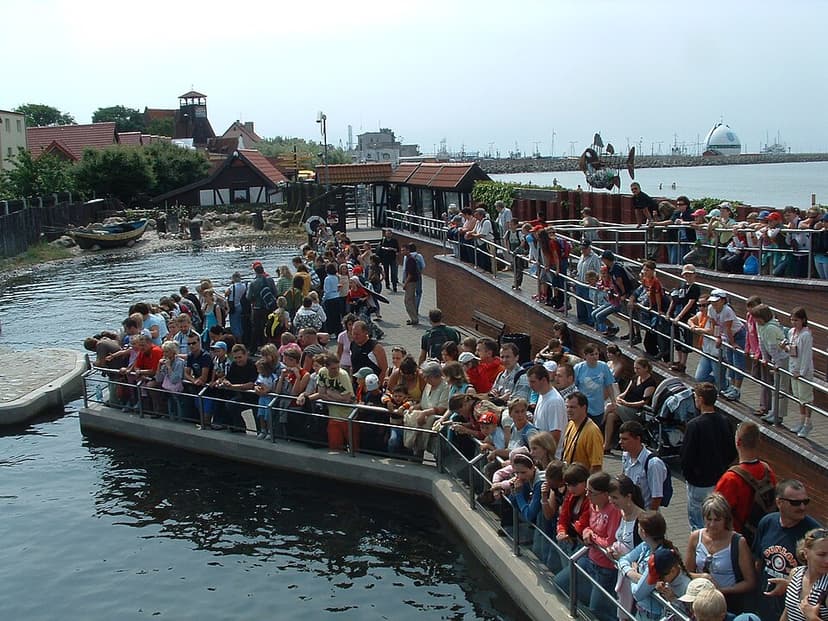
Fokarium na Helu
The Seal Sanctuary in Hel (Fokarium w Helu) is a public aquarium located in Hel, Poland, on the Baltic Sea coast. It is primarily dedicated to the protection of Baltic seals and the promotion of knowledge about them and environmental protection, rather than being a commercial zoo or circus.