
Pyrénées Animal Park
France·Regional Wildlife Park·21st century
The Pyrénées Animal Park, also known as The Marmots Hill, is a zoo located in Argelès-Gazost, France. Established in 1999, its primary aim is to showcase regional fauna in a semi-wild setting, offering visitors close encounters with animals like marmots, bears, and wolves.
Key Facts
- ›Founded in 1999 by Serge Mounard.
- ›Located in Argelès-Gazost, Hautes-Pyrénées, France.
- ›Focuses on presenting regional animals in a semi-wild environment.
- ›Features exhibits for marmots, bears, wolves, foxes, ibex, mouflon, and isards.
- ›Includes a museum reconstructing the life of wild animals from the northern hemisphere, Europe, and Africa.
- ›Offers interactive activities such as footprint molding workshops.
- Marmot Enclosure
- Brown Bear Habitat
- Wolf Enclosure
- European Otter Habitat
- Museum of Northern Hemisphere, European, and African wildlife
Marmot, Brown Bear, Wolf, Isard
About Pyrénées Animal Park
The Pyrénées Animal Park, also known by its nickname 'The Marmots Hill' (French: Parc Animalier des Pyrénées), is a zoological facility located in Argelès-Gazost, within the Hautes-Pyrénées region of France. Established in 1999 by Serge Mounard, the park was conceived with the aim of presenting a variety of regional animals in an environment that closely approximates their natural habitat.
Zoological Offerings
The park's layout features a zigzagging path through the hills, designed to allow visitors to observe common wildlife such as squirrels, marmots, and otters. It also provides opportunities for closer encounters with species like foxes, wolves, ibex, mouflons, isards, and brown bears. In some instances, visitors have been able to interact directly with certain animals, including farm animals, deer, and the park's signature attraction, the marmots.
Educational and Interactive Elements
A dedicated pedagogical team is present to guide visitors, offering information and insights into the animals' lives, supplemented by informative panels. The park also engages visitors with activities like a footprint molding workshop, designed to teach recognition of animal tracks found in the wild. A Pyrenean map is maintained and updated in real-time to show the locations of the 25 bears that inhabit the surrounding massif freely.
Museum and Facilities
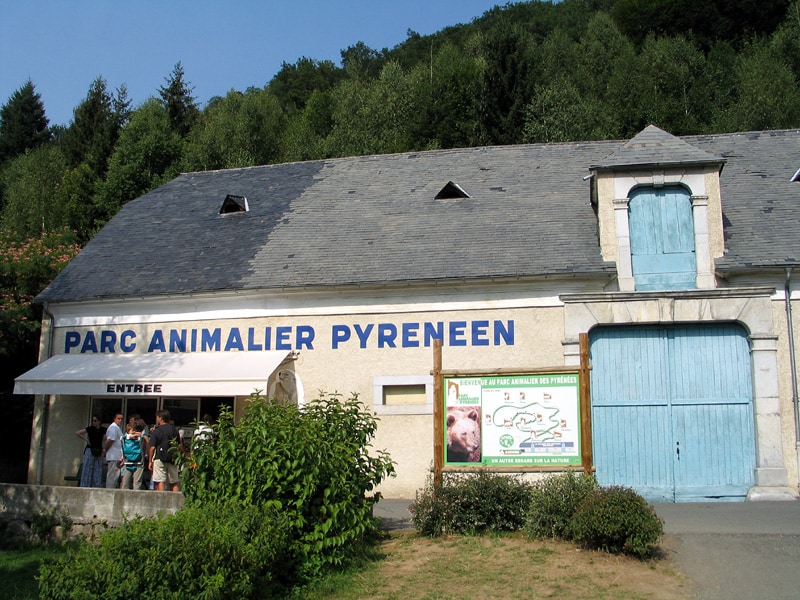
The entrance to the park is marked by a historic building, an old stable dating back to the mid-19th century. This structure houses a museum that reconstructs the lives of wild animals from the northern hemisphere, Europe, and Africa through thematic displays presented in three-dimensional dioramas. A souvenir shop, featuring items such as marmot stuffed toys, is located at the park's exit.
Source: Wikipedia ↗
Frequently Asked Questions
Where is the Pyrénées Animal Park located?
The Pyrénées Animal Park is situated in Argelès-Gazost, in the Hautes-Pyrénées department of France. It is nicknamed 'The Marmots Hill'.
When was the Pyrénées Animal Park established?
The park was created in 1999. It was founded by Serge Mounard on property previously used by his dairy-producing family.
What types of animals can visitors see at the Pyrénées Animal Park?
Visitors can observe a variety of regional animals, including squirrels, marmots, otters, foxes, wolves, ibex, mouflons, isards, and brown bears. Some farm animals, like hens and rabbits, are also present.
What educational and interactive features does the park offer?
The park has a pedagogical team that informs visitors and uses didactical panels. There is also a Pyrenean map showing the real-time position of bears in the massif and a footprint molding workshop to help recognize animal tracks.
Does the Pyrénées Animal Park have any special exhibits or attractions?
A notable attraction is the opportunity to get close to animals, including touching some species like farm animals, deer, and especially marmots, which are a main draw. The entrance building houses a museum with thematic displays on wildlife.
Related Zoos

Alligator Bay
Alligator Bay is a zoological park and herpetarium located in Beauvoir, France, specializing in reptiles. Established in 1994, it has grown to house approximately 1000 animals representing around 100 species, attracting about 115,000 visitors annually.

Citadel of Besançon
The Citadel of Besançon is a 17th-century fortress in France, renowned as a masterpiece of military architecture designed by Sébastien Le Prestre de Vauban. It is a significant historical monument and a major tourist attraction, housing several museums and a zoo, and was recognized as a UNESCO World Heritage Site in 2008.

Haute Touche Zoological Park
The Haute Touche Zoological Park is a zoo and safari park located in Obterre, France, and is affiliated with the Muséum national d'histoire naturelle. Established in 1958 and opened to the public in 1980, it is known for housing animals in semi-freedom within extensive enclosures, offering visitors a glimpse of diverse species from around the world.