
Schloss Herberstein Zoo and Nature Park
Schloss Herberstein Zoo and Nature Park, also known as Tierwelt Herberstein, is a zoo located at Schloss Herberstein in Styria, Austria. Its origins trace back to Count Johann Maximilian I zu Herberstein's decision in the 17th century to introduce fallow deer from Italy to manage the steep terrain around the castle, which evolved into the present-day zoological attraction.
Key Facts
- ›The zoo's origins began with the introduction of fallow deer from Italy to manage the terrain around Schloss Herberstein.
- ›The area for fenced animals was expanded in 1888.
- ›Exotic animals were introduced, and the zoo opened to the public in the late 1960s.
- ›The zoo is situated at Schloss Herberstein in Styria, Austria.
- ›The steep slopes around the castle influenced the zoo's development.

Fallow Deer
About Schloss Herberstein Zoo and Nature Park
Schloss Herberstein Zoo and Nature Park, known in German as Tierwelt Herberstein, is a zoological park situated at the historic Schloss Herberstein in Styria, Austria. The establishment and evolution of the zoo are intrinsically linked to the unique topography of its location.
Origins and Development
The genesis of the zoo can be traced to the 17th century, when Count Johann Maximilian I zu Herberstein faced a practical challenge: the steep slopes surrounding his castle made traditional cattle farming unfeasible. To address this, he opted to introduce fallow deer imported from Italy. These deer were intended to graze the landscape and manage the challenging terrain, laying the foundation for what would eventually become the current zoo.
Over time, the facility evolved. In 1888, a significant step was taken with the expansion of the area designated for keeping fenced animals. A more transformative period began in the late 1960s when the zoo started incorporating exotic animals into its collection and subsequently opened its gates to the public, marking its transition into a recognized zoological attraction.
Source: Wikipedia ↗
Frequently Asked Questions
When did Schloss Herberstein Zoo and Nature Park open to the public?
Schloss Herberstein Zoo and Nature Park opened its gates to the public in the late 1960s. This was after the zoo began to keep exotic animals.
What led to the creation of the zoo at Schloss Herberstein?
The zoo originated from Count Johann Maximilian I zu Herberstein's decision to introduce fallow deer from Italy. These deer were intended to browse the steep slopes around the castle, which made cattle farming impractical.
Has the zoo's size or animal collection changed over time?
Yes, the area for fenced animals was increased in 1888. Later, in the late 1960s, the zoo began to house exotic animals, marking a significant expansion of its collection.
Related Zoos

Citadel of Besançon
The Citadel of Besançon is a 17th-century fortress in France, renowned as a masterpiece of military architecture designed by Sébastien Le Prestre de Vauban. It is a significant historical monument and a major tourist attraction, housing several museums and a zoo, and was recognized as a UNESCO World Heritage Site in 2008.

Letterkenny
Letterkenny, known as the "Cathedral Town," is a significant market town in County Donegal, Ireland, situated on the River Swilly. It serves as a vital economic hub for the northwest of Ireland, alongside the nearby city of Derry. Established at the beginning of the 17th century during the Plantation of Ulster, Letterkenny has grown into a large town with a diverse economy and a developing cultural infrastructure.
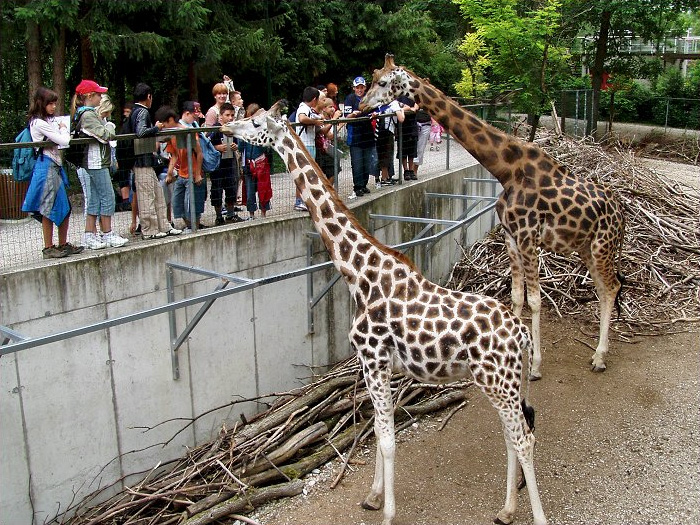
Schmiding Zoo
Schmiding Zoo, located at Schloss Schmiding in Upper Austria, Austria, originated from Europe's largest bird park, Vogelpark Schmiding, which opened in 1982. It is notable for housing the world's largest walk-through aviary and Austria's largest marine aquarium, the Aquazoo.