
Warsaw Zoo
The Warsaw Zoo, officially the Antonina and Jan Żabiński Municipal Zoological Garden, is a scientific zoo located in Warsaw, Poland, along the Vistula River. Established in 1928, it is a popular destination, attracting over 700,000 visitors annually and housing a significant collection of animals. Beyond its role as a public attraction and conservation center, the zoo holds historical importance as a sanctuary for Jews during World War II, a feat recognized by the "Righteous Among the Nations" title awarded to its former director Jan Żabiński and his wife Antonina.
Key Facts
- ›Opened in 1928, with roots tracing back to 17th-century private menageries.
- ›Covers approximately 40 hectares (99 acres) in central Warsaw.
- ›Home to over 11,000 animals representing more than 500 species.
- ›Accredited member of EAZA and WAZA.
- ›Served as a hiding place for over 300 Jews during World War II.
- ›Features notable exhibits including an Elephant house, Hippopotamus House with a shark aquarium, and an Ape House.

Elephant Exhibit, Hippopotamus House & Shark Aquarium, Ape House
Kasia
About Warsaw Zoo
The Warsaw Zoo, officially known as the Antonina and Jan Żabiński Municipal Zoological Garden, is a prominent scientific zoo situated along the Vistula River in Warsaw, Poland. Opened in 1928, it has evolved from earlier private menageries into a significant zoological institution.
History and Establishment
The zoo's origins can be traced to private collections dating back to the 17th century. The modern zoo began its development in the late 1920s, with construction commencing in 1927. Wenanty Burdziński was appointed as the first director, overseeing the initial stages of its establishment. The zoo officially opened its doors on March 11, 1928, featuring animals acquired from a private collection and the Pedagogical Museum. Early residents included lions, tigers, and an Indian elephant named Kasia, who would later give birth to the first Indian elephant born in a Polish zoo in 1937.
Jan Żabiński took over as director in late 1928 and was instrumental in developing several key exhibits before World War II, such as the monkey house, elephant house, and enclosures for antelopes and seals. His directorship spanned several periods, including 1928–1951 with a break.
World War II and Sanctuary
During World War II, the zoo suffered significant damage from bombing raids, leading to the death of many animals. Following the surrender of Warsaw, many animals were taken to Germany, and the zoo was closed. However, this period also marked a critical chapter in the zoo's history. Director Jan Żabiński, along with his wife Antonina and their son Ryszard, courageously used the zoo's facilities to hide over 300 Jews escaping the Warsaw Ghetto, saving them from the Holocaust. This remarkable act of bravery and humanity led to Jan and Antonina Żabiński being honored with the title "Righteous Among the Nations."
Post-War and Modernization
After Jan Żabiński's return from captivity following the 1944 Warsaw Uprising, efforts began to reintroduce animals and reopen the zoo, which occurred in 1949. The zoo has since undergone various stages of modernization and expansion under a succession of directors. It is currently an accredited member of the European Association of Zoos and Aquaria (EAZA) and the World Association of Zoos and Aquariums (WAZA).
Notable Exhibits and Collections
The Warsaw Zoo is home to over 11,000 animals representing more than 500 species. It attracts over 700,000 visitors annually, making it one of Poland's most popular zoos. Notable exhibits include a 6,000-square-meter Elephant exhibit opened in 2003, a Hippopotamus House with an indoor pool and a large salt water aquarium housing sharks and other marine life, and an Ape House for gorillas and chimpanzees opened in 2008. The zoo's collection includes African elephants, hippos, gorillas, chimpanzees, various primates, and a wide array of bird and reptile species.
Cultural Impact
The heroic actions of Jan and Antonina Żabiński during World War II were documented in Diane Ackerman's non-fiction book "The Zookeeper's Wife," which was later adapted into a film released in 2017. These narratives highlight the zoo's dual role as a center for wildlife and a place of refuge during a dark period of history.
Source: Wikipedia ↗
Frequently Asked Questions
What is the official name of the Warsaw Zoo?
The zoo officially adopted the name Antonina and Jan Żabiński Municipal Zoological Garden on January 1, 2023. This name honors its former director Jan Żabiński and his wife Antonina for their significant contributions, particularly during World War II.
When was the Warsaw Zoo established?
The current Warsaw Zoo officially opened on March 11, 1928. However, its history can be traced back to private menageries that existed in Warsaw as early as the 17th century.
How large is the Warsaw Zoo?
The Warsaw Zoo spans approximately 40 hectares, which is equivalent to about 99 acres, located in central Warsaw.
What is the significance of Jan and Antonina Żabiński to the Warsaw Zoo?
Jan and Antonina Żabiński were the director and his wife who saved over 300 Jews from the Holocaust by hiding them within the zoo premises during World War II. They were later recognized with the "Righteous Among the Nations" title for their bravery and humanitarian efforts.
Does the Warsaw Zoo have an aquarium?
Yes, the Warsaw Zoo features a significant aquarium component within its Hippopotamus House. This facility includes a 100,000-liter saltwater tank, which is the largest single fish tank in Poland, housing various fish species including the country's only sand tiger shark.
What notable animals are housed at the Warsaw Zoo?
The zoo is home to a diverse range of animals, including African elephants, hippos, gorillas, chimpanzees, lions, tigers, and antelopes. Notably, the first Indian elephant born in a Polish zoo, named Kasia, was born at the Warsaw Zoo in 1937.
Related Zoos

Downs' Zoological Gardens
Downs' Zoological Gardens was the oldest scientific zoo in North America north of Mexico, opening in Nova Scotia in 1847. Originally conceived for scientific study, it became a popular destination for Halifax residents before its closure in 1868. Despite a brief attempt at rebuilding, its initial run established it as a significant early zoological institution on the continent.

Ogród Zoologiczny w Łodzi
The Łódź Zoo, officially known as Miejski Ogród Zoologiczny w Łodzi, is a significant zoological garden located in Łódź, Poland. Established in 1938, it has grown to become a notable institution for animal conservation and public education, recognized for its diverse collection and modern facilities, including the award-winning Orientarium.
Fokarium na Helu
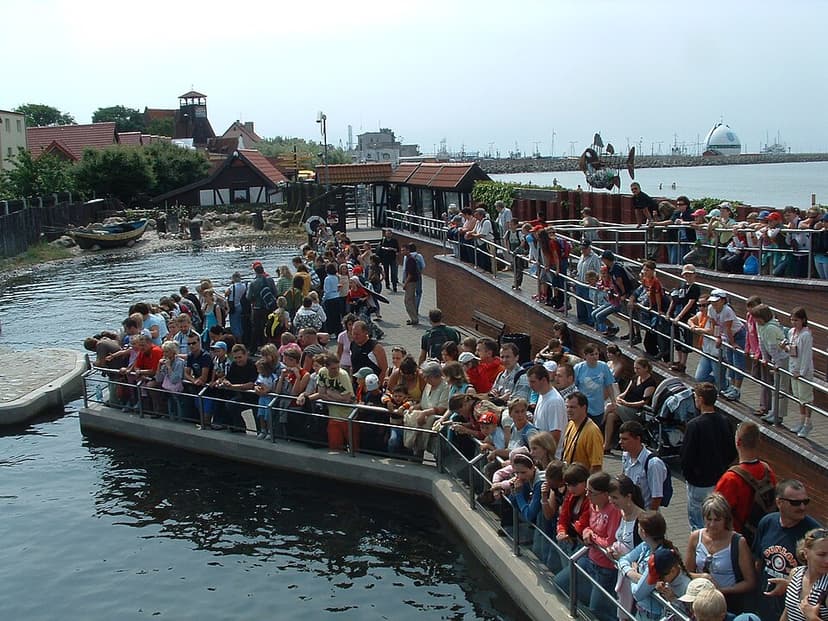
The Seal Sanctuary in Hel (Fokarium w Helu) is a public aquarium located in Hel, Poland, on the Baltic Sea coast. It is primarily dedicated to the protection of Baltic seals and the promotion of knowledge about them and environmental protection, rather than being a commercial zoo or circus.