
Wittringen Castle
Germany·13th century
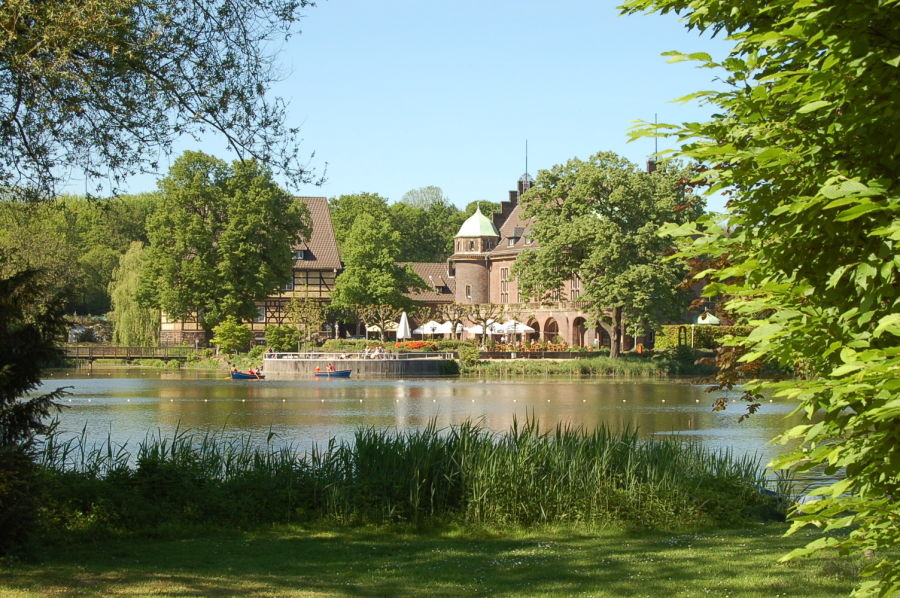
Wittringen Castle, also known as Wittringen House, is a moated castle located in Gladbeck, North Rhine-Westphalia, Germany. First mentioned in official documents in 1263, it has a long history of noble ownership and was significantly renovated in the early 20th century. Today, it serves as the Museum of the City of Gladbeck and houses a restaurant, surrounded by forests and parks.
Key Facts
- ›First documented mention of the noble family von Wittringen in 1263.
- ›Believed to have been erected by Knight Ludolfus de Witteringe around the 13th century.
- ›Owned by the von Oeffte family for approximately 150 years starting in 1438.
- ›Plundered by Hessian troops in 1642 during the Thirty Years' War.
- ›Sold to the city of Gladbeck in 1922 by Freiherr Vittinghoff-Schell.
- ›Renovated in the Dutch Renaissance style and has housed the Museum of Gladbeck since 1928.
About Wittringen Castle
Wittringen Castle, also referred to as Wittringen House, is a historic moated castle located in the city of Gladbeck, within the German state of North Rhine-Westphalia.
History and Ownership
The history of Wittringen Castle is closely tied to the noble family von Wittringen, who were first mentioned in official records in 1263. It is widely believed that Knight Ludolfus de Witteringe was responsible for the construction of the castle around that time, although the precise date of its erection remains unconfirmed. Historical documents from 1394 indicate that Heinrich von Brachtbecke was an owner of the castle, and his family's crest, featuring three Wolfsangeln, was later incorporated into the coat of arms of the city of Gladbeck.
In 1438, a significant shift in ownership occurred when the Herzog of Cleves granted the von Oeffte family enfeoffment of half of Wittringen. This family subsequently acquired the remaining portion, holding sole possession of the castle for the subsequent 150 years. By the mid-sixteenth century, Wittringen was presented to the Knights von Capellen as a betrothal gift. The castle endured hardship during the Thirty Years' War when it was plundered by Hessian troops in 1642.
Modern Use
A pivotal moment in the castle's history arrived in 1922 when Freiherr Vittinghoff-Schell, the then-owner, sold Wittringen Castle to the city of Gladbeck. In the years that followed, extensive renovations were undertaken, guided by historical maps and plans. The manor house was meticulously remodelled to reflect its original Dutch Renaissance architectural style. Since 1928, Wittringen Castle has served as the home of the Museum of the City of Gladbeck (Museum der Stadt Gladbeck). Today, it also accommodates a restaurant and is set within a landscape of spacious forests and parks, adjacent to the Gladbeck Stadium.
Source: Wikipedia ↗
Frequently Asked Questions
When was Wittringen Castle first mentioned?
The noble family von Wittringen was first mentioned in an official document dating back to 1263. It is believed that Knight Ludolfus de Witteringe erected the castle around that same period, though the exact date remains unclear.
Who owned Wittringen Castle before the city of Gladbeck?
Following a period of ownership by the von Oeffte family and later the Knights von Capellen, Freiherr Vittinghoff-Schell was the owner of Wittringen Castle before selling it. The von Oeffte family acquired sole possession for about 150 years after being granted half ownership in 1438.
What happened to Wittringen Castle during the Thirty Years' War?
During the Thirty Years' War, Wittringen Castle was plundered by Hessian troops in 1642. This event marked a period of disruption for the historic moated castle.
What is Wittringen Castle used for today?
Since 1928, Wittringen Castle has been home to the Museum of the City of Gladbeck. It also currently hosts a restaurant and is situated within spacious forests, parks, and near the Gladbeck Stadium.
What architectural style was Wittringen Castle remodelled into?
Following its sale to the city of Gladbeck in 1922, Wittringen Castle was extensively overhauled. The manor house was remodelled in its original style, which was the Dutch Renaissance.
Related Zoos

Aquazoo Löbbecke Museum
The Aquazoo Löbbecke Museum in Düsseldorf is a unique institution that combines a zoo, natural history museum, and aquarium. Opened in 1987, it houses approximately 500 animal species and 1,400 natural history exhibits, making it Düsseldorf's most visited cultural attraction.

Augsburg Zoo
Augsburg Zoo is a significant zoological institution located in Augsburg, Bavaria, Germany. With over 600,000 annual visitors, it ranks among the 20 largest zoos in Germany and plays a role in European conservation efforts. The zoo houses a diverse collection of animals, contributing to public education and engagement with wildlife.

Bad Mergentheim Wildlife Park
Wildpark Bad Mergentheim is a wildlife park established in 1973, situated on a forested hill southeast of Bad Mergentheim. It is home to a diverse collection of wild animals native to the region, alongside various domesticated farm animals.