
Cephalogale
Mammal, Carnivora, Ursidae (extinct hemicyonine)·Unknown
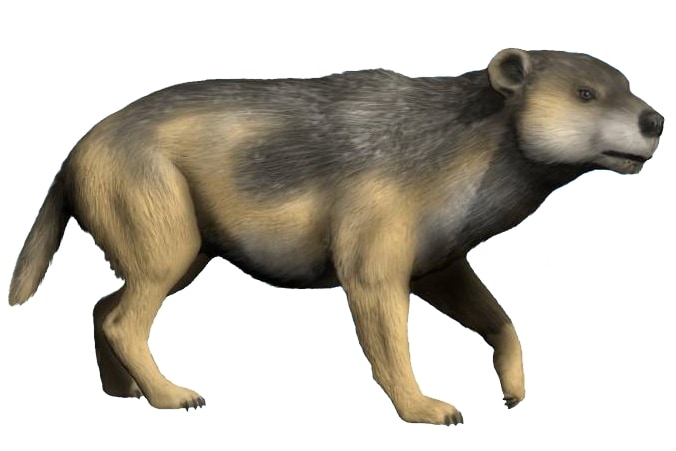
Cephalogale was an extinct genus of hemicyonine bear that inhabited North America and Europe during the Oligocene and Early Miocene epochs, approximately 28.4 to 20 million years ago. Previously considered an ancestor to all bears, it is now understood to be closely related to the ancestry of hemicyonines.
Key Facts
- ›Lived from approximately 28.4 to 20 million years ago.
- ›Fossil evidence found in North America and Europe.
- ›Once thought to be the ancestor of all modern bears.
- ›Now classified as a hemicyonine bear.
- ›Fossil sites include locations in the Czech Republic, Spain, and the United States (New Mexico and Nebraska).
Terrestrial
North America, Europe
About Cephalogale
Cephalogale is an extinct genus of bear belonging to the hemicyonine subfamily. This ancient mammal roamed parts of North America and Europe during the Oligocene and Early Miocene epochs, with its existence spanning approximately 28.4 to 20 million years ago. The genus holds a place in paleontological history, having once been considered a potential ancestor to all modern bear species before more refined classifications placed it as a relative to the hemicyonines.
Fossil Distribution and Significance
Fossil evidence of Cephalogale has been uncovered at several key paleontological sites. In Europe, discoveries have been made in Dětaň, Czech Republic, dating back to around 33.9 to 28.4 million years ago. In North America, significant finds have occurred in Spain (Cetina de Aragon, 22.4—20 Mya) and across various locations in the United States, including New Mexico (Standing Rock Quarry, 24.8—20.6 Mya) and Nebraska (Agate Springs Quarries, 23–5.3 Mya; Hemingford Quarry, 20.6—16.3 Mya). The presence of Cephalogale in these diverse regions highlights its widespread distribution during its time.
The scientific understanding of Cephalogale's evolutionary position has evolved. While earlier theories suggested it was the progenitor of all bears, current research aligns it more closely with the hemicyonine lineage. This revision reflects ongoing advancements in paleontology and the study of bear phylogeny, underscoring Cephalogale's importance in tracing the ancient history of Ursidae.
Source: Wikipedia ↗
Frequently Asked Questions
When did Cephalogale live?
Cephalogale lived during the Oligocene and Early Miocene epochs. Its existence is dated from approximately 28.4 to 20 million years ago.
Where were Cephalogale fossils found?
Fossils of Cephalogale have been discovered in both North America and Europe. Specific locations include Dětaň in the Czech Republic, Cetina de Aragon in Spain, and various sites in New Mexico and Nebraska in the United States.
What is the current classification of Cephalogale?
Cephalogale is currently classified as an extinct genus of hemicyonine bear. Previously, it was considered an ancestor to all bear species.
What is the significance of Cephalogale in bear evolution?
Cephalogale is significant because it was once believed to be the ancestor of all bears. Modern paleontological understanding places it closer to the ancestry of hemicyonines.
