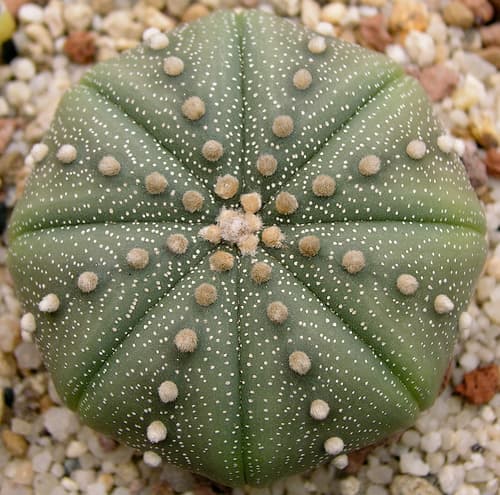
Astrophytum myriostigma
Astrophytum·Globose to cylindrical·Late spring/Summer (in wild context for seed maturation)
Astrophytum myriostigma, commonly known as the bishop's cap cactus, is a spineless species native to the highlands of northeastern and central Mexico. It is distinguished by its star-like shape when young, formed by prominent vertical ribs, which develops into a more cylindrical form as it matures. The plant produces creamy yellow flowers and is widely cultivated as an ornamental.
Key Facts
- ›Native to the highlands of northeastern and central Mexico.
- ›Characterized by prominent vertical ribs that give it a star-like shape when young.
- ›Spineless cactus that can grow up to 100 CM tall and 20 CM in diameter.
- ›Produces creamy yellow flowers with a diameter of 4-6 CM.
- ›Develops a hairy reddish fruit after pollination.
- ›Has received the Royal Horticultural Society's Award of Garden Merit.
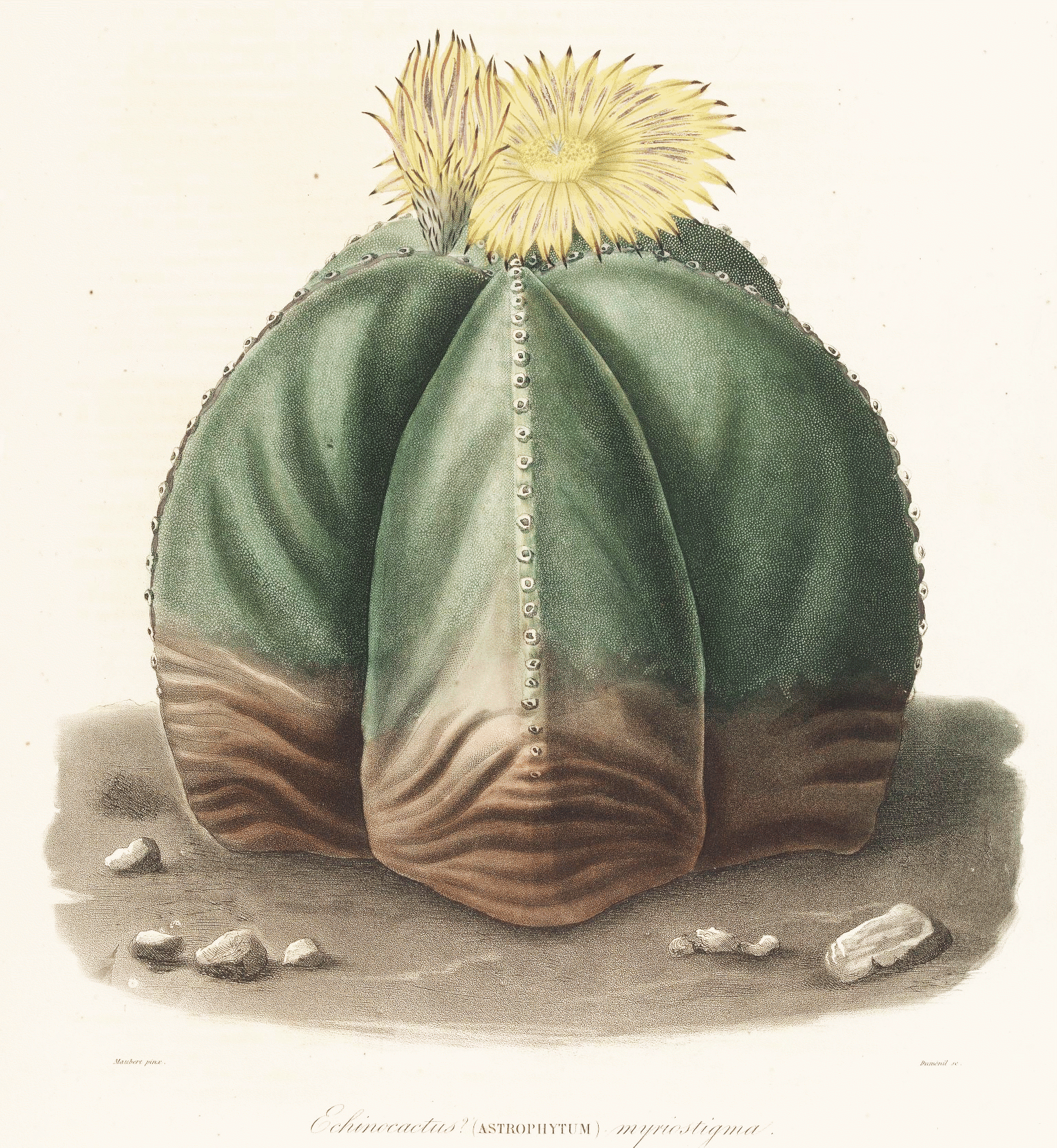
Bishop's Cap Cactus, Bishop's Hat, Bishop's Miter Cactus
- Spineless
- Three To Seven Pronounced Vertical Ribs When Young, Becoming More Cylindrical With Age.
- Stem Covered With A Whitish Flocking of Trichomes .
- Can Grow Up To 70–100 Cm Tall and 10–20 Cm In Diameter.
Creamy Yellow, Orange Base, Red Base
About Astrophytum myriostigma
What is Known
Astrophytum myriostigma, widely recognized by common names such as the bishop's cap cactus, bishop's hat, or bishop's miter cactus, is a distinct species of cactus originating from the highland regions of northeastern and central Mexico. Its scientific name, "Astrophytum," literally translates to "star plant," a moniker derived from its characteristic star-like shape when young. This form is created by the presence of three to seven pronounced vertical ribs.
Morphology and Growth
As Astrophytum myriostigma matures, it may develop additional ribs, and its overall shape transitions from the initial star-like appearance to a more cylindrical form. Mature specimens can reach impressive sizes, growing up to approximately 70–100 cm (2 ft 4 in – 3 ft 3 in) in height and 10–20 cm (4–8 in) in diameter. In its natural environment, the stem is typically covered in a whitish flocking of trichomes, although certain horticultural varieties may lack this feature.
Life Cycle and Reproduction
In the wild, the flowering cycle of Astrophytum myriostigma is timed for early spring, which facilitates the growth of its seeds with the arrival of summer rains. Cultivated plants may exhibit a different flowering period, often blooming in the summer. The cactus produces one or more flowers, measuring 4–6 cm (1.6–2.4 in) in diameter, near its apex. These flowers feature numerous creamy yellow tepals, sometimes with an orange or red base. Following successful pollination, the flowers develop into a hairy reddish fruit, approximately 2–2.5 cm (0.8–1.0 in) in diameter. It can take up to six years for a plant to reach flowering maturity.
Horticultural Significance
Astrophytum myriostigma is a popular choice for cultivation within cactus collections worldwide, valued for its unique aesthetic qualities. Its appeal to enthusiasts is further underscored by its recognition from horticultural societies; it has been awarded the Royal Horticultural Society's Award of Garden Merit. This award signifies its exceptional qualities and desirability among gardeners.
Source: Wikipedia ↗
Frequently Asked Questions
What are the common names for Astrophytum myriostigma?
Astrophytum myriostigma is widely known by several common names, including the bishop's cap cactus, bishop's hat, and bishop's miter cactus. These names often refer to the shape of the cactus, which can resemble a bishop's headwear.
Where is the bishop's cap cactus found naturally?
The bishop's cap cactus is native to the highlands of northeastern and central Mexico. It thrives in these elevated regions as part of its natural habitat.
What makes Astrophytum myriostigma distinctive in appearance?
Its most distinctive feature is its shape, which is star-like when young due to three to seven pronounced vertical ribs. As it matures, it becomes more cylindrical, and some plants have a whitish flocking of trichomes covering their stems.
When does Astrophytum myriostigma flower and produce fruit?
In its natural habitat, the cactus flowers in early spring to allow seeds to grow with summer rains. In cultivation, flowering may occur in summer. The flowers are creamy yellow, and the pollinated flowers develop into a hairy reddish fruit.
How large can Astrophytum myriostigma grow?
Mature plants can grow to be quite substantial, reaching heights of about 70–100 cm (2 ft 4 in – 3 ft 3 in) tall and a diameter of 10–20 cm (4–8 in). The size can vary depending on growing conditions.
Is Astrophytum myriostigma a cultivated plant?
Yes, Astrophytum myriostigma is commonly grown as an ornamental plant in cactus collections. Its unique appearance and relatively easy care make it a popular choice for enthusiasts.
Has Astrophytum myriostigma received any horticultural awards?
Indeed, this cactus species has been recognized for its horticultural merit. It has gained the Royal Horticultural Society's Award of Garden Merit, indicating its value and appeal to gardeners.