
Ichthyophis
Asia·Southeast Asia, southern Philippines, western Indo-Australian Archipelago, Sri Lanka
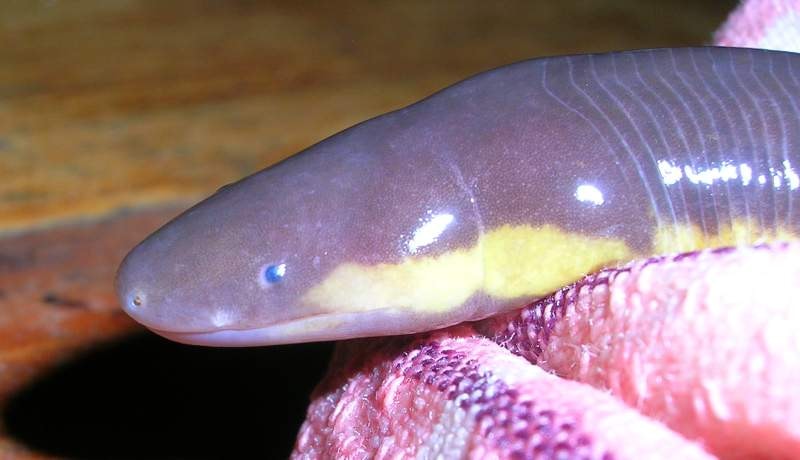
Ichthyophis, meaning "fish snake," is a genus of caecilians native to Southeast Asia, the southern Philippines, and the western Indo-Australian Archipelago. These amphibians are characterized by their elongated, limbless bodies and smooth, moist skin, often resembling earthworms or snakes. Several species are found in Sri Lanka, with some preferring moist habitats and others showing specific altitude preferences.
Key Facts
- ›Ichthyophis species are found in Southeast Asia, the southern Philippines, and the western Indo-Australian Archipelago.
- ›The genus name "Ichthyophis" translates to "fish snake" in Ancient Greek.
- ›These caecilians are known for their elongated, limbless bodies and smooth, moist skin.
- ›In Sri Lanka, three species of Ichthyophis are documented, all preferring moist habitats.
- ›Some species exhibit specific altitude preferences within their Sri Lankan distribution.
- ›A recently discovered species is Ichthyophis multicolor.
Moist Habitats
Fish Snake
About Ichthyophis
Ichthyophis is a genus of caecilians, a group of limbless amphibians. The name "Ichthyophis" is derived from Ancient Greek, combining "ikhthús" (fish) and "óphis" (snake), reflecting their common "fish snake" moniker and their elongated, serpentine form.
Geographic Distribution and Habitat
These amphibians are primarily found across Southeast Asia, extending to the southern Philippines and the western Indo-Australian Archipelago. In Sri Lanka, three distinct species of Ichthyophis have been documented. While they can be found in a variety of environments, Ichthyophis species are known to prefer moist habitats, which are crucial for their amphibian physiology.
Species and Variation
Within Sri Lanka, different Ichthyophis species exhibit variations in their habitat preferences, particularly concerning altitude. For instance, one species is known to avoid lowlands below a specific elevation. The genus also includes recently discovered species, such as Ichthyophis multicolor, highlighting ongoing research and biodiversity within the group. The species Ichthyophis glutinosus is noted as being particularly common and found at almost all altitudes within Sri Lanka.
Source: Wikipedia ↗
Frequently Asked Questions
What does the name Ichthyophis mean?
The name Ichthyophis comes from Ancient Greek words. 'Ikhthús' means "fish," and 'óphis' means "snake," leading to the combined meaning of "fish snake."
Where are Ichthyophis caecilians found?
This genus of caecilians is naturally found in Southeast Asia, the southern Philippines, and the western Indo-Australian Archipelago. They have also been documented in Sri Lanka.
What are the general characteristics of Ichthyophis?
Ichthyophis are caecilians, meaning they are limbless amphibians with elongated bodies. Their skin is smooth and moist, giving them an appearance that can be mistaken for earthworms or snakes.
Are there different species of Ichthyophis in Sri Lanka?
Yes, three species of Ichthyophis occur in Sri Lanka. These species are known to inhabit various environments but generally favor moist conditions.
Do Ichthyophis species have specific habitat requirements?
While often found in moist habitats, some Ichthyophis species have particular altitude preferences. For example, one species found in Sri Lanka does not inhabit lowlands below a certain elevation.
Related Caecilian species

Banna caecilian
The Banna caecilian (Ichthyophis kohtaoensis), also known as the Koh Tao Island caecilian, is an amphibian species found across Southeast Asia and southern China. This species inhabits a wide range of moist tropical and subtropical environments, from lowland forests to urban gardens and agricultural lands. It is primarily threatened by the loss of its diverse natural habitats.

Caudacaecilia larutensis
Caudacaecilia larutensis, also known as the Larut Hills caecilian, is a species of amphibian native to Malaysia and Thailand. It inhabits a variety of forest types, as well as rivers and agricultural lands. This caecilian is distinguished by its specific geographic distribution within Southeast Asia.

Ichthyophis paucisulcus
Ichthyophis paucisulcus, commonly known as the Siantar caecilian, is a species of amphibian native to Indonesia and Singapore. This species is found in a variety of humid lowland environments, including forests, swamps, and even canals and ditches.